
Love and liberty
Alexandre Dumas
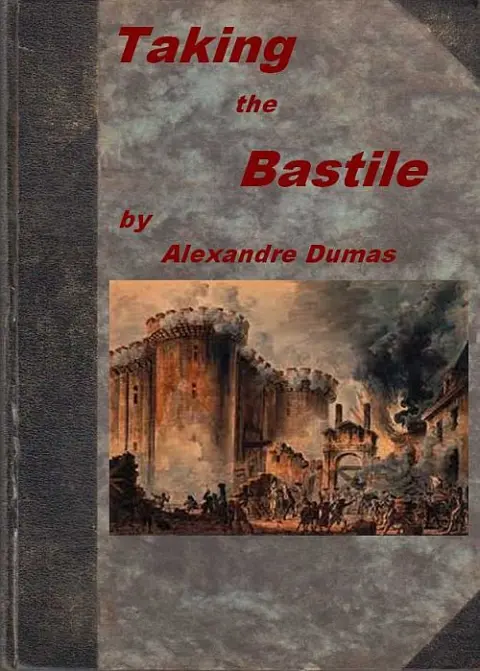
THE CLASSIC COLLECTION · 1891
"Taking the Bastile; Or, Pitou the Peasant" by Alexandre Dumas is a historical novel written in the late 19th century. The story centers around the tumultuous period of the French Revolution, focusing on the character of Ange Pitou, a peasant boy who becomes embroiled in the unfolding events and strives to find his place amidst the chaos. Dumas weaves a tale of heroism, societal change, and the quest for liberty, encapsulated in the dramatic moment of storming the Bastille. The opening portion of the novel introduces us to a young man named Gilbert, who ventures through the snow-covered countryside to find a peasant woman, Madeline Pitou. He brings with him an infant to be raised at her cottage, a child whose birth has been surrounded by tragedy as both parents have died. As Gilbert entrusts the child to Madeline, he expresses both hope and sorrow for the boy's future. Through his interactions with Madeline and her family, we see the warmth and complexities of rural life, as well as the undercurrents of change looming on the horizon. The introduction sets the stage for the emergence of the protagonist, Ange Pitou, hinting at themes of loss, parental bonds, and the significant impact of the upcoming revolution on personal and societal levels.
Introduction adapted from the source catalogue; source summaries may be automatically generated.
Free to read · English · 76,316 words · No account needed
MAKE TIME FOR A GOOD BOOK
On by default. Untick to stop anonymous reading totals. Each page counts after 10 seconds in view. How this works.
Anonymous counting is on unless you have switched it off.
"Certainly, I have heard it, but I do not think this a time to sing it,
or anything else."
"Stay; Marshal Saxe called this gun his Sackbut, because it sang the only music he cared anything for. This is a historical fact. But let us go on."
"Oh," said Billet when upon the tower top, "you have not dismounted the cannon, but merely drawn them in. I shall have to tell the people so."
"The cannon were mounted here by the King's command and by that alone
can they be dismounted."
"Governor Launay," returned Billet, feeling himself rise to the level of the emergency, "the true sovereign is yonder and I counsel you to obey it."
He pointed to the grey-looking masses, spotted with blood from the night's battling, and reflecting the dying sunlight on their weapons up to the very moats.
"Friend, a man cannot know two masters," replied the royalist, holding his head up haughtily: "I, the Governor of the Bastile, know but one: the Sixteenth Louis, who put his sign-manual at the foot of the patent which made me the commander over men and material here."
"Are you not a French citizen?" demanded Billet warmly.
"I am a French nobleman," said the Count of Launay.
"True, you are a soldier, and speak like one."
"You are right," said the gentleman bowing. "I am a soldier and carry
out my orders."
"Well, I am a citizen," went on Billet, "and as my duty as such is opposed to yours as the King's soldier, one of us must die. He who fulfills his orders or his duties."
"That is likely, sir."
"So you are determined to fire on the people?"
"Not unless I am fired at. I pledged myself to that effect to Lord Provost Flesselles' deputation. You see the guns have been retired, but at the first shot, I will roll one--say this one--forward out of the embrasure with my own hands, train it and point it, and fire with the slow-match you see there."
"If I believed that," said Billet, "before you could commit such a
crime----"
"I have told you that I am a soldier and know nothing outside my
orders."
"Then, look!" said Billet, drawing Launay to the gap in the battlements and pointing alternately in two different directions--the main street from the town and the street through the suburbs, "behold those who will henceforth give you orders."
Your reading position is saved on this browser. Take it to another device with a library code. Reading pages adapt to text, rather than matching a printed edition.
Alexandre Dumas
Alexandre Dumas & Auguste Maquet
Alexandre Dumas
Alexandre Dumas
BEHIND THE BOOK
This eBook is for the use of anyone anywhere in the United States and most other parts of the world at no cost and with almost no restrictions whatsoever. You may copy it, give it away or re-use it under the terms of the Project Gutenberg License included with this eBook or online at www.gutenberg.org. If you are not located in the United States, you will have to check the laws of the country where you are located before using this eBook. Read the source licence.
The original source file, including credits and licence, is retained by this library. Request an original-format copy at no charge. Please include the book title and Project Gutenberg identifier #45424.
KEEP YOUR CURIOSITY GOING
Cécile Tormay

Moritz Busch
Coulson Kernahan
John L. Ransom

Maurice Baring
Frances Wright