
Love and liberty
Alexandre Dumas
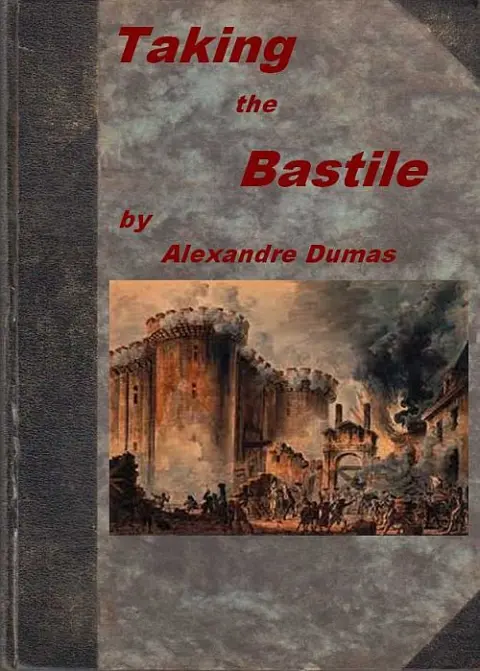
THE CLASSIC COLLECTION · 1891
"Taking the Bastile; Or, Pitou the Peasant" by Alexandre Dumas is a historical novel written in the late 19th century. The story centers around the tumultuous period of the French Revolution, focusing on the character of Ange Pitou, a peasant boy who becomes embroiled in the unfolding events and strives to find his place amidst the chaos. Dumas weaves a tale of heroism, societal change, and the quest for liberty, encapsulated in the dramatic moment of storming the Bastille. The opening portion of the novel introduces us to a young man named Gilbert, who ventures through the snow-covered countryside to find a peasant woman, Madeline Pitou. He brings with him an infant to be raised at her cottage, a child whose birth has been surrounded by tragedy as both parents have died. As Gilbert entrusts the child to Madeline, he expresses both hope and sorrow for the boy's future. Through his interactions with Madeline and her family, we see the warmth and complexities of rural life, as well as the undercurrents of change looming on the horizon. The introduction sets the stage for the emergence of the protagonist, Ange Pitou, hinting at themes of loss, parental bonds, and the significant impact of the upcoming revolution on personal and societal levels.
Introduction adapted from the source catalogue; source summaries may be automatically generated.
Free to read · English · 76,316 words · No account needed
MAKE TIME FOR A GOOD BOOK
On by default. Untick to stop anonymous reading totals. Each page counts after 10 seconds in view. How this works.
Anonymous counting is on unless you have switched it off.
"In this case, hand over the paper. I am Gonchon. Friends," added the vagabond as Billet drew back a step, "here is a chap who does not know me and asks if I am really Gonchon."
The mass burst into laughter; it seemed impossible that their favorite should not be known to all.
"Long life to Gonchon!" was the shout.
"There you are," said Billet, passing the paper to him.
"Mates," said the popular leader, having read, and slapping the bearer on the shoulder, "this is a brother, whom Marat recommends. So you may rely on him. What is your name, Pal?"
"Billet."
"My name is Ax--do you see? between us I hope we shall cut something!"
The mob laughed at the ominous pun.
"Ay, somebody will get cut!" was the cry, "How are we to set about it?"
"We are going right into there," answered Gonchon, pointing to the
building.
"That is the right kind of talk," said the farmer; "How many have you,
Gonchon?"
"Thirty skeletons."
"Thirty thousand of yours, and twenty coming from the Soldiers'
Hospital, ten thousand here; more than enough to succeed if we are to
succeed."
"We shall," replied the beggar king.
"I believe you. Get your men in hand while I go in and summon the governor to surrender. If he should, so much the better as it will spare bloodshed; if not, the blood will fall on his head and it is bad luck these times. Ask those German dragoons who hewed down the inoffensive."
"How long will you be engaged with the governor?"
"As long as I can make it, so as to have the castle invested thoroughly; if possible, the moment I come out, begin the onset."
"Enough said."
"You don't distrust me?" said the countryman, holding out his hand to
the city ragamuffin.
"I, distrust you?" replied the other, shaking with his emaciated hand the plump one of the farmer with a vigor he had not expected; "Wherefore? With a word or a sign, I could have you ground into dust though you were sheltered by yon towers, which to-morrow will exist not. Were you protected by those soldiers, who will be our dead-meat or we shall be theirs! Go ahead and rely on Gonchon as he does on Billet!"
Convinced, the farmer walked towards the Bastile gateway, while his new comrade proceeded towards the dwellings, under cheers for "The People's Mirabeau!"
"I never saw the other Mirabeau," thought Pitou, "but ours is not
handsome."
Your reading position is saved on this browser. Take it to another device with a library code. Reading pages adapt to text, rather than matching a printed edition.
Alexandre Dumas
Alexandre Dumas & Auguste Maquet
Alexandre Dumas
Alexandre Dumas
BEHIND THE BOOK
This eBook is for the use of anyone anywhere in the United States and most other parts of the world at no cost and with almost no restrictions whatsoever. You may copy it, give it away or re-use it under the terms of the Project Gutenberg License included with this eBook or online at www.gutenberg.org. If you are not located in the United States, you will have to check the laws of the country where you are located before using this eBook. Read the source licence.
The original source file, including credits and licence, is retained by this library. Request an original-format copy at no charge. Please include the book title and Project Gutenberg identifier #45424.
KEEP YOUR CURIOSITY GOING
Cécile Tormay

Moritz Busch
Coulson Kernahan
John L. Ransom

Maurice Baring
Frances Wright