
Love and liberty
Alexandre Dumas
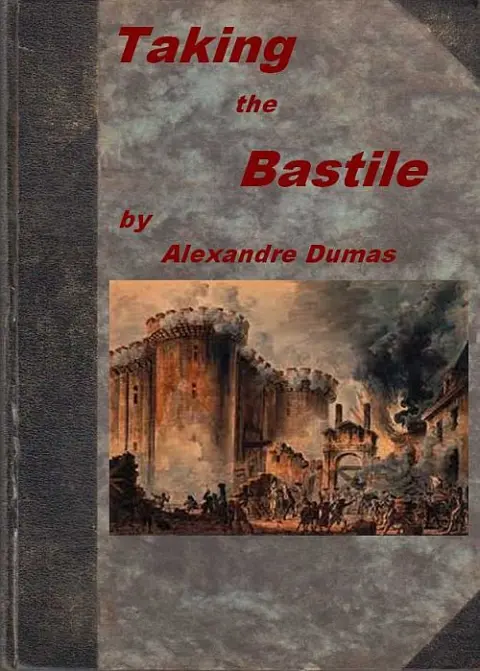
THE CLASSIC COLLECTION · 1891
"Taking the Bastile; Or, Pitou the Peasant" by Alexandre Dumas is a historical novel written in the late 19th century. The story centers around the tumultuous period of the French Revolution, focusing on the character of Ange Pitou, a peasant boy who becomes embroiled in the unfolding events and strives to find his place amidst the chaos. Dumas weaves a tale of heroism, societal change, and the quest for liberty, encapsulated in the dramatic moment of storming the Bastille. The opening portion of the novel introduces us to a young man named Gilbert, who ventures through the snow-covered countryside to find a peasant woman, Madeline Pitou. He brings with him an infant to be raised at her cottage, a child whose birth has been surrounded by tragedy as both parents have died. As Gilbert entrusts the child to Madeline, he expresses both hope and sorrow for the boy's future. Through his interactions with Madeline and her family, we see the warmth and complexities of rural life, as well as the undercurrents of change looming on the horizon. The introduction sets the stage for the emergence of the protagonist, Ange Pitou, hinting at themes of loss, parental bonds, and the significant impact of the upcoming revolution on personal and societal levels.
Introduction adapted from the source catalogue; source summaries may be automatically generated.
Free to read · English · 76,316 words · No account needed
MAKE TIME FOR A GOOD BOOK
On by default. Untick to stop anonymous reading totals. Each page counts after 10 seconds in view. How this works.
Anonymous counting is on unless you have switched it off.
"The man's right," chorussed the soldiers and women. "No children in the fighting. Keep them in."
"Oh, thank you, sir," said the head master to Billet, trying to shake hands with him through the bars.
"And above all take good care of Gilbert," said the latter.
"Keep me in? I tell you they shall not," cried the boy, livid with anger as he struggled in the grasp of the school servants.
"Let me go in, and I undertake to quiet him."
The crowd divided and let the farmer and Pitou go into the schoolyard. Already three or four French Guards and a dozen other soldiers instinctively stood sentry at the gates and prevented the young insurgents from bolting out.
Billet went straight up to Sebastian and taking his fine white hands in his large, horny ones, said:
"Sebastian, do you not know Farmer Billet, who farms your father's own
land?"
"Yes, sir, I know you now."
"And this lad with me?"
"It must be Ange Pitou."
Pitou threw himself on the other's neck, blubbering with joy.
"If they have taken away your father, I will bring him back. I, and the rest of us. Why not? yesterday we had a turn-up with the Austrians and we saw the flat of their backs."
"In token of which here is a cartridge-box one of them has no farther
use for," added Ange.
"Will we not liberate his father?" cried Billet to the mob, who shouted
an assent.
"But my father is in the Bastile," said Sebastian, shaking his head in melancholy. "None can take the Bastile."
"What were you going to do then, had you got out?"
"I should have gone under the Bastile walls and when my father was out walking on the ramparts, where they tell me the prisoners come for an airing, I should have shown myself to him."
"But if the sentinels shot you when they caught you making signs to a
prisoner?"
"I should have died under my father's eyes."
"Death of all the devils, you are a bad boy. To want to get killed under your father's eyes! To make him die of grief in his cell when he has nobody but you to live for, and one he loves so well. Plainly you have no good heart, Sebastian."
"A bad heart," whimpered Pitou as Billet repulsed the boy.
While the boy was musing sadly, the farmer admired the noble face, white and pearly; the fiery eye, fine and ironical mouth, eagle nose and vigorous chin, revealing nobility of race and of spirit.
"You say your father has been put in the Bastile? why?" he inquired.
Your reading position is saved on this browser. Take it to another device with a library code. Reading pages adapt to text, rather than matching a printed edition.
Alexandre Dumas
Alexandre Dumas & Auguste Maquet
Alexandre Dumas
Alexandre Dumas
BEHIND THE BOOK
This eBook is for the use of anyone anywhere in the United States and most other parts of the world at no cost and with almost no restrictions whatsoever. You may copy it, give it away or re-use it under the terms of the Project Gutenberg License included with this eBook or online at www.gutenberg.org. If you are not located in the United States, you will have to check the laws of the country where you are located before using this eBook. Read the source licence.
The original source file, including credits and licence, is retained by this library. Request an original-format copy at no charge. Please include the book title and Project Gutenberg identifier #45424.
KEEP YOUR CURIOSITY GOING
Cécile Tormay

Moritz Busch
Coulson Kernahan
John L. Ransom

Maurice Baring
Frances Wright