
Love and liberty
Alexandre Dumas
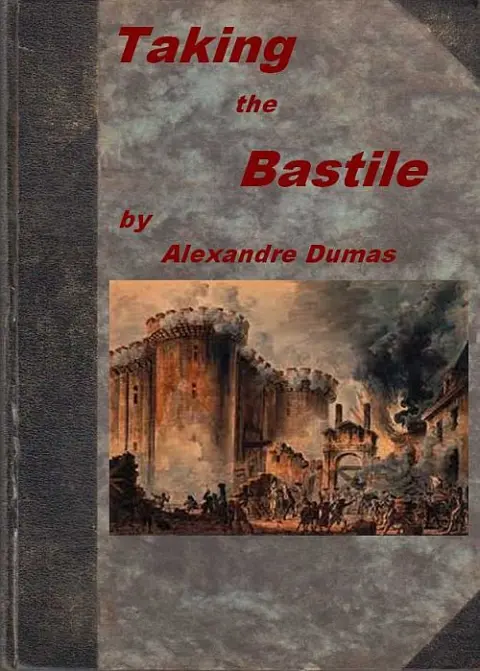
THE CLASSIC COLLECTION · 1891
"Taking the Bastile; Or, Pitou the Peasant" by Alexandre Dumas is a historical novel written in the late 19th century. The story centers around the tumultuous period of the French Revolution, focusing on the character of Ange Pitou, a peasant boy who becomes embroiled in the unfolding events and strives to find his place amidst the chaos. Dumas weaves a tale of heroism, societal change, and the quest for liberty, encapsulated in the dramatic moment of storming the Bastille. The opening portion of the novel introduces us to a young man named Gilbert, who ventures through the snow-covered countryside to find a peasant woman, Madeline Pitou. He brings with him an infant to be raised at her cottage, a child whose birth has been surrounded by tragedy as both parents have died. As Gilbert entrusts the child to Madeline, he expresses both hope and sorrow for the boy's future. Through his interactions with Madeline and her family, we see the warmth and complexities of rural life, as well as the undercurrents of change looming on the horizon. The introduction sets the stage for the emergence of the protagonist, Ange Pitou, hinting at themes of loss, parental bonds, and the significant impact of the upcoming revolution on personal and societal levels.
Introduction adapted from the source catalogue; source summaries may be automatically generated.
Free to read · English · 76,316 words · No account needed
MAKE TIME FOR A GOOD BOOK
On by default. Untick to stop anonymous reading totals. Each page counts after 10 seconds in view. How this works.
Anonymous counting is on unless you have switched it off.
"Yes, but the Spartans are nearly a million and it is your army that is
Xerxes."
"Oh, I would rather be hurled from the throne," she cried, as she rose with clenched fists and face flaming with shame and ire, "I would rather your Parisians hewed me to pieces, than hear from a Charny, one of my supporters, such speech as this!"
"Charny would not so address your Majesty unless every drop of blood in his veins were worthy of his sires and given to you."
"Then let us march upon Paris and let us die together!"
"Shamefully, without any battle," said the noble. "We shall not fight but disappear entirely like Philistines. March on Paris? when, as soon as we enter within her walls, all the houses will tumble down upon us, like the Red Sea waves overwhelming Pharaoh, and you will leave a cursed name, and your children will be hunted down like wolf-cubs."
"How must I fall, pray tell me, count?" demanded the sovereign
haughtily; "teach me."
"As a victim," was the answer, "like a Christian queen, smiling and forgiving those who strike you. If I had five hundred thousand like myself, I might say, Let us have at them this night, and to-morrow you would sleep in the Tuileries, the throne conquered!"
"Woe is me! you despair on whom was set my final hope."
"I despair because all France thinks like Paris, and your army if victorious in the capital, will be engulfed by the other towns. Have courage enough, my lady, to sheathe the sword."
"Is this why I have gathered brave men around me? why I breathed courage into them?" wailed the Queen.
"If you are not of my opinion, madam, order, and we march at once to
Paris! Speak."
So much devotion was in this offer that the hearer was appalled. She threw herself disconsolate on a sofa, where she struggled for a long time with her pride.
"Count," she said at length, "I shall remain inactive as you desire. I am not cross, though I have one thing to scold you for. I only learn by chance that you have a brother in the military service."
"Valence is in Bercheny's Hussars, yes, madam."
"Why have you never spoken of the young man? he deserves a higher grade
in the regiment."
"He is young and inexperienced; he is not fit to command. If your Majesty deigned to lower your view upon me, a Charny, that is no reason for me to elevate my family at the expense of brave gentlemen worthier than brothers of mine."
"You have other brothers?"
"Isidore is another; two ready to die for your Majesty."
"Does he need nothing?"
Your reading position is saved on this browser. Take it to another device with a library code. Reading pages adapt to text, rather than matching a printed edition.
Alexandre Dumas
Alexandre Dumas & Auguste Maquet
Alexandre Dumas
Alexandre Dumas
BEHIND THE BOOK
This eBook is for the use of anyone anywhere in the United States and most other parts of the world at no cost and with almost no restrictions whatsoever. You may copy it, give it away or re-use it under the terms of the Project Gutenberg License included with this eBook or online at www.gutenberg.org. If you are not located in the United States, you will have to check the laws of the country where you are located before using this eBook. Read the source licence.
The original source file, including credits and licence, is retained by this library. Request an original-format copy at no charge. Please include the book title and Project Gutenberg identifier #45424.
KEEP YOUR CURIOSITY GOING
Cécile Tormay

Moritz Busch
Coulson Kernahan
John L. Ransom

Maurice Baring
Frances Wright