
Love and liberty
Alexandre Dumas
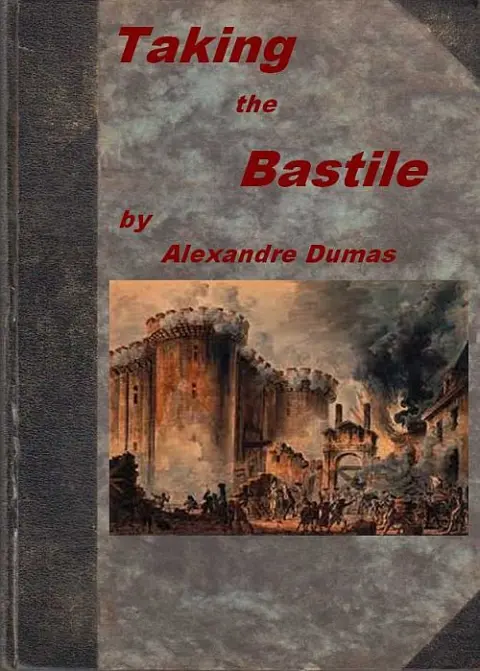
THE CLASSIC COLLECTION · 1891
"Taking the Bastile; Or, Pitou the Peasant" by Alexandre Dumas is a historical novel written in the late 19th century. The story centers around the tumultuous period of the French Revolution, focusing on the character of Ange Pitou, a peasant boy who becomes embroiled in the unfolding events and strives to find his place amidst the chaos. Dumas weaves a tale of heroism, societal change, and the quest for liberty, encapsulated in the dramatic moment of storming the Bastille. The opening portion of the novel introduces us to a young man named Gilbert, who ventures through the snow-covered countryside to find a peasant woman, Madeline Pitou. He brings with him an infant to be raised at her cottage, a child whose birth has been surrounded by tragedy as both parents have died. As Gilbert entrusts the child to Madeline, he expresses both hope and sorrow for the boy's future. Through his interactions with Madeline and her family, we see the warmth and complexities of rural life, as well as the undercurrents of change looming on the horizon. The introduction sets the stage for the emergence of the protagonist, Ange Pitou, hinting at themes of loss, parental bonds, and the significant impact of the upcoming revolution on personal and societal levels.
Introduction adapted from the source catalogue; source summaries may be automatically generated.
Free to read · English · 76,316 words · No account needed
MAKE TIME FOR A GOOD BOOK
On by default. Untick to stop anonymous reading totals. Each page counts after 10 seconds in view. How this works.
Anonymous counting is on unless you have switched it off.
"Do you know the state of affairs, sir?" she inquired.
"I was in the riots yesterday," was his confused reply.
"Then, do not fear to speak. Let us have details."
The lieutenant stepped out, though he colored up.
"My Lords of Bezenval and Lambesq know them better than I," he said.
"Continue, young sir; it pleases me to hear them from you. Under whose orders are these forty thousand men?"
"The superiors are the two gentlemen I named; under whom rule Prince Conde, Narbonne-Fritzlar and Salkenaym. The park of artillery on Montmartre could lay that district in ashes in six hours. At its signal to fire, Vincennes would answer. From four quarters as many corps of ten thousand troops could march in, and Paris would not hold out twenty-four hours."
"This is plain speaking at least, and a clear plan. What do you say to
this, Prince Lambesq?"
"That the young gentleman is a perfect general!"
"At least, he is a soldier who does not despair," said the Queen, seeing the lieutenant turn pale with anger.
"Thank your Majesty," replied the latter. "I do not know what your Majesty will decide, but I beg her to count me with the other forty thousand men, including the captains, as ready to die for her."
With these words he courteously saluted the general, who had almost insulted him. This courtesy struck the Queen more than the pledge of devotedness.
"Your name, sir?" said she.
"Viscount Charny," he responded.
"Charny," repeated Marie Antoinette, blushing in spite of herself; "any relation to Count Charny?"
"I am his brother, lady," bowing more lowly than before.
"I might have known that you were one of my most faithful servitors," said she, recovering from her tremor and looking round with confidence, "by the first words you spoke. I thank you, viscount; how comes this to be the first time I have the pleasure of seeing you at court?"
"My eldest brother, head of the family, ordered me to stay with the army, and I have only been in Versailles twice during seven years on the regimental roll-call."
She let a long look dwell on his face.
"You resemble your brother," she remarked. "I shall scold him for having waited for you to present yourself at court."
Electrified by this greeting to their young spokesman, the officers exaggerated their devotion to the royal cause and from each knot burst expressions of heroism able to conquer the whole of France.
Your reading position is saved on this browser. Take it to another device with a library code. Reading pages adapt to text, rather than matching a printed edition.
Alexandre Dumas
Alexandre Dumas & Auguste Maquet
Alexandre Dumas
Alexandre Dumas
BEHIND THE BOOK
This eBook is for the use of anyone anywhere in the United States and most other parts of the world at no cost and with almost no restrictions whatsoever. You may copy it, give it away or re-use it under the terms of the Project Gutenberg License included with this eBook or online at www.gutenberg.org. If you are not located in the United States, you will have to check the laws of the country where you are located before using this eBook. Read the source licence.
The original source file, including credits and licence, is retained by this library. Request an original-format copy at no charge. Please include the book title and Project Gutenberg identifier #45424.
KEEP YOUR CURIOSITY GOING
Cécile Tormay

Moritz Busch
Coulson Kernahan
John L. Ransom

Maurice Baring
Frances Wright