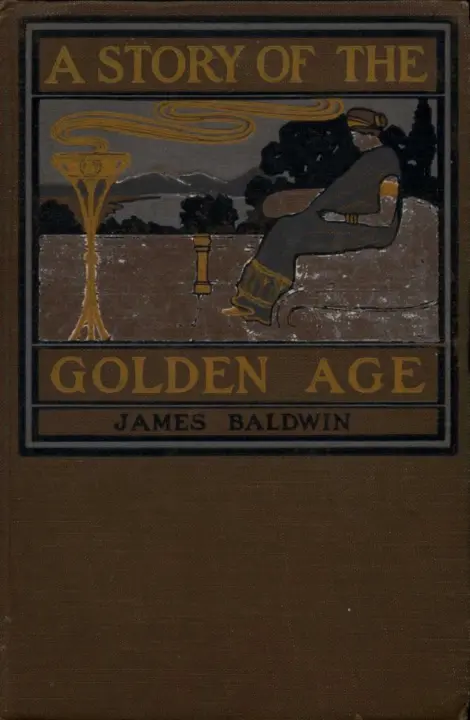
A Story of the Golden Age
James Baldwin
THE CLASSIC COLLECTION · 1892
"Six Centuries of English Poetry: Tennyson to Chaucer" by James Baldwin is a comprehensive anthology of Classic English poetry spanning from the 14th to the 19th century. Written in the late 19th century, this work is part of a series aimed at education, designed for students and teachers to explore notable English literary pieces alongside critical annotations and historical context. The book features selections from renowned poets like Tennyson, Wordsworth, and Chaucer, offering readers an insight into the evolution of English poetic expression through various eras. At the start of the anthology, Baldwin introduces the reader to the historical development of English poetry, suggesting that its roots trace back hundreds of years before Chaucer. He elaborates on the influence of earlier poets and the transition of language, connecting these historical elements to the richness found in later works. Baldwin points out the significance of understanding poetry not just as a literary form but as a reflection of cultural and historical shifts, emphasizing the importance of familiarizing oneself with poetic creations to appreciate their beauty fully. The opening sets a scholarly tone while making an engaging argument for the study of poetry as a vital component of English literature.
Introduction adapted from the source catalogue; source summaries may be automatically generated.
Free to read · English · 75,364 words · No account needed
MAKE TIME FOR A GOOD BOOK
On by default. Untick to stop anonymous reading totals. Each page counts after 10 seconds in view. How this works.
Anonymous counting is on unless you have switched it off.
5. This stanza, evidently a part of the imprecation which Boadicea "hurled" at her enemies, ought to be enclosed with quotation marks, but in most versions of the poem it appears without them.
Oh, that those lips had language! Life has passed With me but roughly since I heard thee last. Those lips are thine--thy own sweet smile I see, The same that oft in childhood solaced me; Voice only fails, else how distinct they say, "Grieve not, my child, chase all thy fears away!" The meek intelligence of those dear eyes (Blessed be the art that can immortalize, The art that baffles Time's tyrannic claim To quench it) here shines on me still the same. Faithful remembrancer of one so dear, O welcome guest, though unexpected here! Who bidst me honor with an artless song, Affectionate, a mother lost so long, I will obey, not willingly alone, But gladly, as the precept were her own: And, while that face renews my filial grief, Fancy shall weave a charm for my relief, Shall steep{1} me in Elysian reverie,{2} A momentary dream that thou art she. My mother! when I learnt{3} that thou wast dead, Say, wast thou conscious of the tears I shed? Hovered thy spirit o'er thy sorrowing son, Wretch even then, life's journey just begun? Perhaps thou gavest me, though unfelt, a kiss; Perhaps a tear, if souls can weep in bliss. Ah! that maternal smile! It answers--Yes. I heard the bell tolled on thy burial day, I saw the hearse that bore thee slow away, And, turning from my nursery window, drew A long, long sigh, and wept a last adieu! But was it such?--It was.--Where thou art gone Adieus and farewells are a sound unknown. May I but meet thee on that peaceful shore, The parting word shall pass my lips no more! The maidens, grieved themselves at my concern,{4} Oft gave me promise of thy quick return. What ardently I wished I long believed, And, disappointed still, was still deceived. By expectation every day beguiled, Dupe of to-morrow even from a child. Thus many a sad to-morrow came and went, Till, all my stock of infant sorrow spent, I learned at last submission to my lot; But, though I less deplored thee, ne'er forgot. Where once we dwelt our name is heard no more, Children not thine have trod my nursery floor; And where the gardener Robin, day by day, Drew me to school along the public way, Delighted with my bauble coach, and wrapped In scarlet mantle warm, and velvet capped, 'Tis now become a history little known, That once we called the pastoral house our own. Short-lived possession! but the record fair That memory keeps, of all thy kindness there, Still outlives many a storm that has effaced A thousand other themes less deeply traced.{5} Thy nightly visits to my chamber made, That thou mightst know me safe and warmly laid; Thy morning bounties ere I left my home, The biscuit, or confectionary plum;{6} The fragrant waters on my cheek bestowed By thy own hand, till fresh they shone and glowed; All this, and more endearing still than all, Thy constant flow of love, that knew no fall, Ne'er roughened by those cataracts and brakes That humor interposed too often makes;{7} All this still legible in memory's page, And still to be so to my latest age, Adds joy to duty, makes me glad to pay Such honors to thee as my numbers may; Perhaps a frail memorial, but sincere, Not scorned in heaven, though little noticed here. Could Time, his flight reversed, restore the hours, When, playing with thy vesture's tissued flowers, The violet, the pink, and jessamine, I pricked them into paper with a pin (And thou wast happier than myself the while, Wouldst softly speak, and stroke my head and smile), Could those few pleasant days again appear, Might one wish bring them, would I wish them here? I would not trust my heart--the dear delight Seems so to be desired, perhaps I might.-- But no--what here we call our life is such So little to be loved, and thou so much, That I should ill requite thee to constrain Thy unbound spirit into bonds again. Thou, as a gallant bark{8} from Albion's coast (The storms all weathered and the ocean crossed) Shoots into port at some well-havened isle, Where spices breathe, and brighter seasons smile, There sits quiescent on the floods that show Her beauteous form reflected clear below, While airs impregnated with incense play Around her, fanning light her streamers gay; So thou, with sails how swift! hast reached the shore, "Where tempests never beat nor billows roar."{9} And thy loved consort on the dangerous tide Of life long since has anchored by thy side. But me, scarce hoping to attain that rest, Always from port withheld, always distressed-- Me howling blasts drive devious, tempest tost, Sails ripped, seams opening wide, and compass lost, And day by day some current's thwarting force, Sets me more distant from a prosperous course. Yet, oh, the thought that thou art safe, and he! That thought is joy, arrive what may to me. My boast is not, that I deduce my birth From loins enthroned and rulers of the earth; But higher far my proud pretensions rise-- The son of parents passed into the skies! And now, farewell--Time unrevoked has run His wonted course, yet what I wished is done. By contemplation's help, not sought in vain, I seem to have lived my childhood o'er again; To have renewed the joys that once were mine, Without the sin of violating thine: And, while the wings of Fancy still are free, And I can view this mimic show of thee,{10} Time has but half succeeded in his theft-- Thyself removed, thy power to soothe me left.
Your reading position is saved on this browser. Take it to another device with a library code. Reading pages adapt to text, rather than matching a printed edition.
James Baldwin
James Baldwin

James Baldwin
James Baldwin
BEHIND THE BOOK
This eBook is for the use of anyone anywhere in the United States and most other parts of the world at no cost and with almost no restrictions whatsoever. You may copy it, give it away or re-use it under the terms of the Project Gutenberg License included with this eBook or online at www.gutenberg.org. If you are not located in the United States, you will have to check the laws of the country where you are located before using this eBook. Read the source licence.
The original source file, including credits and licence, is retained by this library. Request an original-format copy at no charge. Please include the book title and Project Gutenberg identifier #30235.
KEEP YOUR CURIOSITY GOING

Eric Mackay
Edmund Gosse
Sophia Margaretta Hensley
Gilbert Parker
George MacDonald

Elizabeth Bibesco