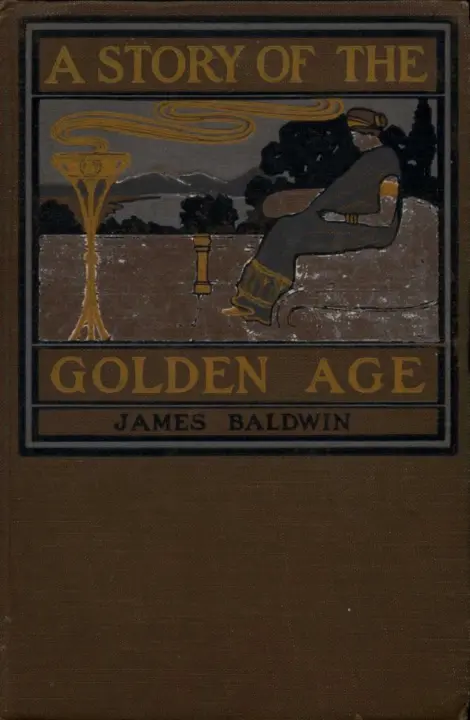
A Story of the Golden Age
James Baldwin
THE CLASSIC COLLECTION · 1892
"Six Centuries of English Poetry: Tennyson to Chaucer" by James Baldwin is a comprehensive anthology of Classic English poetry spanning from the 14th to the 19th century. Written in the late 19th century, this work is part of a series aimed at education, designed for students and teachers to explore notable English literary pieces alongside critical annotations and historical context. The book features selections from renowned poets like Tennyson, Wordsworth, and Chaucer, offering readers an insight into the evolution of English poetic expression through various eras. At the start of the anthology, Baldwin introduces the reader to the historical development of English poetry, suggesting that its roots trace back hundreds of years before Chaucer. He elaborates on the influence of earlier poets and the transition of language, connecting these historical elements to the richness found in later works. Baldwin points out the significance of understanding poetry not just as a literary form but as a reflection of cultural and historical shifts, emphasizing the importance of familiarizing oneself with poetic creations to appreciate their beauty fully. The opening sets a scholarly tone while making an engaging argument for the study of poetry as a vital component of English literature.
Introduction adapted from the source catalogue; source summaries may be automatically generated.
Free to read · English · 75,364 words · No account needed
MAKE TIME FOR A GOOD BOOK
On by default. Untick to stop anonymous reading totals. Each page counts after 10 seconds in view. How this works.
Anonymous counting is on unless you have switched it off.
8. =requiem.= A dirge, or funeral song. "So called from the first word in the Catholic mass for the dead, Requiem æternum dona iis Domine (Give eternal rest to them, O Lord)."--Brand.
=become a sod.= Compare with Ecclesiastes, xii, 7: "Then shall the dust return to the earth as it was."
9. =alien corn.= See Ruth, ii. Why alien corn? Longfellow, in his poem
on "Flowers," says:
"Everywhere about us they are glowing--
Some like stars, to tell us Spring is born;
Others, their blue eyes with tears o'erflowing,
Stand like Ruth amid the golden corn."
Full on this casement shone the wintry moon, And threw warm gules on Madeline's fair breast, As down she knelt for heaven's grace and boon; Rose-bloom fell on her hands, together prest, And on her silver cross soft amethyst, And on her hair a glory, like a saint: She seem'd a splendid angel, newly drest, Save wings, for heaven:--Porphyro grew faint: She knelt, so pure a thing, so free from mortal taint.
Anon his heart revives: her vespers done, Of all its wreathed pearls her hair she frees; Unclasps her warmed jewels one by one; Loosens her fragrant bodice; by degrees Her rich attire creeps rustling to her knees: Half-hidden, like a mermaid in sea-weed, Pensive awhile she dreams awake, and sees, In fancy, fair St. Agnes in her bed, But dares not look behind, or all the charm is fled.
Soon, trembling in her soft and chilly nest, In sort of wakeful swoon, perplexed she lay, Until the poppied warmth of sleep oppressed Her soothed limbs, and soul fatigued away; Flown, like a thought, until the morrow-day; Blissfully havened both from joy and pain; Clasped like a missal where swart Paynims pray: Blinded alike from sunshine and from rain, As though a rose should shut, and be a bud again.
Stolen to this paradise, and so entranced, Porphyro gazed upon her empty dress, And listened to her breathing, if it chanced To wake into a slumberous tenderness; Which when he heard, that minute did he bless, And breathed himself: then from the closet crept, Noiseless as fear in a wide wilderness, And over the hushed carpet, silent, stept, And 'tween the curtains peeped, where, lo!--how fast she slept.
Then by the bed-side, where the faded moon Made a dim, silver twilight, soft he set A table, and, half anguished, threw thereon A cloth of woven crimson, gold, and jet:-- O for some drowsy Morphean amulet! The boisterous, midnight, festive clarion, The kettle-drum, and far-heard clarionet, Affray his ears, though but in dying tone:-- The hall-door shuts again, and all the noise is gone.
Your reading position is saved on this browser. Take it to another device with a library code. Reading pages adapt to text, rather than matching a printed edition.
James Baldwin
James Baldwin

James Baldwin
James Baldwin
BEHIND THE BOOK
This eBook is for the use of anyone anywhere in the United States and most other parts of the world at no cost and with almost no restrictions whatsoever. You may copy it, give it away or re-use it under the terms of the Project Gutenberg License included with this eBook or online at www.gutenberg.org. If you are not located in the United States, you will have to check the laws of the country where you are located before using this eBook. Read the source licence.
The original source file, including credits and licence, is retained by this library. Request an original-format copy at no charge. Please include the book title and Project Gutenberg identifier #30235.
KEEP YOUR CURIOSITY GOING

Eric Mackay
Edmund Gosse
Sophia Margaretta Hensley
Gilbert Parker
George MacDonald

Elizabeth Bibesco