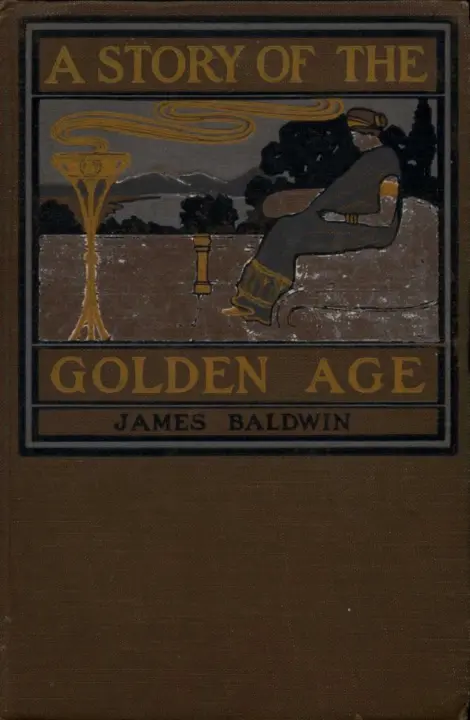
A Story of the Golden Age
James Baldwin
THE CLASSIC COLLECTION · 1892
"Six Centuries of English Poetry: Tennyson to Chaucer" by James Baldwin is a comprehensive anthology of Classic English poetry spanning from the 14th to the 19th century. Written in the late 19th century, this work is part of a series aimed at education, designed for students and teachers to explore notable English literary pieces alongside critical annotations and historical context. The book features selections from renowned poets like Tennyson, Wordsworth, and Chaucer, offering readers an insight into the evolution of English poetic expression through various eras. At the start of the anthology, Baldwin introduces the reader to the historical development of English poetry, suggesting that its roots trace back hundreds of years before Chaucer. He elaborates on the influence of earlier poets and the transition of language, connecting these historical elements to the richness found in later works. Baldwin points out the significance of understanding poetry not just as a literary form but as a reflection of cultural and historical shifts, emphasizing the importance of familiarizing oneself with poetic creations to appreciate their beauty fully. The opening sets a scholarly tone while making an engaging argument for the study of poetry as a vital component of English literature.
Introduction adapted from the source catalogue; source summaries may be automatically generated.
Free to read · English · 75,364 words · No account needed
MAKE TIME FOR A GOOD BOOK
On by default. Untick to stop anonymous reading totals. Each page counts after 10 seconds in view. How this works.
Anonymous counting is on unless you have switched it off.
Queen and huntress, chaste and fair,
Now the sun is laid to sleep;
Seated in thy silver chair,
State in wonted manner keep;
Hesperus entreats thy light,
Goddess excellently bright.
Earth, let not thy envious shade
Dare itself to interpose;
Cynthia's shining orb was made
Heaven to clear, when day did close;
Bless us then with wished sight,
Goddess excellently bright.
Lay thy bow of pearl apart,
And thy crystal-shining quiver;
Give unto the flying heart
Space to breathe, how short soever;
Thou that mak'st a day of night,
Goddess excellently bright.
To draw no envy, Shakespeare, on thy name, Am I thus ample to thy book and fame;{1} While I confess thy writings to be such, As neither Man nor Muse can praise too much. 'Tis true, and all men's suffrage. But these ways Were not the paths I meant unto thy praise; For seeliest{2} ignorance on these may light, Which, when it sounds at best, but echoes right; Or blind affection, which doth ne'er advance The truth, but gropes, and urgeth all by chance; Or crafty malice might pretend this praise, And think to ruin where it seemed to praise. But thou art proof against them and, indeed, Above the ill fortune of them, or the need. I therefore will begin: Soul of the age! The applause, delight, the wonder of our stage! My SHAKESPEARE rise! I will not lodge thee by Chaucer, or Spenser, or bid Beaumont lie A little further, to make thee a room:{3} Thou art a monument without a tomb, And art alive still while thy book doth live, And we have wits to read, and praise to give. That I not mix thee so my brain excuses,-- I mean with great, but disproportioned Muses; For if I thought my judgment were of years, I should commit thee surely with thy peers, And tell how far thou didst our Lyly{4} outshine, Or sporting Kyd, or Marlowe's mighty line. And though thou hadst small Latin and less Greek, From thence to honor thee I would not seek For names, but call forth thund'ring Æschylus,{5} Euripides, and Sophocles to us, Pacuvius, Accius,{6} him of Cordova dead, To life again, to hear thy buskin tread, And shake a stage; or when thy socks{7} were on, Leave thee alone for a comparison Of all that insolent Greece or haughty Rome Sent forth, or since did from their ashes come. Triumph, my Britain, thou hast one to show, To whom all scenes of Europe homage owe. He was not of an age, but for all time! And all the Muses still were in their prime, When, like Apollo, he came forth to warm Our ears, or like a Mercury to charm! Nature herself was proud of his designs, And joyed to wear the dressing of his lines, Which were so richly spun, and woven so fit, As, since, she will vouchsafe no other wit. The merry Greek, tart Aristophanes, Neat Terence, witty Plautus,{8} now not please; But antiquated and deserted lie, As they were not of Nature's family. Yet must I not give Nature all; thy Art, My gentle Shakespeare, must enjoy a part. For though the poet's matter nature be, His art doth give the fashion; and that he{9} Who casts to write a living line, must sweat (Such as thine are) and strike the second heat Upon the Muses' anvil, turn the same, And himself with it, that he thinks to frame; Or for the laurel he may gain to scorn; For a good poet's made, as well as born. And such wert thou! Look, how the father's face Lives in his issue, even so the race Of Shakespeare's mind and manners brightly shines In his well-turnèd and true filèd lines, In each of which he seems to shake a lance, As brandished at the eyes of ignorance. Sweet Swan of Avon!{10} what a sight it were To see thee in our waters yet appear, And make those flights upon the banks of Thames, That so did take Eliza and our James! But stay, I see thee in the hemisphere{11} Advanced, and made a constellation there! Shine forth, thou Star of Poets, and with rage Or influence chide or cheer the drooping stage, Which, since thy flight from hence, hath mourned like night, And despairs day but for thy volume's light.
Your reading position is saved on this browser. Take it to another device with a library code. Reading pages adapt to text, rather than matching a printed edition.
James Baldwin
James Baldwin
James Baldwin
James Baldwin
BEHIND THE BOOK
This eBook is for the use of anyone anywhere in the United States and most other parts of the world at no cost and with almost no restrictions whatsoever. You may copy it, give it away or re-use it under the terms of the Project Gutenberg License included with this eBook or online at www.gutenberg.org. If you are not located in the United States, you will have to check the laws of the country where you are located before using this eBook. Read the source licence.
The original source file, including credits and licence, is retained by this library. Request an original-format copy at no charge. Please include the book title and Project Gutenberg identifier #30235.
KEEP YOUR CURIOSITY GOING

Eric Mackay
Edmund Gosse
Sophia Margaretta Hensley
Gilbert Parker
George MacDonald

Elizabeth Bibesco