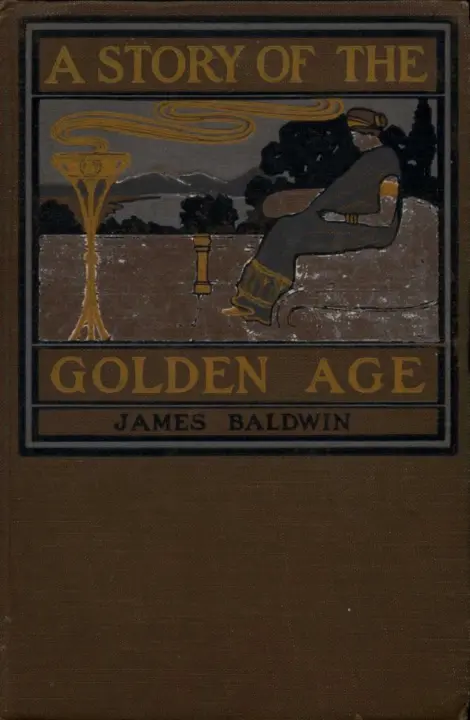
A Story of the Golden Age
James Baldwin
THE CLASSIC COLLECTION · 1892
"Six Centuries of English Poetry: Tennyson to Chaucer" by James Baldwin is a comprehensive anthology of Classic English poetry spanning from the 14th to the 19th century. Written in the late 19th century, this work is part of a series aimed at education, designed for students and teachers to explore notable English literary pieces alongside critical annotations and historical context. The book features selections from renowned poets like Tennyson, Wordsworth, and Chaucer, offering readers an insight into the evolution of English poetic expression through various eras. At the start of the anthology, Baldwin introduces the reader to the historical development of English poetry, suggesting that its roots trace back hundreds of years before Chaucer. He elaborates on the influence of earlier poets and the transition of language, connecting these historical elements to the richness found in later works. Baldwin points out the significance of understanding poetry not just as a literary form but as a reflection of cultural and historical shifts, emphasizing the importance of familiarizing oneself with poetic creations to appreciate their beauty fully. The opening sets a scholarly tone while making an engaging argument for the study of poetry as a vital component of English literature.
Introduction adapted from the source catalogue; source summaries may be automatically generated.
Free to read · English · 75,364 words · No account needed
MAKE TIME FOR A GOOD BOOK
On by default. Untick to stop anonymous reading totals. Each page counts after 10 seconds in view. How this works.
Anonymous counting is on unless you have switched it off.
Rightwisenes chastised al robbours,
By egall balaunce of execucion,
Fraud, falsë mede, put backward fro jurours,
True promes holde, made no delacioun;
Forswearing shamed durst enter in no toun,
Nor lesingmongers, because Attemperaunce
Had in that world wholy the governaunce.
That golden world could lovë God and drede,
All the seven dedes of mercy for to use,
The rich was ready to do almës dede,
Who asked harbour, men did him not refuse;
No man of malice would other tho accuse,
Defame his neighbour, because Attemperaunce
Had in that world wholy the governaunce.
The true marchant by measure bought and sold,
Deceipt was none in the artificer,
Making no balkes, the plough was truely hold,
Abacke stode Idlenes, farre from labourer,
Discrecion marcial at diner and supper,
Content with measure, because Attemperaunce
Had in that world wholy the governaunce.
Of wast in clothing was that time none excesse; Men might the lord from his subjectës know; A difference made twene povertie and richesse, Twene a princesse and other statës lowe; Of horned boastës no boast was tho blowe, Nor counterfeit feining, because Attemperaunce Had in that world wholy the governaunce.
This golden world long whylë dyd endure,
Was none allay in that metall sene,
Tyll Saturne ceased, by record of scripture,
Jupiter reygned, put out his father clene,
Chaunged obrison into silver shene,
Al up so downe, because Attemperaunce
Was set asyde, and loste her governaunce.
"The Falls of Princes," from which this is an extract, was printed in folio in 1558. Its complete title is, "The Tragedies gathered by Jhon Bochas of all such Princes as fell from theyr Estates throughe the Mutability of Fortune since the creation of Adam until his time; wherin may be seen what vices bring menne to destruccion, wyth notable warninges howe the like may be avoyded. Translated into English by John Lidgate, Monke of Burye."
Wald my gud lady lufe me best,
And wirk eftir my will,
I suld ane Garmond gudliest
Gar mak hir body till.
Off hie honour suld be hir hud,
Upoun hir heid to weir,
Garneist with governance so gud,
Na demyng suld hir deir.
Hir sark suld be hir body nixt,
Of chestetie so quhyt,
With schame and dreid togidder mixt,
The same suld be perfyt.
Hir kirtill suld be of clene constance,
Lasit with lesum lufe,
The mailyheis of continuance
For nevir to remufe.
Hir gown suld be of gudliness
Weill ribband with renowne,
Purfillit with plesour in ilk place,
Furrit with fyne fassoun.
Hir belt suld be of benignitie,
About hir middill meit;
Hir mantill of humilitie,
To tholl bayth wind and weit.
Your reading position is saved on this browser. Take it to another device with a library code. Reading pages adapt to text, rather than matching a printed edition.
James Baldwin
James Baldwin

James Baldwin
James Baldwin
BEHIND THE BOOK
This eBook is for the use of anyone anywhere in the United States and most other parts of the world at no cost and with almost no restrictions whatsoever. You may copy it, give it away or re-use it under the terms of the Project Gutenberg License included with this eBook or online at www.gutenberg.org. If you are not located in the United States, you will have to check the laws of the country where you are located before using this eBook. Read the source licence.
The original source file, including credits and licence, is retained by this library. Request an original-format copy at no charge. Please include the book title and Project Gutenberg identifier #30235.
KEEP YOUR CURIOSITY GOING

Eric Mackay
Edmund Gosse
Sophia Margaretta Hensley
Gilbert Parker
George MacDonald

Elizabeth Bibesco