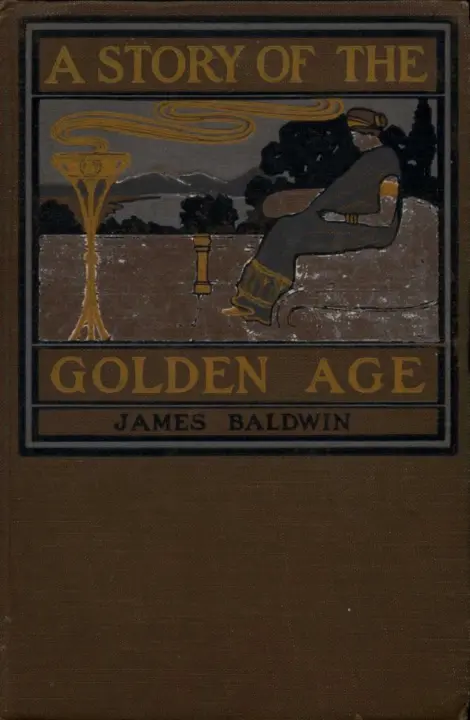
A Story of the Golden Age
James Baldwin
THE CLASSIC COLLECTION · 1892
"Six Centuries of English Poetry: Tennyson to Chaucer" by James Baldwin is a comprehensive anthology of Classic English poetry spanning from the 14th to the 19th century. Written in the late 19th century, this work is part of a series aimed at education, designed for students and teachers to explore notable English literary pieces alongside critical annotations and historical context. The book features selections from renowned poets like Tennyson, Wordsworth, and Chaucer, offering readers an insight into the evolution of English poetic expression through various eras. At the start of the anthology, Baldwin introduces the reader to the historical development of English poetry, suggesting that its roots trace back hundreds of years before Chaucer. He elaborates on the influence of earlier poets and the transition of language, connecting these historical elements to the richness found in later works. Baldwin points out the significance of understanding poetry not just as a literary form but as a reflection of cultural and historical shifts, emphasizing the importance of familiarizing oneself with poetic creations to appreciate their beauty fully. The opening sets a scholarly tone while making an engaging argument for the study of poetry as a vital component of English literature.
Introduction adapted from the source catalogue; source summaries may be automatically generated.
Free to read · English · 75,364 words · No account needed
MAKE TIME FOR A GOOD BOOK
On by default. Untick to stop anonymous reading totals. Each page counts after 10 seconds in view. How this works.
Anonymous counting is on unless you have switched it off.
=Robert Herrick= (1594-1674). See biographical note, page 202.
=Sir John Suckling= (1608-1642). Love poems.
=Richard Lovelace= (1618-1658). Short poems; "Lucasta: Odes, Sonnets,
Songs," etc.
=Lord Herbert of Cherbury= (1581-1648). Odes and short poems.
=George Herbert= (1592-1634). "The Temple: Sacred Poems and Private
Ejaculations"; short poems.
=George Sandys= (1577-1643). "Christ's Passion."
=Richard Crashaw= (1615-1650). "Steps to the Altar."
=Henry Vaughan= (1621-1695). "Silex Scintillans"; "The Mount of Olives."
=Abraham Cowley= (1618-1667). "Poetical Blossomes"; "The Mistress."
=Edmund Waller= (1605-1687). See biographical note, page 205.
=Sir John Denham= (1615-1668). "Cooper's Hill."
=Sir William Davenant= (1605-1668). "Gondibert"; "Madagascar and Other
Poems."
=John Milton= (1608-1674). See biographical note, page 195.
=Andrew Marvell= (1621-1678). Lyric and satiric poems.
=Samuel Butler= (1612-1680). "Hudibras."
=Thomas Otway= (1651-1685). "The Poet's Complaint of his Muse"; "Windsor
Castle."
=John Dryden= (1631-1700). See biographical note, page 175.
John Dryden.
'Twas at the royal feast,{1} for Persia won
By Philip's warlike son:
Aloft in awful state
The godlike hero sate
On his imperial throne:
His valiant peers were placed around;
Their brows with roses and with myrtles bound:{2}
(So should desert in arms be crowned.)
The lovely Thais,{3} by his side,
Sate like a blooming Eastern bride
In flower of youth and beauty's pride.
Happy, happy, happy pair!
None but the brave,
None but the brave,
None but the brave deserves the fair.
Chorus.
Happy, happy, happy pair!
None but the brave,
None but the brave,
None but the brave deserves the fair.
Timotheus,{4} placed on high
Amid the tuneful quire,
With flying fingers touched the lyre:
The trembling notes ascend the sky,
And heavenly joys inspire.
The song began from Jove,{5}
Who left his blissful seats above,
(Such is the power of mighty love.)
A dragon's fiery form belied the god:
Sublime on radiant spires he rode.
The listening crowd admire the lofty sound,
A present deity,{6} they shout around;
A present deity, the vaulted roofs rebound:
With ravish'd ears
The monarch hears,
Assumes the god,
Affects to nod,{7}
And seems to shake the spheres.
Chorus.
With ravish'd ears
The monarch hears,
Assumes the god,
Affects to nod,
And seems to shake the spheres.
The praise of Bacchus then, the sweet musician sung,
Of Bacchus ever fair and ever young:
The jolly god in triumph comes;
Sound the trumpets; beat the drums;
Flush'd with a purple grace,
He shows his honest face:
Now give the hautboys{8} breath; he comes! he comes!
Bacchus, ever fair and young,
Drinking joys did first ordain;
Bacchus' blessings are a treasure,
Drinking is the soldier's pleasure;
Rich the treasure,
Sweet the pleasure;
Sweet is pleasure after pain.
Chorus.
Your reading position is saved on this browser. Take it to another device with a library code. Reading pages adapt to text, rather than matching a printed edition.
James Baldwin
James Baldwin
James Baldwin
James Baldwin
BEHIND THE BOOK
This eBook is for the use of anyone anywhere in the United States and most other parts of the world at no cost and with almost no restrictions whatsoever. You may copy it, give it away or re-use it under the terms of the Project Gutenberg License included with this eBook or online at www.gutenberg.org. If you are not located in the United States, you will have to check the laws of the country where you are located before using this eBook. Read the source licence.
The original source file, including credits and licence, is retained by this library. Request an original-format copy at no charge. Please include the book title and Project Gutenberg identifier #30235.
KEEP YOUR CURIOSITY GOING

Eric Mackay
Edmund Gosse
Sophia Margaretta Hensley
Gilbert Parker
George MacDonald

Elizabeth Bibesco