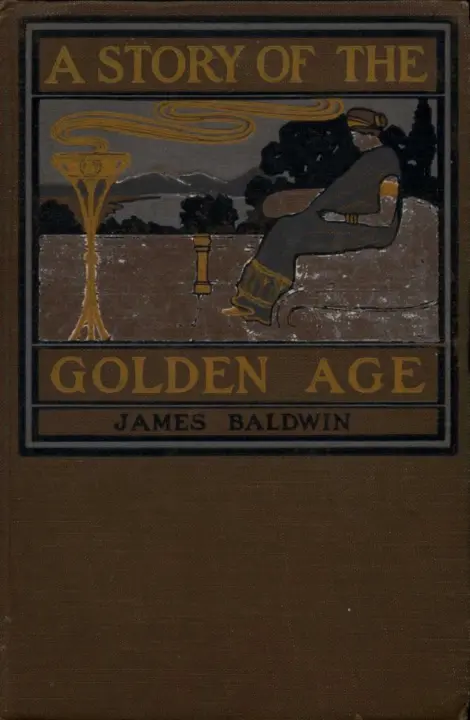
A Story of the Golden Age
James Baldwin
THE CLASSIC COLLECTION · 1892
"Six Centuries of English Poetry: Tennyson to Chaucer" by James Baldwin is a comprehensive anthology of Classic English poetry spanning from the 14th to the 19th century. Written in the late 19th century, this work is part of a series aimed at education, designed for students and teachers to explore notable English literary pieces alongside critical annotations and historical context. The book features selections from renowned poets like Tennyson, Wordsworth, and Chaucer, offering readers an insight into the evolution of English poetic expression through various eras. At the start of the anthology, Baldwin introduces the reader to the historical development of English poetry, suggesting that its roots trace back hundreds of years before Chaucer. He elaborates on the influence of earlier poets and the transition of language, connecting these historical elements to the richness found in later works. Baldwin points out the significance of understanding poetry not just as a literary form but as a reflection of cultural and historical shifts, emphasizing the importance of familiarizing oneself with poetic creations to appreciate their beauty fully. The opening sets a scholarly tone while making an engaging argument for the study of poetry as a vital component of English literature.
Introduction adapted from the source catalogue; source summaries may be automatically generated.
Free to read · English · 75,364 words · No account needed
MAKE TIME FOR A GOOD BOOK
On by default. Untick to stop anonymous reading totals. Each page counts after 10 seconds in view. How this works.
Anonymous counting is on unless you have switched it off.
Matthew Arnold says: "Gray's production was scanty, and scanty it could not but be. Even what he produced was not always pure in diction, true in evolution. Still, with whatever drawbacks, he is alone or almost alone in his age. Gray said himself that the style he aimed at was 'extreme conciseness of expression, yet pure, perspicuous, and musical.' Compared, not with the work of the great masters of the golden ages of poetry, but with the poetry of his own contemporaries in general, Gray may be said to have reached, in his style, the excellence at which he aimed."
Cowper writes, "I have been reading Gray's works, and think him the only poet since Shakespeare entitled to the character of sublime."
Lowell says: "Gray, if we may believe the commentators, has not an idea, scarcely an epithet, that he can call his own, and yet he is, in the best sense, one of the classics of English literature."
And Sir James Mackintosh says: "Of all English poets he was the most finished artist. He attained the highest degree of splendor of which poetic style seemed to be capable. It may be added that he deserves the comparatively trifling praise of having been the most learned poet since Milton."
=Other Poems to be Read:= Elegy Written in a Country Churchyard; On a Distant Prospect of Eton College; The Progress of Poesy; Ode on Spring.
REFERENCES: Johnson's Lives of English Poets; Gray (English Men of Letters), by Edmund Gosse; Hazlitt's Lectures on the English Poets; Roscoe's Essays.
Alexander Pope.
Some to Conceit{1} alone their taste confine, And glitt'ring thoughts struck out at ev'ry line; Pleas'd with a work where nothing's just or fit;{2} One glaring Chaos and wild heap of wit.{3} Poets, like painters, thus, unskill'd to trace The naked nature and the living grace, With gold and jewels cover ev'ry part, And hide with ornaments their want of art. True wit is nature to advantage dress'd; What oft was thought, but ne'er so well express'd;{4} Something, whose truth convinc'd at sight we find, That gives us back the image of our mind. As shades more sweetly recommend the light, So modest plainness sets off sprightly wit. For works may have more wit than does 'em good, As bodies perish through excess of blood. Others for Language all their care express, And value books, as women men,{5} for dress: Their praise is still,--the style is excellent; The sense, they humbly take upon content.{6} Words are like leaves; and where they most abound, Much fruit of sense beneath is rarely found: False eloquence, like the prismatic glass, In gaudy colors spreads on ev'ry place; The face of nature we no more survey, All glares alike, without distinction gay: But true expression, like th' unchanging sun, Clears and improves whate'er it shines upon; It gilds all objects, but it alters none. Expression is the dress of thought, and still Appears more decent, as more suitable; A vile conceit in pompous words express'd Is like a clown in regal purple dress'd: For diff'rent styles with diff'rent subjects sort,{7} As sev'ral garbs with country, town, and court. Some by old words to fame have made pretence, Ancients in phrase, mere moderns in their sense; Such labor'd nothings, in so strange a style, Amaze th' unlearn'd, and make the learned smile, Unlucky, as Fungoso{8} in the play, These sparks{9} with awkward vanity display What the fine gentleman wore yesterday; And but so mimic ancient wits at best, As apes our grandsires, in their doublets drest. In words, as fashions, the same rule will hold; Alike fantastic, if too new or old: Be not the first by whom the new are try'd, Nor yet the last to lay the old aside. But most by numbers judge a poet's song, And smooth or rough, with them, is right or wrong: In the bright muse, tho' thousand charms conspire, Her voice is all these tuneful fools admire; Who haunt Parnassus{10} but to please their ear, Not mend{11} their minds, as some to church repair, Not for the doctrine, but the music there. These equal syllables alone require, Tho' oft the ear the open vowels tire;{12} While expletives their feeble aid do join; And ten low words oft creep in one dull line: While they ring round the same unvaried chimes, With sure returns of still expected rhymes; Where'er you find "the cooling western breeze," In the next line, it "whispers through the trees":{13} If crystal streams "with pleasing murmurs creep," The reader's threaten'd (not in vain) with "sleep": Then, at the last and only couplet fraught With some unmeaning thing they call a thought, A needless Alexandrine ends the song,{14} That, like a wounded snake, drags its slow length along.{15} Leave such to tune their own dull rhymes, and know What's roundly smooth, or languishingly slow; And praise the easy vigor of a line, Where Denham's strength and Waller's{16} sweetness join. True ease in writing comes from art, not chance, As those move easiest who have learn'd to dance. 'Tis not enough no harshness gives offence, The sound must seem an echo to the sense: Soft is the strain when Zephyr gently blows, And the smooth stream in smoother numbers{17} flows; But when loud surges lash the sounding shore, The hoarse, rough verse should like the torrent roar: When Ajax{18} strives some rock's vast weight to throw, The line too labors, and the words move slow: Not so, when swift Camilla{19} scours the plain, Flies o'er th' unbending corn, and skims along the main. Hear how Timotheus'{20} vary'd lays surprise, And bid alternate passions fall and rise! While at each change, the son of Libyan Jove{21} Now burns with glory, and then melts with love; Now his fierce eyes with sparkling fury glow, Now sighs steal out, and tears begin to flow: Persians and Greeks like turns of nature found, And the world's victor stood subdu'd by sound! The power of music all our hearts allow, And what Timotheus was, is Dryden now. Avoid extremes; and shun the fault of such, Who still are pleas'd too little or too much. At ev'ry trifle scorn to take offence, That always shows great pride, or little sense: Those heads, as stomachs, are not sure the best, Which nauseate all, and nothing can digest. Yet let not each gay turn thy rapture move; For fools admire, but men of sense approve: As things seem large which we through mists descry; Dulness is ever apt to magnify. Some foreign writers, some our own despise; The ancients only, or the moderns prize. Thus wit, like faith, by each man is apply'd To one small sect, and all are damn'd beside. Meanly they seek the blessing to confine, And force that sun but on a part to shine, Which not alone the southern wit sublimes, But ripens spirits in cold northern climes; Which from the first has shone on ages past, Enlights the present, and shall warm the last; Tho' each may feel increases and decays, And see now clearer and now darker days. Regard not, then, if wit be old or new, But blame the false, and value still the true. Some ne'er advance a judgment of their own, But catch the spreading notion of the Town; They reason and conclude by precedent, And own stale nonsense which they ne'er invent. Some judge of authors' names, not works, and then Nor praise nor blame the writings, but the men. Of all this servile herd, the worst is he That in proud dulness joins with Quality.{22} A constant critic at the great man's board, To fetch and carry nonsense for my Lord. What woful stuff this madrigal would be, In some starv'd hackney sonneteer, or me? But let a Lord once own the happy lines, How the wit brightens! how the style refines! Before his sacred name flies ev'ry fault, And each exalted stanza teems with thought!
Your reading position is saved on this browser. Take it to another device with a library code. Reading pages adapt to text, rather than matching a printed edition.
James Baldwin
James Baldwin
James Baldwin
James Baldwin
BEHIND THE BOOK
This eBook is for the use of anyone anywhere in the United States and most other parts of the world at no cost and with almost no restrictions whatsoever. You may copy it, give it away or re-use it under the terms of the Project Gutenberg License included with this eBook or online at www.gutenberg.org. If you are not located in the United States, you will have to check the laws of the country where you are located before using this eBook. Read the source licence.
The original source file, including credits and licence, is retained by this library. Request an original-format copy at no charge. Please include the book title and Project Gutenberg identifier #30235.
KEEP YOUR CURIOSITY GOING

Eric Mackay
Edmund Gosse
Sophia Margaretta Hensley
Gilbert Parker
George MacDonald

Elizabeth Bibesco