THE CLASSIC COLLECTION✦A dead man’s diaryCLASSIC FREE BOOKS
A dead man’s diary
Coulson Kernahan
THE CLASSIC COLLECTION · 1916
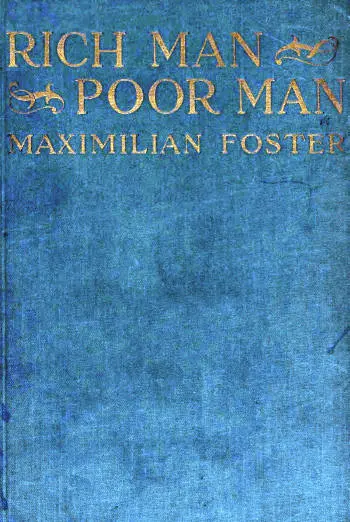
"Rich Man, Poor Man" by Maximilian Foster is a novel written in the early 20th century. The story explores themes of class, wealth, and personal connections, particularly focusing on the lives of Mr. Mapleson, a timid clerk in New York City, and Bab Wynne, a spirited young woman who is on the verge of discovering her true heritage. The interplay between these characters and their relationships will likely form a central part of the narrative as the plot unfolds. At the start of the novel, we meet Mr. Mapleson, an elderly clerk whose life appears mundane and lonely. On Christmas Eve, his character is established as he reflects on the loneliness and alienation he experiences, despite the joyful holiday spirit surrounding him. Meanwhile, the narrative shifts to Bab Wynne, who is depicted with a spirited demeanor that subtly suggests her yearning for a more exciting life, free from the confines of her boarding house existence. The initial chapters set the stage for a forthcoming transformation in their lives, hinting at the intertwining fates of the characters against the backdrop of societal expectations and personal dreams.
Introduction adapted from the source catalogue; source summaries may be automatically generated.
Free to read · English · 58,624 words · No account needed
MAKE TIME FOR A GOOD BOOK
On by default. Untick to stop anonymous reading totals. Each page counts after 10 seconds in view. How this works.
Anonymous counting is on unless you have switched it off.
David, too, had come down early. Since the beginning of the spring, the time when the Lloyds had moved out to their place on Long Island, he had had a room for himself at his grandfather's. Ordinarily the country appealed far more to David than the town, but of late, for various reasons, he seemed to have changed his preference. Bab found him now in the library, his chin upon his hands, a book opened on his knees. The scene with Beeston, an incident as astonishing as it was inexplicable, had left her uncomfortable; but at the sight of David all Bab's animation returned at a bound. Leaning over, she slipped the book away from him.
"Silly!"
"Oh, hello!"
His air as he looked up was bewildered, and again she laughed.
"You weren't reading; your book was upside down! A fine time to be
dreaming!"
"Not dreaming; I was thinking," he answered, and though a smile went with the words there was a note in his tone that instantly caught her attention.
"Why, David!" she murmured.
She came round in front of him as she spoke, and again, a second time that evening, her voice was slow with wonder.
"David, what's wrong?" asked Bab.
He shook his head.
"Nothing," he said. Then as he looked her over, from the crown of her soft brown hair to her little golden slippers, David's lips parted.
"Bab, you're lovely tonight!" he murmured. "That gown makes you more
than ever lovely!"
Bab dropped him a curtsy.
"Recognize it? It's the same rose gown you liked the other night!"
His eyes leaped to hers, a sudden look. A swift speech hovered on his lips, but before he could utter it Bab spoke again.
"Look, Davy, see this too!"
She had bent her head, her hands raised to play with something at her throat--a slender platinum thread from which hung a single pearl, pear-shaped and heavy. Intent on it she did not see the light that leaped into his eyes.
"Wonderful, isn't it!" she murmured, and held it out for him to see. Her face rapt, she looked down at the pearl again. In the hollow of her small pink palm the pearl lay like a dewdrop in the petal of a rose. Such a gem might well have graced a duchess.
"Grandfather gave it to me tonight," she said.
A little laugh, birdlike in its happiness, rippled from her. "What dears you all are! You're all wonderful! All my relatives are!" Then, hardly aware of what she did or what it would mean to him, this new-found cousin, Bab bent above him and laid her hand upon his cheek. The effect was instantaneous.
Your reading position is saved on this browser. Take it to another device with a library code. Reading pages adapt to text, rather than matching a printed edition.
BEHIND THE BOOK
This eBook is for the use of anyone anywhere in the United States and most other parts of the world at no cost and with almost no restrictions whatsoever. You may copy it, give it away or re-use it under the terms of the Project Gutenberg License included with this eBook or online at www.gutenberg.org. If you are not located in the United States, you will have to check the laws of the country where you are located before using this eBook. Read the source licence.
The original source file, including credits and licence, is retained by this library. Request an original-format copy at no charge. Please include the book title and Project Gutenberg identifier #46945.
KEEP YOUR CURIOSITY GOING
Coulson Kernahan

Maurice Baring
Frances Wright
Cécile Tormay

Frederic Jesup Stimson

W. H. P. (William Henry Pope) Jarvis