THE CLASSIC COLLECTION✦A dead man’s diaryCLASSIC FREE BOOKS
A dead man’s diary
Coulson Kernahan
THE CLASSIC COLLECTION · 1916
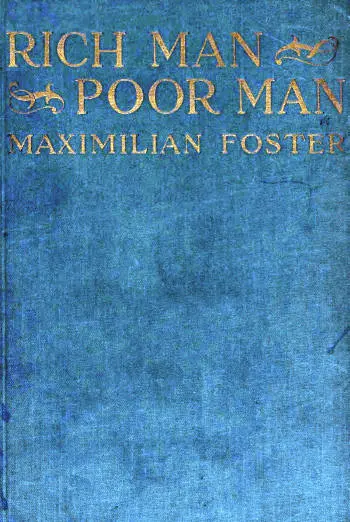
"Rich Man, Poor Man" by Maximilian Foster is a novel written in the early 20th century. The story explores themes of class, wealth, and personal connections, particularly focusing on the lives of Mr. Mapleson, a timid clerk in New York City, and Bab Wynne, a spirited young woman who is on the verge of discovering her true heritage. The interplay between these characters and their relationships will likely form a central part of the narrative as the plot unfolds. At the start of the novel, we meet Mr. Mapleson, an elderly clerk whose life appears mundane and lonely. On Christmas Eve, his character is established as he reflects on the loneliness and alienation he experiences, despite the joyful holiday spirit surrounding him. Meanwhile, the narrative shifts to Bab Wynne, who is depicted with a spirited demeanor that subtly suggests her yearning for a more exciting life, free from the confines of her boarding house existence. The initial chapters set the stage for a forthcoming transformation in their lives, hinting at the intertwining fates of the characters against the backdrop of societal expectations and personal dreams.
Introduction adapted from the source catalogue; source summaries may be automatically generated.
Free to read · English · 58,624 words · No account needed
MAKE TIME FOR A GOOD BOOK
On by default. Untick to stop anonymous reading totals. Each page counts after 10 seconds in view. How this works.
Anonymous counting is on unless you have switched it off.
The dinner was at eight. At half-past seven, long before the first of the guests possibly could arrive, Bab, dressed and ready, came pitapatting down the broad stairway in her high-heeled little gold slippers. On each cheek a spot of color burned, and Bab's blue eyes, too, gleamed brightly, dancing with suppressed excitement The house during the day had been transformed.
A huge bank of palms behind which the orchestra was to play half filled the hall, and everywhere there were flowers. Bab's breath came swiftly as she saw them. She had not expected anything like this, and, her hand on the stair rail, she halted, gazing about her, thrilled. Seeing her, Crabbe, the white-haired butler, came hurrying from the pantry. Like her, Crabbe, too, was filled with suppressed excitement.
"Mr. David's in the library, please," he announced; "he said I was to let you know." Then his taciturnity for once forgotten, Crabbe smiled broadly. "Wonderful, Miss Barbara, isn't it? The master's orders it was!"
"My grandfather's!" Bab had cried out in astonishment.
All along, it had seemed to her, Beeston had regarded her first dance only in gloomy tolerance, as if he wished the confusion and stir in his household at an end. But apparently she had been mistaken. Of a sudden that evening Beeston had appeared upon the scene, and after a look about him had demanded where the florist was. Then when the man had come running, Beeston, his brows twitching, more than ever grim, had rumbled an order at him. After that for an hour confusion had piled on itself in the household. Then as hurriedly it had passed, while out of it the house had risen transformed, beautified into a bower.
Bab listened intently to what old Crabbe was telling her. In the months she had lived there in that house she had grasped how many-sided was Beeston's dark and formidable nature. And yet, grim as it was and uncompromising, the man had about him, somewhere buried in his half-starved soul, a streak of sentimentalism impulsive and surprising. Of this his orders for the night's decoration seemed an evidence, and Bab still was looking about her in wonder, her appreciation growing, when at the door of the library Beeston himself appeared. Crabbe, breaking off in the midst of a sentence, sought to efface himself, but Beeston had seen him.
"Here, you, Crabbe!" he grunted.
Bearing on the arm of his young English valet, Cater, he came scuffling along the hall, his stick thwacking loudly on the floor, his brow darkened by an angry frown.
"Yes, sir," said Crabbe.
"My son-in-law, Mr. Lloyd--has he come in?" Beeston demanded abruptly.
Crabbe bent toward him deferentially.
Your reading position is saved on this browser. Take it to another device with a library code. Reading pages adapt to text, rather than matching a printed edition.
BEHIND THE BOOK
This eBook is for the use of anyone anywhere in the United States and most other parts of the world at no cost and with almost no restrictions whatsoever. You may copy it, give it away or re-use it under the terms of the Project Gutenberg License included with this eBook or online at www.gutenberg.org. If you are not located in the United States, you will have to check the laws of the country where you are located before using this eBook. Read the source licence.
The original source file, including credits and licence, is retained by this library. Request an original-format copy at no charge. Please include the book title and Project Gutenberg identifier #46945.
KEEP YOUR CURIOSITY GOING
Coulson Kernahan

Maurice Baring
Frances Wright
Cécile Tormay

Frederic Jesup Stimson

W. H. P. (William Henry Pope) Jarvis