THE CLASSIC COLLECTION✦A dead man’s diaryCLASSIC FREE BOOKS
A dead man’s diary
Coulson Kernahan
THE CLASSIC COLLECTION · 1916
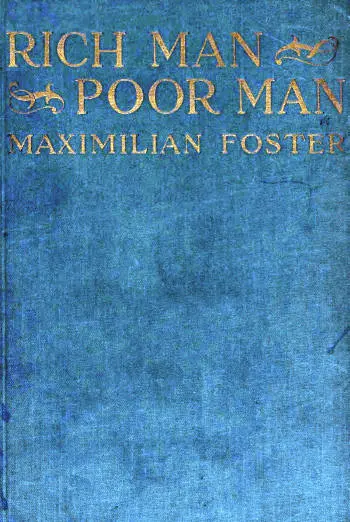
"Rich Man, Poor Man" by Maximilian Foster is a novel written in the early 20th century. The story explores themes of class, wealth, and personal connections, particularly focusing on the lives of Mr. Mapleson, a timid clerk in New York City, and Bab Wynne, a spirited young woman who is on the verge of discovering her true heritage. The interplay between these characters and their relationships will likely form a central part of the narrative as the plot unfolds. At the start of the novel, we meet Mr. Mapleson, an elderly clerk whose life appears mundane and lonely. On Christmas Eve, his character is established as he reflects on the loneliness and alienation he experiences, despite the joyful holiday spirit surrounding him. Meanwhile, the narrative shifts to Bab Wynne, who is depicted with a spirited demeanor that subtly suggests her yearning for a more exciting life, free from the confines of her boarding house existence. The initial chapters set the stage for a forthcoming transformation in their lives, hinting at the intertwining fates of the characters against the backdrop of societal expectations and personal dreams.
Introduction adapted from the source catalogue; source summaries may be automatically generated.
Free to read · English · 58,624 words · No account needed
MAKE TIME FOR A GOOD BOOK
On by default. Untick to stop anonymous reading totals. Each page counts after 10 seconds in view. How this works.
Anonymous counting is on unless you have switched it off.
The lawyers were to arrive at eight. Long before that hour came the conviction that something startling was in the wind had begun gradually to dawn in the minds of Mrs. Tilney's boarders. The dinner in itself was significant.
Usually under Mrs. Tilney's practiced eye the meal progressed with order, with propriety. Not so tonight In fact, the longer it continued, the more it seemed to take on the haste, not to say the impulsiveness, of an Alpine avalanche. Food, plates, silverware, all were hurled across the terrain of the tablecloth as if discharged upon it by some convulsion of Nature.
"Pardon!" said Miss Hultz, pausing abruptly in the middle of the repast. Then she grasped Lena, the waitress, firmly by the wrist. "You give me back that slaw!" directed Miss Hultz, her tone minatory. "The idea, the way you're snatching things before I'm finished!"
Lena valiantly defended herself.
"You needn't lay it on me, miss! There's folks callin' to see Mrs. Tilney at eight, I tell you, and I gotta git th' room cleared!"
"That's all right too!" retorted Miss Hultz. "Mrs. T. can ask in the whole street if she's a mind, only I'm not going to give up eating! Pass th' bread, Mr. Backus!"
Mr. Backus, the gentleman at Miss Hultz' left, was a plump, pasty young man who worked in Wall Street, and as he passed the bread he inquired:
"What's th' madam giving, a soirée?"
"Sworry" was what he called it, but Miss Hultz seemed to comprehend. Shrugging her shoulders, she raised at the same time her fine, expressive eyebrows.
"Search me," she murmured indolently.
The colloquy, it appeared, had not been lost on the others; neither had they missed the vague evidences that something unusual was happening in Mrs. Tilney's house.
Mr. Jessup spoke suddenly.
"Did you say someone was coming?" he abruptly asked. Then he added:
"Tonight?"
His tone was queer. His air, too, was equally curious; and Mrs. Jessup glanced up at him astonished.
"What's that?" she asked.
"I asked what was happening," said Mr. Jessup. Then, as no one seemed able to answer him, he looked round the table. "Where's Mr. Mapleson?" he suddenly inquired.
No one seemed able to tell him this.
"H'm!" said Mr. Jessup queerly, and picking up his knife and fork he silently went on eating. His face, however, still wore a strange expression.
Your reading position is saved on this browser. Take it to another device with a library code. Reading pages adapt to text, rather than matching a printed edition.
BEHIND THE BOOK
This eBook is for the use of anyone anywhere in the United States and most other parts of the world at no cost and with almost no restrictions whatsoever. You may copy it, give it away or re-use it under the terms of the Project Gutenberg License included with this eBook or online at www.gutenberg.org. If you are not located in the United States, you will have to check the laws of the country where you are located before using this eBook. Read the source licence.
The original source file, including credits and licence, is retained by this library. Request an original-format copy at no charge. Please include the book title and Project Gutenberg identifier #46945.
KEEP YOUR CURIOSITY GOING
Coulson Kernahan

Maurice Baring
Frances Wright
Cécile Tormay

Frederic Jesup Stimson

W. H. P. (William Henry Pope) Jarvis