THE CLASSIC COLLECTION✦An outlaw’s diary: the CommuneCLASSIC FREE BOOKS
An outlaw’s diary: the Commune
Cécile Tormay
THE CLASSIC COLLECTION · 1904
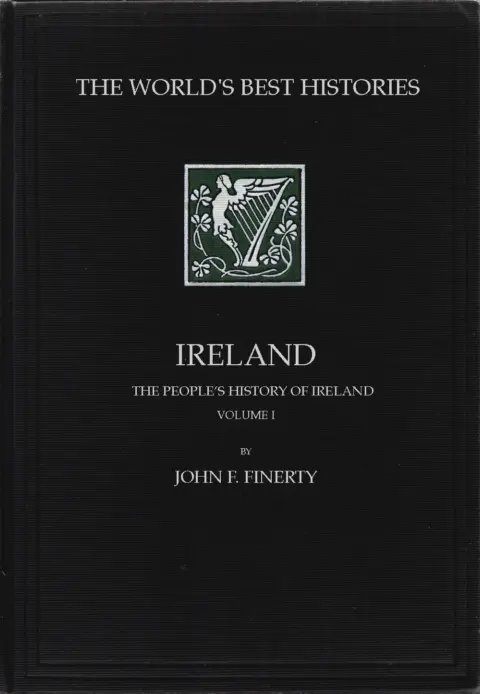
"Ireland: The People's History of Ireland, Volume 1" by John F. Finerty is a historical account written in the early 20th century. The text delves into the rich and complex history of Ireland, addressing the narrative from ancient times through significant events, such as the Reformation and invasions. It aims to provide a comprehensive understanding of the people and culture of Ireland, particularly for those unfamiliar with its past. At the start of the volume, Finerty discusses geographical and physical characteristics of Ireland, outlining its divisions into provinces and detailing the nation's fertile land and vibrant resources. The text emphasizes the importance of Ireland's history, noting the influence of its early inhabitants, the establishment of social structures, and the impact of various invasions, including the Danish and Norman incursions. Finerty aims to illuminate the contributions of the Irish people to the wider world and their enduring legacy, especially as it relates to the Irish diaspora in America.
Introduction adapted from the source catalogue; source summaries may be automatically generated.
Free to read · English · 128,763 words · No account needed
MAKE TIME FOR A GOOD BOOK
On by default. Untick to stop anonymous reading totals. Each page counts after 10 seconds in view. How this works.
Anonymous counting is on unless you have switched it off.
The existing division of the counties among the provinces is as follows: Munster comprises Clare, Cork, Kerry, Limerick, Tipperary, and Waterford; Ulster contains Antrim, Armagh, Cavan, Donegal, Down, Fermanagh, Derry, Monaghan, and Tyrone; Connaught has Galway, Leitrim, Mayo, Roscommon, and Sligo; Leinster comprises Carlow, Dublin, Kildare, Kilkenny, King’s County, Longford, Louth, Meath, Queen’s County, Westmeath, Wexford, and Wicklow.
The reader ought to know, however, that a majority of the Ulster and Connaught counties, and some in Leinster and Munster, did not recognize their English designations, or yield to English law, in any shape, until after the accession of James I to the British throne, in 1603. They were governed by their own princes, chiefs, and judges, under the old Brehon law, until “the Peace of Mellifont” in that year.
While the Irish counties differ very materially in extent, the provinces show the following proportions: Munster, 6,064,579 acres; Ulster, 5,475,458; Leinster, 4,871,118; Connaught, 4,392,043. The island is further subdivided into 316 baronies, 2,532 parishes, and 60,760 townlands, which average about 300 acres each. These are figures with which every student of Irish history should be familiar.
The country is, in general, very fertile, and grows cereals luxuriantly. The green crops, such as turnips, parsnips, cabbages, and kindred vegetables, are unexcelled. Its grazing capacity is very great, and Irish horses, homed cattle, sheep, and swine are among the choicest in Europe. Apples, pears, plums, and the smaller fruits grow abundantly in the mild, moist climate, but the Irish sun will not ripen peaches, grapes, or tomatoes, unless they are under glass. Poultry thrive wondrously, and there is a large exportation of fowl and eggs to the British markets. Irish butter ranks high also. Yet the country is poor, chiefly because of the scarcity of manufactures, and for other reasons that will be explained as we proceed.
The Irish climate is equable, but, in general, damp, when compared with that of America. Neither summer heat nor winter cold produces discomfort, except at very rare intervals. Violent storms are infrequent, except along the western coast, and electrical disturbances are much rarer than in our atmosphere. Only one cyclonic storm, that of January 6, 1839, visited Ireland during the nineteenth century, and it is known to this day as “the Big Wind.”
Your reading position is saved on this browser. Take it to another device with a library code. Reading pages adapt to text, rather than matching a printed edition.
BEHIND THE BOOK
This eBook is for the use of anyone anywhere in the United States and most other parts of the world at no cost and with almost no restrictions whatsoever. You may copy it, give it away or re-use it under the terms of the Project Gutenberg License included with this eBook or online at www.gutenberg.org. If you are not located in the United States, you will have to check the laws of the country where you are located before using this eBook. Read the source licence.
The original source file, including credits and licence, is retained by this library. Request an original-format copy at no charge. Please include the book title and Project Gutenberg identifier #67845.
KEEP YOUR CURIOSITY GOING
Cécile Tormay

Moritz Busch
John L. Ransom
Frances Wright
Cécile Tormay

Mabel Potter Daggett