THE CLASSIC COLLECTION✦An outlaw’s diary: the CommuneCLASSIC FREE BOOKS
An outlaw’s diary: the Commune
Cécile Tormay
THE CLASSIC COLLECTION · 1904
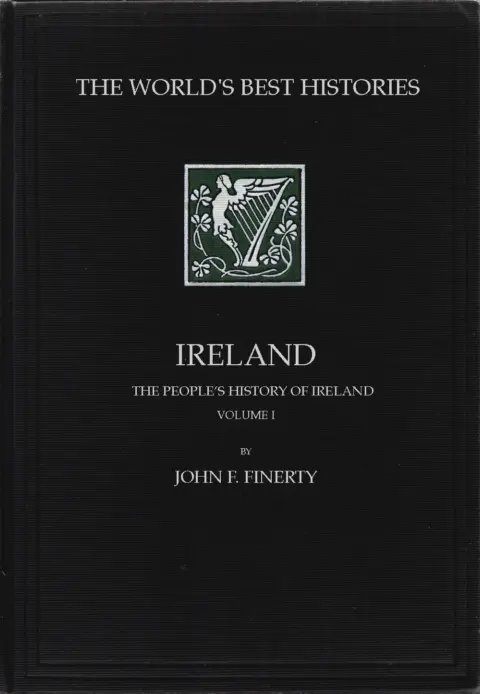
"Ireland: The People's History of Ireland, Volume 1" by John F. Finerty is a historical account written in the early 20th century. The text delves into the rich and complex history of Ireland, addressing the narrative from ancient times through significant events, such as the Reformation and invasions. It aims to provide a comprehensive understanding of the people and culture of Ireland, particularly for those unfamiliar with its past. At the start of the volume, Finerty discusses geographical and physical characteristics of Ireland, outlining its divisions into provinces and detailing the nation's fertile land and vibrant resources. The text emphasizes the importance of Ireland's history, noting the influence of its early inhabitants, the establishment of social structures, and the impact of various invasions, including the Danish and Norman incursions. Finerty aims to illuminate the contributions of the Irish people to the wider world and their enduring legacy, especially as it relates to the Irish diaspora in America.
Introduction adapted from the source catalogue; source summaries may be automatically generated.
Free to read · English · 128,763 words · No account needed
MAKE TIME FOR A GOOD BOOK
On by default. Untick to stop anonymous reading totals. Each page counts after 10 seconds in view. How this works.
Anonymous counting is on unless you have switched it off.
Charles I, of England, was a thorough Stuart in despotic character, wavering policy, base ingratitude, and fatuous obstinacy. His reign was to furnish to Ireland one of the most consummate tyrants and highway robbers that ever cursed a country with his cruelty and greed. This moral monster was the infamous Thomas Wentworth, Earl of Strafford, whose “tiger jaws” closed on the unfortunate country with the grip of a dragon. This dishonorable “noble” counseled King Charles to commit an act of moral delinquency which, in our day, would be rightly, if coarsely, called “a confidence game.” The Irish Catholics, in convention assembled, had drawn up a sort of Bill of Rights, which they urged the king to confirm, and agreed to pay into the royal treasury the sum of £100,000, which they could ill spare, to show their “loyalty,” and also, no doubt, to influence Charles, who, like all of his family, dearly loved money, to grant “the graces” prayed for. Strafford advised the base king to take the money, but to manage matters so that the concessions he had solemnly promised should never go into effect! And the ignominious Stuart actually acted on the advice of this ignoble mentor. And so the poor Irish Catholic “gentry” lost both their money and their “concessions.” When we read this chapter of Irish history, we are tempted to feel less sympathy for the fate of Charles I, who was afterward sold to Cromwell and the English Parliament by the Scottish mercenary army of General Leslie, with which the king had taken shelter, for back pay, amounting to £200,000 (see Sir Walter Scott’s “Tales of a Grandfather”). This miserable monarch so far degraded himself, further, as to cause writs for the election of a Parliament to grant the Catholic claims issued in Ireland, but privately instructed Lord Falkland to have the documents informally prepared, so that the election might prove invalid; and, meanwhile, his Lords Justices went on confiscating Catholic property in Ireland and persecuting prelates, priests, and people almost as savagely as in the worst days of Mountjoy and Chichester. Strafford came to Ireland as Lord Deputy in July, 1633, and entered at once on his “thorough” policy, as he called it; and, to prepare himself for the task he had set himself to perform, he through the “Lords Justices” extracted a “voluntary contribution” of £20,000 additional out of the terrorized Catholic “nobility and gentry” of the “sister” island, who, no doubt, wrung it, in turn, out of the sweat of the faces of their peasant retainers. But this was a mere bagatelle to what followed. He compelled Ireland to pay subsidies to the amount of £200,000 in 1634, and imposed £100,000 more in the succeeding year. He carried the war of wholesale confiscation into Connaught, and compelled grand juries, specially “packed” for the work, to give the King of England title to the three great counties of Mayo, Sligo, and Roscommon. The grand jury of Galway County refused to return such a verdict. They were summoned to the court of the Castle Chamber in Dublin, and sentenced to pay a fine of £4,000 each to the crown. The sheriff who empaneled them was fined £1,000. (McGee.) The very lawyers who pleaded for the actual proprietors were stripped of their gowns; “the sheriff died in prison and the work of spoliation proceeded.” (Ibid.) Similar, if not quite so general, robberies went on in Kildare, Kilkenny, Cork, and other counties. It must be said, however, that Strafford was, in a manner, impartial, and robbed, his master granting full approval, without distinction of creed. We can not help feeling thankful that the London companies which swallowed, in the reign of King James, the lands of Tyrone and Tyrconnel, were compelled by “Black Tom,” as the earl was nicknamed, to pay £70,000 “for the use of the king.” Out of all this plunder, and much more beside, Strafford was enabled to maintain in Ireland 10,000 infantry and 1,000 excellently equipped horse, “for the service of his royal master.” When this great robber visited London in 1639, fresh from his crimes in Ireland, the king, on whom so much ill-deserved sympathy has been wasted, assured him, in person, that his actions in Ireland had his (Charles’) “most cordial approval” (McGee), and even urged the earl to “proceed fearlessly in the same course.” To still further mark his approbation of Strafford’s policy, the king promoted him to the rank of Viceroy of Ireland. Strafford took the king at his word and did proceed so fearlessly in Ireland that his name of terror has been overshadowed in that country by only one other—that of Oliver Cromwell. Every Parliament called to meet by the tyrant in the conquered country—for so the earl regarded Ireland—was used simply as an instrument wherewith to extort still more tribute from the impoverished Irish people. This terrible despot, having accomplished his deadly mission in Ireland, returned to England and there, as before, became chief adviser to the weak and wicked monarch. He counseled the latter to ignore, as far as he dared, the action of Parliament, and was imprudent enough to remark that he (Strafford) had an army in Ireland to support the royal will. He was, soon afterward, impeached by the House of Commons, led by stern John Pym, for treasonable acts in seeking to change the constitutional form of the English Government. This method of procedure was abandoned, however, and Parliament passed a bill of attainder, to which the “false, fleeting, perjured” Charles, frightened by popular clamor, which accused himself of being implicated in a plot to admit soldiers to the Tower for the rescue of Strafford, gave the “royal assent.” The earl, on learning this, placed a hand upon his heart and exclaimed, “Put not your trust in Princes!” And thus the master he had but too faithfully served consigned Strafford to the block. He was beheaded on Tower Hill, May 12, 1641. When the hour of his similar doom approached, nearly eight years thereafter, Charles said that the only act of his reign he repented of was giving his assent to the bill which deprived his favorite minister of life.
Your reading position is saved on this browser. Take it to another device with a library code. Reading pages adapt to text, rather than matching a printed edition.
BEHIND THE BOOK
This eBook is for the use of anyone anywhere in the United States and most other parts of the world at no cost and with almost no restrictions whatsoever. You may copy it, give it away or re-use it under the terms of the Project Gutenberg License included with this eBook or online at www.gutenberg.org. If you are not located in the United States, you will have to check the laws of the country where you are located before using this eBook. Read the source licence.
The original source file, including credits and licence, is retained by this library. Request an original-format copy at no charge. Please include the book title and Project Gutenberg identifier #67845.
KEEP YOUR CURIOSITY GOING
Cécile Tormay

Moritz Busch
John L. Ransom
Frances Wright
Cécile Tormay

Mabel Potter Daggett