THE CLASSIC COLLECTION✦An outlaw’s diary: the CommuneCLASSIC FREE BOOKS
An outlaw’s diary: the Commune
Cécile Tormay
THE CLASSIC COLLECTION · 1908
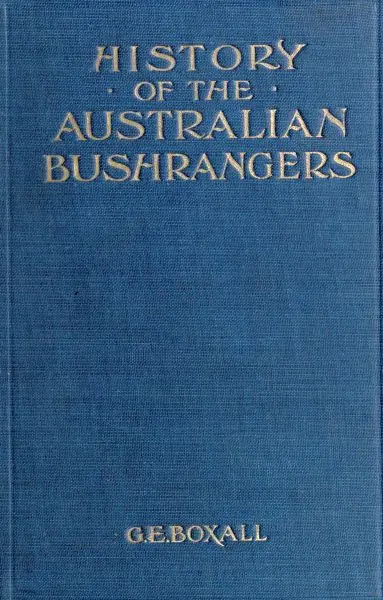
"History of the Australian Bushrangers" by George Boxall is a historical account written in the late 19th century. This work delves into the complex era of bushranging in Australia, examining the social and legal conditions that fostered the emergence of these outlaw groups. The narrative is rooted in the historical treatment of convicts and explores the motivations behind their descent into bushranging, shedding light on a significant period of Australian history. The opening of the text provides a foundational understanding of bushranging, highlighting its origins connected to the convict system in Australia. Boxall discusses how the harsh treatment and oppressive laws against convicts often pushed them to revolt against the system, leading many to take to the bush to escape their dire circumstances. He emphasizes that early bushrangers were often driven by desperation rather than inherent criminality and illustrates the grim realities they faced, including severe punitive measures like flogging. Boxall aims to present a comprehensive picture of bushranging and its implications for Australian society, suggesting that the bushrangers, despite their notorious actions, were products of their brutal environment.
Introduction adapted from the source catalogue; source summaries may be automatically generated.
Free to read · English · 150,077 words · No account needed
MAKE TIME FOR A GOOD BOOK
On by default. Untick to stop anonymous reading totals. Each page counts after 10 seconds in view. How this works.
Anonymous counting is on unless you have switched it off.
Pierce the Cannibal; A Terrible Journey; A Shocking Confession; Escapes from "the Western Hell"; The Ruffian Jefferies; Brady the Bushranger; Escapes from Macquarie Harbour; Sticks up the Town of Sorell; The Governor's Proclamation; Brady Laughs at it; The Fight with Colonel Balfour; Betrayed by a Comrade; Captured by John Batman; Sympathy at his Trial; End of the Epoch.
In a despatch to the Colonial Secretary in 1822, Lieutenant Governor Arthur said that bushranging had been "totally suppressed in Van Diemen's Land during the past three years," or since the breaking up of Howe's gang. But the happy conditions suggested by this report were not destined to last. There was still a number of runaways or bolters in the bush, but bushranging had by this time come to mean the commission of more serious crimes than petty larceny, and it was in this sense that the Governor made use of the term. We have, however, not yet arrived at the time when others, besides highwaymen, can be excluded. The next illustration is, perhaps, the most terrible of all the events connected with bushranging, although it concerns only the bushrangers themselves. On September 20th, 1822, Alexander Pierce, Bob Greenhill, Mathew Travers, Thomas Bodenham, Bill Cornelius or Kenelly, James Brown, John Mathers, and Alexander Dalton made their escape from the recently-founded penal station at Macquarie Harbour. According to Pierce's confession it appears that they "made it up for to take a boat" and proceed to Hobart Town. Greenhill being at work at the mines, "we had to call for him, he being a good navigator." Greenhill smashed up the miners' chests with an axe, and took all their provisions. "We then put out all the fires with buckets of water, so that the miners could not signal our escape; but, when we were a quarter of a mile out we saw fires all along the beach, so we could not have put them all out. We thought a boat would be despatched after us, so we went a little further and then landed. We knew it was no use trying to go by water, so we broke up the boat. We then proceeded to the side of the mountain right opposite the settlement. We were afraid that Dr. Spence or the Commandant would see us with the spy glass, the settlement being so plain to us. So we agreed to lie down until the sun went round. When the sun was behind the hill we went to the top, kindled a fire, and camped all night. Next morning we started again, and walked all day. Little Brown, who came back, and died in the hospital, was the worst walker of all. He was always behind, and kept cooeying. So we said we would leave him behind if he did not keep up. We kept off Gordon River for fear the soldiers might be after us. We travelled from daylight till dark night over very rough country for eight days. We were very weak for want of provisions. Our tinder got wet and we were very cold and hungry. Bill Cornelius said 'I'm so hungry I could eat a piece of a man.' The next morning there were four of us for a feast. Bob Greenhill said he had 'seen the like done before and it eat much like pork.' Mathers spoke out and said it would be murder; and perhaps then we could not eat it. 'I'll warrant you,' said Greenhill, 'I'll eat the first bit; but, you must all lend a hand, so that we'll all be equal in the crime.' We consulted about who should fall, and Greenhill said, 'Dalton, he volunteered to be a flogger. We will kill him.' We made a bit of a breakwind with boughs, and about three in the morning Dalton was asleep. Then Greenhill struck him on the head with an axe and he never spoke after. Greenhill called Travers, and he cut Dalton's throat to bleed him. Then we dragged him away a bit and cut him up. Travers and Greenhill put his heart and liver on the fire and ate them before they were right warm. The others refused to eat any that night, but the next morning it was cut up and divided and we all got our share. We started a little after sunrise. One man was appointed each day to walk ahead and make a road. He carried nothing but a tomahawk. The others carried the things. This morning Cornelius and Brown said they would go ahead together and carry the pots. We had not gone far when the leaders were missing. We went back to look for them, but could see no signs of them. We said, 'They will go back and hang us all,' but we thought they would not find the way, so we went on. We walked for four days through bad country, till we came to a big river. We thought it was the Gordon. We stopped a day and two nights looking for a place to cross. We felled trees, but the stream was too strong and carried them away. Travers and Bodenham couldn't swim, but at last we got over and cut a pole thirty or forty feet long and reached it across, where there was a rock jutting out into the river, and pulled them across. We got up the hill with great difficulty, it was so steep. The ground was very barren on the other side, and covered with scrub. We were very weak and hungry. A consultation was held as to who should be the next victim. Bodenham did not know anything about it, and it was resolved to kill him. Me and Mathers went to gather wood, Travers saying, 'You'll hear it directly.' About two minutes after Mathers said, 'He's done; Greenhill hit him with the axe and Travers cut his throat.' Greenhill took Bodenham's shoes and put them on, for his own were very bad. We ate only the heart and liver that night. Next day we camped and dried the meat. We travelled on for three days, and saw many emus and kangaroos, but could not catch them. Mathers and me went away together, and Mathers said, 'Let us go on by ourselves. You see what kind of a cove Greenhill is. He'd kill his own father before he'd fast for a day.' We travelled on for two days more. We boiled a piece of the meat, and it made Mathers so sick that he began to vomit. Greenhill started up and hit him on the forehead with the axe. Although he was cut, he was still stronger than Greenhill. He called out, 'Pierce, will you see me murdered?' and rushed at Greenhill. He took the axe from him and threw it to me. We walked on till night, and then Travers and Greenhill collared Mathers and got him down. They gave him half an hour to pray. When the half-hour was up Mathers handed the prayer-book to me and Greenhill killed him. When crossing the second tier of mountains Travers got his foot stung by an insect and it swelled up. On the other side we got to a big river and camped for two nights. Me and Greenhill swam across and cut a long wattle, and pulled Travers over as he could not swim. Here the country got better and we travelled well for two days. Then Travers' foot got black, and he said he couldn't go any further. He asked us to leave him to die in peace. When we were a little way away, Greenhill said: 'Pierce, it's no use for to be detained any longer; let's serve him like the rest.' I replied, 'I'll have no hand in it.' When we went back Travers was lying on his back asleep. It was about two o'clock in the day. Greenhill lifted the axe and hit him on the head, and then cut his throat. We crossed the third tier of mountains and got into fine country, the grass being very long. Greenhill began to fret, and said he would never reach a post. I watched Greenhill for two nights and thought that he eyed me more than usual. He always carried the axe and kept it under his head when lying down. At length, just before daybreak, Greenhill dozed off to sleep, and I snatched the axe and killed him with a blow. I took a thigh and one arm and travelled on four more days until the last was eaten. I then walked for two days with nothing to eat I took off my belt meaning to hang myself, but took another turn and travelled on till I came to a fire with some pieces of kangaroo and opossum lying beside it. I ate as much as I could and carried the rest away. Some days later I came to a marsh. I saw a duck with ten young ones. I jumped into the water and the duck flew off, while the little ones dived. Two of them came up close to my legs and I caught one in each hand. Next day I saw a large mountain, and thought it was Table Mountain. Then I came to a big river and travelled down it for two days. I came on a flock of sheep belonging to Tom Triffet, at the falls, and caught a lamb. While I was eating it the shepherd came up and said he would tell. I threatened to shoot him. Then he got friendly and took me to the hut, and fed me for three days. Then he told me that the master was coming up and I'd have to go. I went to another hut and stayed three weeks. Then I fell in with Davis and Cheetham and they said I could join them. They had 126 newly-marked sheep and said they were going to select some more. I shepherded the mob while they were away. They continued robbing the stations until the soldiers came. The soldiers captured the gang except Bill Davis, who snatched up his gun and ran away, Corporal Kelly followed and called on him to stop. As he kept on Kelly fired and missed, when Davis turned round and said, 'I've got you now.' Kelly cried out 'Murder,' and the other soldiers ran forward and fired. Davis was wounded in the arm and gave in."
Your reading position is saved on this browser. Take it to another device with a library code. Reading pages adapt to text, rather than matching a printed edition.
BEHIND THE BOOK
This eBook is for the use of anyone anywhere in the United States and most other parts of the world at no cost and with almost no restrictions whatsoever. You may copy it, give it away or re-use it under the terms of the Project Gutenberg License included with this eBook or online at www.gutenberg.org. If you are not located in the United States, you will have to check the laws of the country where you are located before using this eBook. Read the source licence.
The original source file, including credits and licence, is retained by this library. Request an original-format copy at no charge. Please include the book title and Project Gutenberg identifier #58799.
KEEP YOUR CURIOSITY GOING
Cécile Tormay

Moritz Busch
John L. Ransom
Frances Wright
Cécile Tormay

Mabel Potter Daggett