THE CLASSIC COLLECTION✦An outlaw’s diary: the CommuneCLASSIC FREE BOOKS
An outlaw’s diary: the Commune
Cécile Tormay
THE CLASSIC COLLECTION · 1908
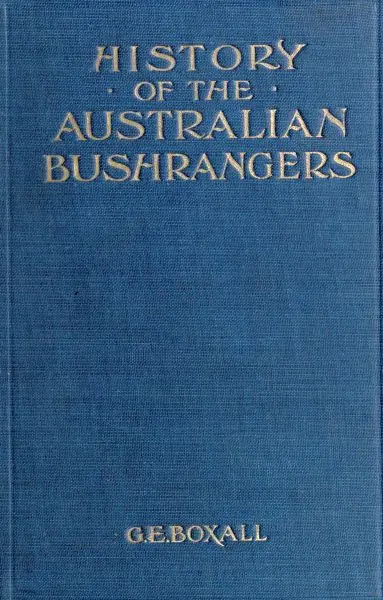
"History of the Australian Bushrangers" by George Boxall is a historical account written in the late 19th century. This work delves into the complex era of bushranging in Australia, examining the social and legal conditions that fostered the emergence of these outlaw groups. The narrative is rooted in the historical treatment of convicts and explores the motivations behind their descent into bushranging, shedding light on a significant period of Australian history. The opening of the text provides a foundational understanding of bushranging, highlighting its origins connected to the convict system in Australia. Boxall discusses how the harsh treatment and oppressive laws against convicts often pushed them to revolt against the system, leading many to take to the bush to escape their dire circumstances. He emphasizes that early bushrangers were often driven by desperation rather than inherent criminality and illustrates the grim realities they faced, including severe punitive measures like flogging. Boxall aims to present a comprehensive picture of bushranging and its implications for Australian society, suggesting that the bushrangers, despite their notorious actions, were products of their brutal environment.
Introduction adapted from the source catalogue; source summaries may be automatically generated.
Free to read · English · 150,077 words · No account needed
MAKE TIME FOR A GOOD BOOK
On by default. Untick to stop anonymous reading totals. Each page counts after 10 seconds in view. How this works.
Anonymous counting is on unless you have switched it off.
Bushrangers and Pirates; Capture of H.M. Brig Cyprus by Bushrangers; A Piratical Voyage; Stealing the Schooners Edward and Waterwitch; Mutiny of Prisoners on H.M. Brig Governor Phillip at Norfolk Island; The Trial of the Mutineers at Sydney; How Captain Boyle Recaptured the Vessel.
The connection between bushranging and piracy may not at first seem very apparent, but the bushrangers stole more than one vessel, and started a career of crime on the high seas instead of on the high roads, and our story of the bushrangers would be incomplete were no reference made to thefts of vessels and boats, and their use as vehicles for robbery. It is not very surprising that so many convicts made their escapes from Macquarie Harbour, Port Arthur, and Norfolk Island, in whale boats which they stole, long as the voyages made were. The whale boat has played a conspicuous part in Australian exploration. Lieutenant Bass made his memorable voyage from Sydney, when he discovered the straits which bear his name, in a whale boat in which he started to explore the coast. Flinders and many others also made long voyages and many discoveries in whale boats; for the Pacific, the largest of the oceans of the world, however stormy it may be at times, fully deserves the name bestowed upon it by early navigators, for several months in the year. Hence a voyage in a whale boat from Norfolk Island or from Van Diemen's Land is not so dangerous as the distance to be travelled might suggest. We know that even now it is no very uncommon occurrence for convicts to steal boats and sail or row from New Caledonia to some part of the coast of Australia, and we know also that the Australians have at times entertained no very friendly feelings towards France for persisting in maintaining a penal settlement so near their shores. It is not with the capture of whale or ships' boats that we now have to deal, but with the seizure of larger vessels. In August, 1829, the Government brig Cyprus, commanded by Captain Harris, left Hobart Town for Macquarie Harbour with thirty-three convicts on board, the crew consisting of twelve, including the Commander, and there were also some soldiers under the command of Lieutenant Carew, and some women and children, numbering eleven altogether. The brig put into Research Bay on the south coast of the island, and anchored, but a gale arose and the brig was driven from her moorings, and lost her anchor and cable. She put back to Hobart Town, obtained a fresh anchor, and started again. On reaching Research Bay she was again anchored, and the anchor and cable lost a few days before were recovered. At about six in the evening, while the men on board were having supper, Lieutenant Carew, Dr. Williams, a soldier, and Popjoy (the coxswain), with two or three convicts, started in the long boat to catch some fish. They had not rowed very far when they heard shouting and some shots on board the brig, and Lieutenant Carew exclaimed: "Oh, my God! The convicts have taken the ship." They pulled back as rapidly as possible, and Carew tried to climb on board, but was threatened with a musket by one of the prisoners. When the trigger was pulled the gun flashed in the pan and Carew again tried to get on board, but was pushed back into the boat. He then asked the convicts who were clustered round to give him his wife and children, and these were passed into the boat. Mrs. Williams, her servant, and the wives of a couple of the soldiers were also put into the boat. It appears that when the long boat left there were only Captain Harris and two soldiers on deck, the rest of the crew and passengers being below at supper. Suddenly five heavily ironed prisoners made a rush, and knocked down the captain and two sentinels. Others rushed to the hatchway, and began to put the hatches on, when the soldiers and crew, fearing that they would be suffocated, agreed to surrender. They gave up their arms, and as they came on deck they were conducted to one of the boats, in which several prisoners who had had their irons taken off seated themselves at the oars. Popjoy was compelled to go on board, as it was said his services would be required for navigating the vessel. Then the captain, the lieutenant, and doctor, with the women, the soldiers, and the crew, were rowed to an island in the bay and landed. Seventeen of the prisoners were also landed, the mutineers only numbering sixteen of those on board. The boats were hoisted in, the sails lowered, and the ship got under way. But as she started Popjoy jumped overboard and swam ashore. As the brig went down the bay the men on board shouted "Hooray! the ship's our own, hooray!" The captain and others landed on the little island in the bay, with no means of reaching the mainland, suffered great hardships. For several days they had nothing but a few mussels and other shellfish which they picked up on the beach to eat. Popjoy, however, came to the rescue. He made a sort of canoe of bark and sticks, and sailed out into the open sea. Here he saw the barque Zebra, and made signals. He was taken on board, and a couple of boats with provisions were sent in to feed and bring off the fugitives. For these services Popjoy, who was a convict with a ticket-of-leave, received a free pardon. What became of the brig and its crew of mutineers was for some time a matter of conjecture. It was reported in Australia that she had been seen at Valparaiso. Then it was said that she had foundered at sea owing to the ignorance of navigation of the men on board. However, in the beginning of March, 1830, the Committee of Supercargoes at Canton were informed that four persons with a ship's boat had landed. They represented themselves as part of the crew of an English merchant vessel which had been wrecked on the China coast. The story was not believed, as no such wreck had been reported, but enquiries were made and a man calling himself William Waldon, of Sunderland, was examined. He represented himself as having been the commander of the brig Edward, which left the London Docks in December, 1828, bound for Rio de Janeiro. On his return voyage he had called at Valparaiso and the Sandwich Islands. At Japan his ship had been fired at from a battery and much damaged. He sailed for Manilla, but had to abandon the brig near Formosa, as she leaked heavily. He and the fifteen men of the crew had taken to the boats and all had been lost except himself and the three men with him. The boat bore the name:--"The Edward, of London--William Waldon." Although some doubt was still entertained the Committee arranged for the four men to be taken to England in the Charles Grant. A few days after their departure another boat with three men on board arrived at Whampoa. The leader, Huntley, represented himself as having been wrecked in the brig Edward, but said the captain's name was James Wilson and that she had left London in June, 1828, and gone straight to the Cape. When near the Ladrones he had quarrelled with Wilson and run away. As the two accounts differed so materially the former suspicions were revived and Huntley was sent home under arrest in the Killie Castle, and on the arrival of the Charles Grant in London the three men on board, John Anderson, Alexander Telford, and Charles Williams, were arrested. Waldon had landed at Margate, and thus escaped for the time, but was arrested in London a week or two later. The four men were brought up at the Thames Police Court on September 22nd, 1830, for examination, and were charged with piracy. The principal witness was Popjoy, who had returned to England on receiving his pardon. He identified Huntley as George James Davis, a convict who had been sentenced to death at Hobart Town for highway robbery, but whose sentence had been commuted to penal servitude at Macquarie Harbour. Davis was one of the leaders of the mutiny when the brig Cyprus had been seized. Alexander Stevenson, sometimes called Stevie, who now appeared as Telford, had been convicted in Glasgow in 1824, and had been reconvicted for bushranging in Australia. John Beveridge, alias Anderson, was sentenced in Perth in 1821, and was further sentenced in Hobart Town to seven years' penal servitude for having robbed Mr. Peachey. William Watts, alias George Williams, was known in Van Diemen's Land as Wattle. He ran away from a chain gang and took to the bush. He had stabbed one man and had attempted to shoot another. Of Swallow, Popjoy knew nothing, but had seen him on board the Cyprus before the mutiny. The boat which had been sent from China to England was identified by Popjoy as one belonging to the Cyprus, the names Edward and Waldon, having been painted on it since the mutiny. The prisoners were tried at the Admiralty Court, on November 4th. Popjoy, under cross-examination, admitted that he had been transported to New South Wales for horse-stealing. He had been assigned to a master, and had run away. He had received two hundred lashes at Botany Bay, but this was "only a few." He had been sent to Van Diemen's Land, and had been charged with highway robbery near Hobart Town, but had "proved his innocence." He had "buried in oblivion all the charges" made against him in the colony. He went to Macquarie Harbour in the Cyprus as a volunteer. Dr. Williams, surgeon, said that he was on board the Cyprus when she was seized by convicts in Research Bay, in August, 1829. He had gone in the long boat with Lieutenant Carew to fish, and when the boat was some distance from the brig they had heard a clashing of arms. They put back, and Lieutenant Carew tried to get on board but was repulsed, and a pistol was snapped at him. He then asked for his sword, but a convict named Ferguson, who had it, refused to give it up. When Mrs. Carew and Mrs. Williams were put into the boat, Swallow came to the side of the vessel and said, "Gentlemen, you see I'm a pressed man. I am unarmed, and surrounded by armed men." In consequence of this testimony, Swallow, alias Waldon, was acquitted, but was subsequently sent to the colony to serve his original sentence. Davis, alias Huntley, Watts, alias Williams, Stevenson, alias Telford, and Beveridge, alias Anderson, were sentenced to death.
Your reading position is saved on this browser. Take it to another device with a library code. Reading pages adapt to text, rather than matching a printed edition.
BEHIND THE BOOK
This eBook is for the use of anyone anywhere in the United States and most other parts of the world at no cost and with almost no restrictions whatsoever. You may copy it, give it away or re-use it under the terms of the Project Gutenberg License included with this eBook or online at www.gutenberg.org. If you are not located in the United States, you will have to check the laws of the country where you are located before using this eBook. Read the source licence.
The original source file, including credits and licence, is retained by this library. Request an original-format copy at no charge. Please include the book title and Project Gutenberg identifier #58799.
KEEP YOUR CURIOSITY GOING
Cécile Tormay

Moritz Busch
John L. Ransom
Frances Wright
Cécile Tormay

Mabel Potter Daggett