THE CLASSIC COLLECTION✦An outlaw’s diary: the CommuneCLASSIC FREE BOOKS
An outlaw’s diary: the Commune
Cécile Tormay
THE CLASSIC COLLECTION · 1908
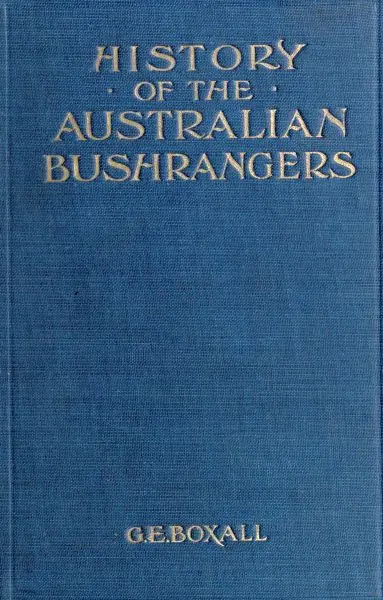
"History of the Australian Bushrangers" by George Boxall is a historical account written in the late 19th century. This work delves into the complex era of bushranging in Australia, examining the social and legal conditions that fostered the emergence of these outlaw groups. The narrative is rooted in the historical treatment of convicts and explores the motivations behind their descent into bushranging, shedding light on a significant period of Australian history. The opening of the text provides a foundational understanding of bushranging, highlighting its origins connected to the convict system in Australia. Boxall discusses how the harsh treatment and oppressive laws against convicts often pushed them to revolt against the system, leading many to take to the bush to escape their dire circumstances. He emphasizes that early bushrangers were often driven by desperation rather than inherent criminality and illustrates the grim realities they faced, including severe punitive measures like flogging. Boxall aims to present a comprehensive picture of bushranging and its implications for Australian society, suggesting that the bushrangers, despite their notorious actions, were products of their brutal environment.
Introduction adapted from the source catalogue; source summaries may be automatically generated.
Free to read · English · 150,077 words · No account needed
MAKE TIME FOR A GOOD BOOK
On by default. Untick to stop anonymous reading totals. Each page counts after 10 seconds in view. How this works.
Anonymous counting is on unless you have switched it off.
Racers as Mounts for the Bushrangers; The Shooting of Lowry; The ---- Bushrangers visit Bathurst; They hold the Town of Canowindra for Three Days; Burke Shot by Mr. Keightley; Female Bushrangers; Death of O'Meally at Goimbla; A Newspaper Man and his Wife Stuck Up; Lively Times During the Christmas Holidays.
The chief necessity for a successful career as a bushranger was a good supply of racehorses, and hence it was almost impossible for any person to keep a really valuable saddle horse during this "Reign of Terror," as the newspapers of the district called it. Special raids were organised by members of the gang to obtain a supply of horses, and the bushrangers frequently travelled upwards of two hundred miles to secure a horse which had made a name on the turf. Thus on May 18th Harry Wilson, trainer for Mr. Allen Hancock, was exercising the racer Jacky Morgan, within sight of the police station in the town of Burrowa, when Gilbert rode up and said "I want that horse." "For God's sake don't ruin me, Johnny," exclaimed the jockey. "Hold your---- jaw and get off," was the reply, as the bushranger brought out his ready revolver. The robber specially cautioned Wilson not to "sing out" so that the police could hear, or he'd "be sorry for it," and in spite of his remonstrances the jockey was compelled to dismount and walk home to inform his employer. Mr. Hancock told him to saddle another horse. He then took down his gun carefully, wiped and loaded it, and went away swearing that he would never return until he had recovered Jacky Morgan.
Gilbert also took a racer out of Mr. Hammond's stables at Junee. He stole the racers Chinaman and Micky Hunter from the stables of Mr. J. Roberts at Currawang. When leading Micky Hunter out of his stall Gilbert patted his neck and said, "You're the---- cove we want." Old Comus and several other horses were taken out of Mr. Iceley's stables at Coombing. The old horse had had a good career on the course, and had been set apart for stud purposes, and Mr. Iceley offered a large sum to the bushrangers to leave him alone, but Gilbert said, "There's a good gallop in him yet," and led him away. But the bushrangers did not devote their whole time to capturing race horses. Robberies on the highway continued as frequently as usual. The police, however, were not idle. In August, Sergeant James Stephenson, Constable Herbst, and Detectives Camphin and Saunderson traced Lowry to Thomas Vardy's, Limerick Races Hotel, at Cook's Vale Creek. When asked if there were any lodgers there, Vardy pointed to the door of one of the bedrooms and replied, "Yes, one there." Stephenson knocked at the door, but there was no reply. The sergeant knocked again and called out "Come out Lowry, it's no use." As no answer was returned, the sergeant placed his shoulder against the door, and tried to burst it open. Immediately some one inside fired a pistol, the bullet from which passed through the panel of the door between the two policemen. Stephenson again called on Lowry to come out or it would be "the worse for him," and the bushranger replied "I'll fight you, you----. All of you." He again fired through the door, and the bullet wounded one of the police horses tied to the verandah. Sergeant Stephenson called on Vardy to take the horses to a safe place, and when they were out of sight, he and Constable Herbst again tried to force the door by leaning their combined weight against it. Suddenly Lowry threw the door open, and the sergeant almost fell into the room. The bushranger shouted "Come on, you---- I'll fight you fair," and fired. The police returned the fire. Stephenson, who was inside the room, took steady aim and pulled the trigger. The robber fell, saying "I'm done for! Where's the priest?" The police arrested Vardy and all his family, as well as a man named Larry Cummins, who was in the room with Lowry, but who took no part in the fight. When this ceremony had been completed, Lowry was made as comfortable as circumstances permitted while a messenger was sent off to the nearest town for a doctor. For more than an hour detective Camphin sat by Lowry's side reading prayers from a Catholic prayer-book which Mrs. Vardy lent him. The robber gradually grew weaker and died. His last words were, "Tell 'em I died game." The police borrowed a cart from a farmer who lived about a mile away from the hotel, and the body was placed in it, covered with a blanket, and started away for Goulburn, where this extraordinary funeral cortège arrived the next day, Sunday, just as the people were leaving the churches.
Your reading position is saved on this browser. Take it to another device with a library code. Reading pages adapt to text, rather than matching a printed edition.
BEHIND THE BOOK
This eBook is for the use of anyone anywhere in the United States and most other parts of the world at no cost and with almost no restrictions whatsoever. You may copy it, give it away or re-use it under the terms of the Project Gutenberg License included with this eBook or online at www.gutenberg.org. If you are not located in the United States, you will have to check the laws of the country where you are located before using this eBook. Read the source licence.
The original source file, including credits and licence, is retained by this library. Request an original-format copy at no charge. Please include the book title and Project Gutenberg identifier #58799.
KEEP YOUR CURIOSITY GOING
Cécile Tormay

Moritz Busch
John L. Ransom
Frances Wright
Cécile Tormay

Mabel Potter Daggett