THE CLASSIC COLLECTION✦An outlaw’s diary: the CommuneCLASSIC FREE BOOKS
An outlaw’s diary: the Commune
Cécile Tormay
THE CLASSIC COLLECTION · 1908
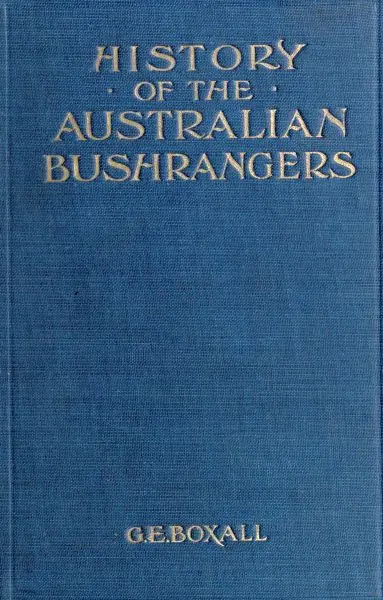
"History of the Australian Bushrangers" by George Boxall is a historical account written in the late 19th century. This work delves into the complex era of bushranging in Australia, examining the social and legal conditions that fostered the emergence of these outlaw groups. The narrative is rooted in the historical treatment of convicts and explores the motivations behind their descent into bushranging, shedding light on a significant period of Australian history. The opening of the text provides a foundational understanding of bushranging, highlighting its origins connected to the convict system in Australia. Boxall discusses how the harsh treatment and oppressive laws against convicts often pushed them to revolt against the system, leading many to take to the bush to escape their dire circumstances. He emphasizes that early bushrangers were often driven by desperation rather than inherent criminality and illustrates the grim realities they faced, including severe punitive measures like flogging. Boxall aims to present a comprehensive picture of bushranging and its implications for Australian society, suggesting that the bushrangers, despite their notorious actions, were products of their brutal environment.
Introduction adapted from the source catalogue; source summaries may be automatically generated.
Free to read · English · 150,077 words · No account needed
MAKE TIME FOR A GOOD BOOK
On by default. Untick to stop anonymous reading totals. Each page counts after 10 seconds in view. How this works.
Anonymous counting is on unless you have switched it off.
Captain Moonlite; The "Reverend Gentleman" Robs the Bank, and Nearly Makes his Escape; He Breaks out of Ballarat Gaol; He Becomes a Reformed Character; He Sticks Up Wantabadgery Station; A Desperate Battle with the Police; Moonlite is Captured; His Young Companions in Crime; Sentenced to Death; The Wild Horse Hunters Turn Bushrangers; An Abortive Attempt to Rob a Bank.
From about June, 1872, to April, 1878, or nearly six years, Australia was free from bushrangers. With the exception of the two or three robberies in the far west of New South Wales, so far west as to be almost out of the colony, the roads were safe; travellers journeyed in all directions without fear of molestation; and the public, as well as the authorities, began to congratulate themselves once more on having at length definitely stamped out the scourge of bushranging. Since the shooting of Thunderbolt and the capture of Power, there had been no sign of a recrudescence of the crime, and bushranging was beginning to be referred to as belonging to a past age. But this peaceful condition of the country was not always to continue. The old leaven of convictism so frequently referred to, had not as yet been so completely eliminated as the public and the authorities hoped and believed. Reports began to spread about in 1878 that robberies had been committed in the neighbourhood where Power had so long set the police at defiance, and shortly afterwards the name of Ned Kelly began to be associated with them. Ned Kelly is still spoken of as the last of the bushrangers, and as his death closes the story, it may be as well to deal with some other bushrangers who finished their careers before "the gentleman of the Strathbogie Ranges." The most remarkable of these was George Scott, alias Captain Moonlite. His story belongs partly to the former era, but I have reserved it in order to make it more complete than would have been possible had it been divided. Scott was born in the North of Ireland, and emigrated to Victoria. He went to the diggings at a time when agents from New Zealand were endeavouring to raise a corps in Victoria for service against the Maoris. He enlisted and fought through the war in 1861-65, being wounded in the leg. On his return to Victoria he showed a strong desire to join the Church, and as he was well educated and a good speaker he was appointed lay reader at Bacchus Marsh, with a view to his being ordained a minister of the Church of England, when the Bishop of Melbourne should consider him worthy of the charge. His duties as lay reader were to travel round the settlement, to read prayers and conduct services, his head quarters being in the town at Mount Egerton. His chief friends here were the manager of the Union Bank and the schoolmaster. He soon came to be respected and liked in the district. One night, however, a masked man walked into the living apartments connected with the bank and ordered the manager, who was alone, to bail up. The manager recognised the voice and asked him whether he thought this a suitable practical joke for a clergyman. Scott replied that he would soon find it was no joke. He threatened to shoot the manager unless he surrendered and did as he was ordered. He then gagged the manager, took him across the street to the school-house, and compelled him to sign the following statement:--"Captain Moonlite has stuck me up and robbed the bank." There was no one at the school-house, Scott having apparently timed his visit when he knew the school would be empty. Leaving the paper on the desk in the school-house, Scott took the manager back to the bank, tied him hand and foot, and then took about £1000 worth in notes and coin from the safe. The schoolmaster found the paper lying on the desk when he went to open the school next morning, and at first did not know what to make of it. He handed it to the police, who, on going to the bank, found the manager gagged and tied. Having heard his story the police considered it absurd, and arrested the manager and schoolmaster as having been jointly concerned in the crime. The idea of charging the minister, as Scott was generally called, appeared to be preposterous, the more especially as Scott was very active in trying to find incriminating evidence against his quondam friends. Being intimately acquainted with the lives led by the two men, he was able to supply the police with several facts, true or false, which were considered strong circumstantial proofs of their guilt. They were committed for trial, Scott being bound over as a witness against them. He did not wait for the trial, however, but went to Sydney, where he put up at one of the leading hotels and spent money lavishly. He represented himself as a wealthy visitor to the colonies travelling for pleasure, and spoke of his intention to visit some of the South Sea Islands. For this purpose he purchased a yacht, for which he paid partly in cash and partly by a cheque for £150. This cheque was returned by the bank on which it was drawn as valueless, and the man who had sold him the yacht immediately communicated with the police. Scott had already set sail, but the police followed him in a steam launch and caught him just outside the Heads. He was brought back and tried for fraud and was sent to gaol for eighteen months.
Your reading position is saved on this browser. Take it to another device with a library code. Reading pages adapt to text, rather than matching a printed edition.
BEHIND THE BOOK
This eBook is for the use of anyone anywhere in the United States and most other parts of the world at no cost and with almost no restrictions whatsoever. You may copy it, give it away or re-use it under the terms of the Project Gutenberg License included with this eBook or online at www.gutenberg.org. If you are not located in the United States, you will have to check the laws of the country where you are located before using this eBook. Read the source licence.
The original source file, including credits and licence, is retained by this library. Request an original-format copy at no charge. Please include the book title and Project Gutenberg identifier #58799.
KEEP YOUR CURIOSITY GOING
Cécile Tormay

Moritz Busch
John L. Ransom
Frances Wright
Cécile Tormay

Mabel Potter Daggett