THE CLASSIC COLLECTION✦An outlaw’s diary: the CommuneCLASSIC FREE BOOKS
An outlaw’s diary: the Commune
Cécile Tormay
THE CLASSIC COLLECTION · 1908
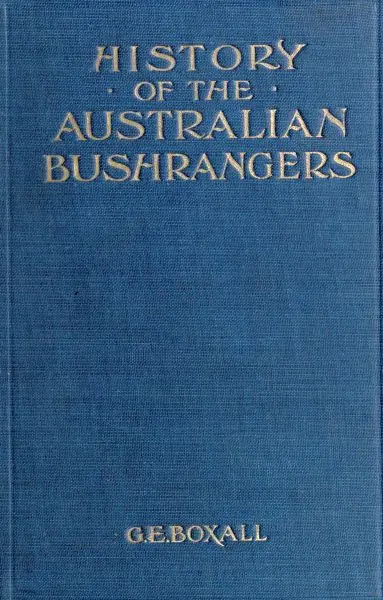
"History of the Australian Bushrangers" by George Boxall is a historical account written in the late 19th century. This work delves into the complex era of bushranging in Australia, examining the social and legal conditions that fostered the emergence of these outlaw groups. The narrative is rooted in the historical treatment of convicts and explores the motivations behind their descent into bushranging, shedding light on a significant period of Australian history. The opening of the text provides a foundational understanding of bushranging, highlighting its origins connected to the convict system in Australia. Boxall discusses how the harsh treatment and oppressive laws against convicts often pushed them to revolt against the system, leading many to take to the bush to escape their dire circumstances. He emphasizes that early bushrangers were often driven by desperation rather than inherent criminality and illustrates the grim realities they faced, including severe punitive measures like flogging. Boxall aims to present a comprehensive picture of bushranging and its implications for Australian society, suggesting that the bushrangers, despite their notorious actions, were products of their brutal environment.
Introduction adapted from the source catalogue; source summaries may be automatically generated.
Free to read · English · 150,077 words · No account needed
MAKE TIME FOR A GOOD BOOK
On by default. Untick to stop anonymous reading totals. Each page counts after 10 seconds in view. How this works.
Anonymous counting is on unless you have switched it off.
The New Bushranging Era; Fallacy of the Belief that Highwaymen Rob the Rich to Enrich the Poor; The Cattle Duffers and Horse Planters; The Riot at the Lambing Flat; Frank Gardiner, the Butcher; Charged with Obtaining Beasts "on the cross," he Abandons his Butcher's Shop; Efforts to Establish a Reign of Terror in the District; A Letter from Gardiner; The Great Escort Robbery.
Hitherto the bushrangers of Australia had been, as the records prove, drawn almost exclusively from the ranks of those who "left their country for their country's good." Those who took the most prominent share in the next outbreak of the "epidemic" were generally native-born Australians. The sequelæ of the old disease were not yet worked out. As I have already said, there were numbers of the "old hands" scattered about the bush, some of them with farms or small cattle or sheep stations of their own who lived fairly honest and useful lives, but even among these, whatever may have been their station in life, there was the old antagonism to "law and order," and their sympathies were all with those who waged war against society. Their children imbibed these ideas, and wherever there was a neighbourhood where this class had collected together, morality was at a low ebb. But besides these settlers there were numbers of nomads, men who worked as shepherds, bullock-drivers, splitters and fencers, shearers, and so on, and as long as the old hands formed a majority, or even a considerable minority of the bush-workers, it was the custom for men to work from shearing to shearing, or from harvest to harvest, and then "draw their cheques," make for the nearest public-house, and indulge in a wild spree, until they were informed by the landlord that the money which their cheques represented had been expended. There were some respectable inns in the back country where they got fair value for their money perhaps, but in too many of these "bush pubs," as they were called, the object of the landlord was to "lamb them down" in the shortest possible space of time. Perhaps when the character of the liquor sold in these places is taken into consideration, this method of cheating was not altogether an evil. It prevented the bushmen from swallowing such large quantities of the deleterious stuff as they might have done if they had received full value for their money. During the time when they were working their principal mode of amusing themselves was telling or listening to tales of the convict days. Some of these stories told by the old hands were of too revolting a character for repetition, but no doubt they were founded on fact. Nothing is too horrible or obscene to have been true of the convict times. The stories, however, which appear to have had the greatest influence over the minds of a certain class of Australian youth were those told of the bushrangers. In these stories there was of course much that was apocryphal, to put it mildly. Many of the exploits of the historic highwaymen of old were told as actual facts in the careers of some Australian bushrangers, with just sufficient variation to adapt them to local purposes. One of the ancient superstitions introduced into Australia by these story-tellers was that the highwaymen robbed the rich to give to the poor. I have no desire to raise any doubts as to the generosity and benevolence of Robin Hood, but I can find no evidence of any such beneficence on the part of any of the Australian bushrangers. No doubt they got their money easily, and spent it recklessly. But they did not pause to enquire whether the person they robbed was rich or poor. There was no such class distinction in the colonies as there is and always has been in England; no very poor class not worth robbing and ready to bless anyone who gave them a penny, and no hereditary wealthy class. Every one had to work somehow for his living, though some were more successful in piling up wealth than others. But the poor had opportunities which have never existed in England, and if they neglected them it was more or less their own fault if they were poor. The tendency in Australia, as elsewhere, is to build up a wealthy class, but this class did not exist in convict times, and is only just beginning to appear now. The Australian bushranger in fact had to obtain money or go under. He was compelled to share his ill-gotten gains with those who supplied him with food and information. He was a mark for the blackmailer, and he was compelled to find money to bribe those who were in a position to lead the troops or the police to his hiding place. But the convict bushranger was not so well off as the native-born bushranger. There was a strong feeling of camaraderie, an esprit de corps, among the convicts, which tended to prevent numbers of men from betraying him, even though they received no bribes. But the new bushranger was more fortunate than the old one. He had his parents, his brothers and sisters, his cousins and his aunts and uncles, who sympathised with him for family and other reasons, and who were bound to help him. It was from among these relatives and friends that the "bush telegraphs," who informed the bushranger of the whereabouts of the police, were drawn, and it soon became apparent that if bushranging was to be abolished these sympathisers and "bush telegraphs" must be dealt with.
Your reading position is saved on this browser. Take it to another device with a library code. Reading pages adapt to text, rather than matching a printed edition.
BEHIND THE BOOK
This eBook is for the use of anyone anywhere in the United States and most other parts of the world at no cost and with almost no restrictions whatsoever. You may copy it, give it away or re-use it under the terms of the Project Gutenberg License included with this eBook or online at www.gutenberg.org. If you are not located in the United States, you will have to check the laws of the country where you are located before using this eBook. Read the source licence.
The original source file, including credits and licence, is retained by this library. Request an original-format copy at no charge. Please include the book title and Project Gutenberg identifier #58799.
KEEP YOUR CURIOSITY GOING
Cécile Tormay

Moritz Busch
John L. Ransom
Frances Wright
Cécile Tormay

Mabel Potter Daggett