THE CLASSIC COLLECTION✦An outlaw’s diary: the CommuneCLASSIC FREE BOOKS
An outlaw’s diary: the Commune
Cécile Tormay
THE CLASSIC COLLECTION · 1908
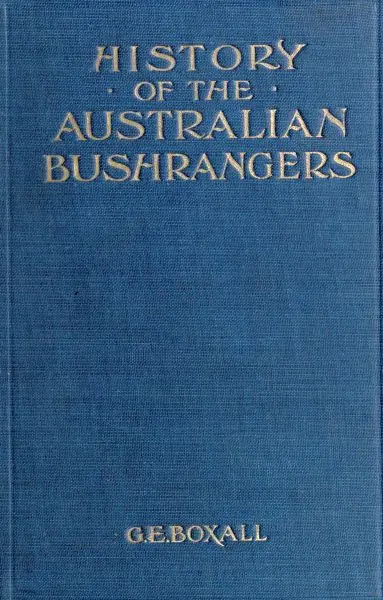
"History of the Australian Bushrangers" by George Boxall is a historical account written in the late 19th century. This work delves into the complex era of bushranging in Australia, examining the social and legal conditions that fostered the emergence of these outlaw groups. The narrative is rooted in the historical treatment of convicts and explores the motivations behind their descent into bushranging, shedding light on a significant period of Australian history. The opening of the text provides a foundational understanding of bushranging, highlighting its origins connected to the convict system in Australia. Boxall discusses how the harsh treatment and oppressive laws against convicts often pushed them to revolt against the system, leading many to take to the bush to escape their dire circumstances. He emphasizes that early bushrangers were often driven by desperation rather than inherent criminality and illustrates the grim realities they faced, including severe punitive measures like flogging. Boxall aims to present a comprehensive picture of bushranging and its implications for Australian society, suggesting that the bushrangers, despite their notorious actions, were products of their brutal environment.
Introduction adapted from the source catalogue; source summaries may be automatically generated.
Free to read · English · 150,077 words · No account needed
MAKE TIME FOR A GOOD BOOK
On by default. Untick to stop anonymous reading totals. Each page counts after 10 seconds in view. How this works.
Anonymous counting is on unless you have switched it off.
The confession may here be very much abridged, as the account he gives of his acts is very rambling. About 250 sheep, a gold watch, two silver watches, and a number of other articles were found at the camp. Several of the gang were hung and the others sentenced to long terms of penal servitude. Pierce denied having taken any active share in the robberies, and as he was merely found in charge of the stolen, or as he euphoniously calls them "the selected," sheep, he was sent back to Macquarie Harbour to be dealt with as a bolter. On November 16th, 1823, Pierce again absconded from Macquarie Harbour in company with Thomas Cox. On the 21st, as the schooner Waterloo was sailing down the harbour, a man was observed standing on the shore and signalling with smoke from a fire. These signals had also been observed from the settlement, and a boat was despatched from there. The boat sent by Mr. Lucas from the schooner reached the place at the same time that the boat from the settlement arrived. On landing it was found that Alexander Pierce had made the fire, and he was immediately arrested by Lieutenant Cuthertson. Pierce said that he had killed Cox and eaten part of the body. He volunteered to show where the remainder was. On going to the place it was found that all the fleshy parts had been cut away, leaving the bones and viscera. It is impossible that Pierce could have committed this murder through want of food. He had only been away from the settlement for a few days, and some flour, a piece of pork, some bread, and a few fish, which Pierce and Cox had stolen from a party of hunters, were found at the camp. Before his trial Pierce said that he had been so horror-struck at the crime he had committed that, when he signalled, he did not know what he was about. After his conviction, however, he said that man's flesh was delicious; far better than fish or pork; and his craving for it had led him to induce Cox to abscond so that he might kill and eat him. He was wearing the clothes of the murdered man when he was captured. Although he made no secret of his cannibalism after his conviction, but boasted about it, he is believed to have very much toned down his share in the murders perpetrated during that terrible journey across the Western Tiers. Possibly Greenhill may have been the moving spirit in these atrocities, but we have the fact that Pierce was the sole survivor, and he gives but a very brief account of the last struggle between himself and Greenhill. We can conceive something of it. Pierce was the larger and stronger man, but Greenhill was active though small, and moreover he carried the axe. The two men probably pretended to be actuated by friendly feelings towards each other; each one endeavouring to put the other off his guard; but each knew that the other was only watching for an opportunity to slay him. For two days they walked side by side at a safe distance apart; each afraid to let the other get behind him, or near enough to spring upon him; and each was also afraid to allow the other to get out of sight because of the certainty that he would merely dog him through the scrub until an opportunity to strike occurred. For two nights they sat facing each other, a short distance apart, each afraid to go to sleep or to allow the other to go out of sight. If one rose up the other started to his feet immediately. Every slight movement of one caused the other to be on the alert. The tension must have been fearful. At length, when the second night was drawing to a close, Greenhill could bear up no longer. He dozed, and Pierce sprang on him at once. That is something like the tradition handed down among the "old hands," who knew nothing of Pierce's confession, but who had heard the tale from companions of the cannibal himself. There was a time when it was frequently told round the camp fire in rough, coarse language, plentifully intermingled with profanity, but the old hands have died out and it is heard no longer. Pierce, the cannibal, has been almost forgotten, and yet the story has its moral. It affords us an example of the terrible depths of degradation to which men can be reduced by brutal treatment, and it is not good that the story of Alexander Pierce should be forgotten as long as any remains of the old prison discipline which produced such men continues to exist, either in Australia or in any other civilised country.
Your reading position is saved on this browser. Take it to another device with a library code. Reading pages adapt to text, rather than matching a printed edition.
BEHIND THE BOOK
This eBook is for the use of anyone anywhere in the United States and most other parts of the world at no cost and with almost no restrictions whatsoever. You may copy it, give it away or re-use it under the terms of the Project Gutenberg License included with this eBook or online at www.gutenberg.org. If you are not located in the United States, you will have to check the laws of the country where you are located before using this eBook. Read the source licence.
The original source file, including credits and licence, is retained by this library. Request an original-format copy at no charge. Please include the book title and Project Gutenberg identifier #58799.
KEEP YOUR CURIOSITY GOING
Cécile Tormay

Moritz Busch
John L. Ransom
Frances Wright
Cécile Tormay

Mabel Potter Daggett