THE CLASSIC COLLECTION✦An outlaw’s diary: the CommuneCLASSIC FREE BOOKS
An outlaw’s diary: the Commune
Cécile Tormay
THE CLASSIC COLLECTION · 1908
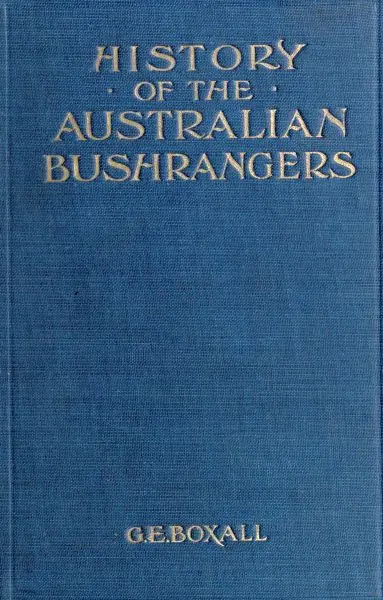
"History of the Australian Bushrangers" by George Boxall is a historical account written in the late 19th century. This work delves into the complex era of bushranging in Australia, examining the social and legal conditions that fostered the emergence of these outlaw groups. The narrative is rooted in the historical treatment of convicts and explores the motivations behind their descent into bushranging, shedding light on a significant period of Australian history. The opening of the text provides a foundational understanding of bushranging, highlighting its origins connected to the convict system in Australia. Boxall discusses how the harsh treatment and oppressive laws against convicts often pushed them to revolt against the system, leading many to take to the bush to escape their dire circumstances. He emphasizes that early bushrangers were often driven by desperation rather than inherent criminality and illustrates the grim realities they faced, including severe punitive measures like flogging. Boxall aims to present a comprehensive picture of bushranging and its implications for Australian society, suggesting that the bushrangers, despite their notorious actions, were products of their brutal environment.
Introduction adapted from the source catalogue; source summaries may be automatically generated.
Free to read · English · 150,077 words · No account needed
MAKE TIME FOR A GOOD BOOK
On by default. Untick to stop anonymous reading totals. Each page counts after 10 seconds in view. How this works.
Anonymous counting is on unless you have switched it off.
Norfolk Island: Its Founding as a Penal Station; The Terrible Discipline in Norfolk Island; An Attempt to Ameliorate it; Its Failure; The Rigorous Treatment Restored; The Consequent Riot; Jackey Jackey's Revenge; An Unparalleled Tale of Ferocity; The Soldiers Overawe the Rioters; Thirteen Condemned to the Gallows; Jackey Jackey's Remarkable Letter; The End of Several Notorious Bushrangers.
Norfolk Island, lying some seven hundred miles from the coast of New South Wales, was first utilised as a penal settlement in 1788, when it was decided that convicts who committed crimes in New South Wales should be transported there for more severe treatment. Early in the nineteenth century a rumour spread in Australia that Napoleon the First intended to fit out a fleet to search for Admiral La Perouse, and to found colonies in the south seas. The truth of this rumour seemed to be affirmed by the activity of the naval authorities in New South Wales. Settlements were made at Port Essington in the north, King George's Sound in the west, and the Derwent River in Van Diemen's Land. Shortly afterwards, in 1805, the prisoners were removed from Norfolk Island to Hobart Town, apparently for the purpose of strengthening the settlement in Van Diemen's Land. When Van Diemen's Land was made independent of New South Wales, in 1825, Norfolk Island was again made a penal settlement of the mother colony, and it so continued until transportation to New South Wales ceased in 1842, when Norfolk Island was transferred from the jurisdiction of the Governor of New South Wales to that of the Governor of Van Diemen's Land. The treatment of the prisoners in the island was rigorous in the extreme, and may aptly be described as savage. When the enquiry of the House of Commons, by Select Committee, was made in 1837 and 1838, as to the condition of the convicts in the penal settlements, the few particulars published about the evidence in the English newspapers had some effect on public opinion, and in 1841, Captain Maconochie, one of the witnesses examined who said that the prisoners might be governed with less harshness, was appointed Commandant of Norfolk Island, with instructions to try the mild reformatory treatment he advocated. Captain Maconochie and his supporters in England do not seem to have realised that human beings who have been under demoralising influences until they have reached the adult age, and their characters have become set, are not amenable to civilising influences. These should have been applied during the impressionable years, and the younger they are applied the more successful they are likely to be. This fact, however, does not yet seem to be known sufficiently in England, and therefore small blame attaches to Captain Maconochie, if he was not aware of it sixty years ago. The new Commandant abolished Sunday labour as a punishment, shortened the hours of labour on week-days, and granted holidays for good behaviour. He allowed the men to build huts and to cultivate small patches of ground, and thus to provide themselves with vegetables. He also gave them tins to cook in, and served out rations individually, instead of giving the rations out in messes. It does not appear that the prisoners became unduly riotous under this treatment, and no such murders as were mentioned by Judge Forbes and other witnesses before the Select Committee, in which men had killed their mates for the purpose of being hung "out of their misery," took place. One of these murders which occurred only a short time before Captain Maconochie took charge may be mentioned here. Stephen Brennan was sent to the island for bushranging. He was tried there and found guilty of the murder of another convict. There had been no quarrel between the two men, who were as friendly as circumstances permitted under the rigid discipline, nevertheless Brennan suddenly struck Patrick Lynch a blow with a stone-breaker's hammer, and then stabbed him with a knife. The murder was committed avowedly so that the perpetrator might be hung, and thus escape the harsh treatment he was subjected to, and it is not improbable that it was committed with the consent of the victim, for although there is no evidence of this in this case, it is well known that men had actually drawn lots in Norfolk Island, to decide which should murder the other and get hung for the crime. In place of crimes like this, there were quarrels and some rowdyism, but this was sufficient for the opponents of the new experiment. Paragraphs appeared in the Van Diemen's Land papers jeering at the "plum pudding policy" of Captain Maconochie, and asserting that Queen's birthday rejoicings only led to increased disturbances in Norfolk Island. Whether these paragraphs were inspired by the prison officials, who feared that if Captain Maconochie was successful there would be an end of "the system" which they had organised, it is impossible to say, but after a three years' trial, the mild treatment was pronounced a failure, and Major Joseph Childs was appointed to supersede Captain Maconochie, as Commandant of Norfolk Island, and reached the island on February 8th, 1844. Major Childs landed with orders to revert to the old rigid discipline, and he appears to have endeavoured to carry these orders out to the best of his ability. The hours of work were increased, holidays abolished, and all the old punishments re-established. These alterations were made very gradually. As I have already said, the prisoners had been supplied with rations individually, and were allowed their own pots and pans to cook them with. In July, 1846, new regulations were issued that rations were to be issued in bulk and to be cooked in the general mess house. The rations on the island had always been notoriously bad, and consisted generally of salt beef and maize. Captain Maconochie had allowed them to grow potatoes. The privilege was abolished on January 1st, 1846, when the garden plots were taken from the prisoners and laid waste. The prisoners refused in a body to go to work unless some equivalent was given them for their potatoes, and half a pint of peas daily was promised them. After three days the peas in stock gave out, and another mutiny took place. Numbers of the prisoners were flogged, but this did not quieten them, and Commandant Childs promised them that eight ounces of flour should be served out in place of the peas. In a few days, however, the stock of flour was exhausted, and then, "incredible as it may appear, an old order, issued in May, 1846, after the gardens were taken away from the prisoners, stating that two pounds of sweet potatoes should form part of the daily rations, was posted up; although it must have been known to the superintendent that it would be utterly impossible to serve out a single ounce of sweet potatoes a man daily for a week."[35] The sweet potatoes in the island had been grown by the men, and had been most unjustly taken away from them when their gardens were laid waste. It was well-known that there were no sweet potatoes in the island, and the reposting of this old and obsolete regulation was an outrage on truth. The prisoners were not slow in showing their indignation, nor very particular as to the words they used in expressing it. And it was during the dissatisfaction consequent on the posting of this old order, that the new regulation calling in the kettles on July the 1st was posted. When the order was first posted, the majority of the prisoners were in their cells. A few were attending school, and among these was Jackey Jackey, who was doing a sum when the soldiers came round to collect the kettles. Hearing the rattling of the tins, he raised himself up, pencil in hand, and listened intently. Then he pushed the slate away, folded his arms, and sat as if in deep thought. The other prisoners present were whispering together, trying to conjecture what was being done with their tins. On the following morning, July 2nd, the prisoners were all mustered for prayers, a practice only recently introduced along with the repressive measures of the new superintendent. During the service the men kept whispering and paid but little attention. Several times order was called for, but this only produced a lull for a time. When the prayers were over the men marched to the Lumber Yard and read the new regulation. Then they found that their tins had already been removed. There was silence for a moment, followed by fierce and eager whisperings, then the whole body marched to the Barrack Yard, broke open the store, and took out all the tins they could find. They marched back to the Lumber Yard, and then Jackey Jackey made the following speech:--"Now, men, I've made up my mind to bear this oppression no longer; but, remember, I'm going to the gallows. If any man funks let him stand out. Those who wish to follow me, come on."
Your reading position is saved on this browser. Take it to another device with a library code. Reading pages adapt to text, rather than matching a printed edition.
BEHIND THE BOOK
This eBook is for the use of anyone anywhere in the United States and most other parts of the world at no cost and with almost no restrictions whatsoever. You may copy it, give it away or re-use it under the terms of the Project Gutenberg License included with this eBook or online at www.gutenberg.org. If you are not located in the United States, you will have to check the laws of the country where you are located before using this eBook. Read the source licence.
The original source file, including credits and licence, is retained by this library. Request an original-format copy at no charge. Please include the book title and Project Gutenberg identifier #58799.
KEEP YOUR CURIOSITY GOING
Cécile Tormay

Moritz Busch
John L. Ransom
Frances Wright
Cécile Tormay

Mabel Potter Daggett