THE CLASSIC COLLECTION✦An outlaw’s diary: the CommuneCLASSIC FREE BOOKS
An outlaw’s diary: the Commune
Cécile Tormay
THE CLASSIC COLLECTION · 1908
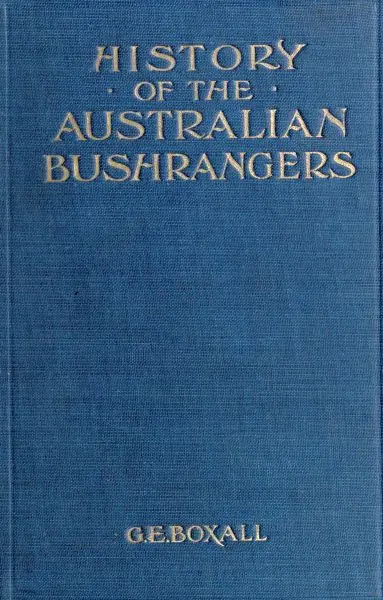
"History of the Australian Bushrangers" by George Boxall is a historical account written in the late 19th century. This work delves into the complex era of bushranging in Australia, examining the social and legal conditions that fostered the emergence of these outlaw groups. The narrative is rooted in the historical treatment of convicts and explores the motivations behind their descent into bushranging, shedding light on a significant period of Australian history. The opening of the text provides a foundational understanding of bushranging, highlighting its origins connected to the convict system in Australia. Boxall discusses how the harsh treatment and oppressive laws against convicts often pushed them to revolt against the system, leading many to take to the bush to escape their dire circumstances. He emphasizes that early bushrangers were often driven by desperation rather than inherent criminality and illustrates the grim realities they faced, including severe punitive measures like flogging. Boxall aims to present a comprehensive picture of bushranging and its implications for Australian society, suggesting that the bushrangers, despite their notorious actions, were products of their brutal environment.
Introduction adapted from the source catalogue; source summaries may be automatically generated.
Free to read · English · 150,077 words · No account needed
MAKE TIME FOR A GOOD BOOK
On by default. Untick to stop anonymous reading totals. Each page counts after 10 seconds in view. How this works.
Anonymous counting is on unless you have switched it off.
Meeting the Gold Escort; Murder of Constable Nelson; A Brush with the Police; Attempt to Stick Up the Araluen Gold Escort; Death of Constable Kelly and Pluck of Constable Burns; Sir Frederick Pottinger Resigns; Death of Ben Hall; Sketch of his Life; Death of Johnny Gilbert; Record of John Dunn and the Gang; Capture and Trial of Johnny Dunn; His Execution; Fate of the Chief Members of the Gardiner Gang.
Like many other young men I spent a few years on the diggings in hopes of making "my pile," and early in 1865 I, in company with two mates, left the King's Plains, where we had just finished working out a hole, and started for Apple Tree Flat, near Mudgee, where a rush had recently taken place. We were well mounted, and had a packhorse which "belonged to the firm." One of my mates was a keen sportsman, and his horse had won several prizes at those country meetings known as "Publican's Races," from the fact that they were organised by a publican and held near his house for obvious business reasons. We were travelling steadily along the road leading from Blaney to Bathurst, near Back Creek, when we saw the Government Gold Escort in the distance. The police authorities of New South Wales had learned a lesson from the Great Escort Robbery of 1862, and no longer mounted all the police on the coach or drag in which the gold was conveyed to Sydney. At the place we had arrived at the road, a chain and a half wide (99 feet), had been cleared through a stretch of heavy forest timber. It ran as straight as possible as far as the eye could reach, and was bordered on either side by a dense growth of timber and scrub rising to a height of from 200 to 300 feet like a wall of greenery. In the centre of the roadway was a metalled or gravelled road about fifteen feet wide. The remainder on either side was graded to near the timber line, where a small cutting to carry off surface water was made. We rode on the soft grassy side slopes and left the metalled or gravelled road for vehicles. It was in the centre of this gorge in the forest that we first sighted the escort. First rode a single trooper; at fifty yards distance came two more; then, at about the same distance, came the escort cart, drawn by four horses, the driver and another policeman sitting on the front seat, while a third trooper sat behind. A mounted trooper also rode one on each side of the cart. Fifty yards further back were two more troopers, while the rear was brought up by another single trooper. The troopers had their carbines ready in their hands, the butts resting on their thighs. When the leading trooper came within hail of us, he cried "Halt," and raised his rifle. We halted. The two troopers behind him came forward at a rapid pace until they were near enough to support him, if necessary. The cart stopped, and the other troopers gathered round it ready to defend it. The sergeant in charge inquired what our names were, where we were going, and what was our business. We told him. He said our horses were superior to those usually ridden by diggers. We replied that we didn't care about riding old screws. He asked whether the two guns we carried were loaded. We informed him that one was loaded with shot in case we came across a duck or a pigeon. He told us to sit up straight and follow him. Then he motioned to the two troopers just behind him. He led the way while the troopers followed behind us. We all kept to the side of the road; the cart having been drawn up on the other side. The other troopers sat on their horses, carbine in hand, as we passed. It was a most impressive show of force out there in the bush. The sergeant and two troopers conducted us for about a hundred yards past the cart and then pulled up. The sergeant said it was difficult to tell what men were by their appearance. He advised us to be very careful, and asked if we had any gold or money with us. We told him that we had been at Lambing Flat, and knew what the state of the country was. We did not feel disposed to carry gold or very much money with us while there were banks in every town. He said we were right and wished us good day after telling us to ride straight on and not attempt to turn back. We laughed and said we were travelling in the opposite direction and had no desire to turn back. In talking the matter over in our camp that night we decided that great as the improvement in the escort service had been it would not be impossible to rob the escort again. If, for instance, we had been part of a gang of bushrangers, sent to draw the attention of the police to us, while another portion of the gang had been hidden in the scrub, opposite where the cart stood, the troopers might have been shot down almost without a chance of defending themselves. However, the escort protection seems to have been sufficient, as it was not robbed again, although one or two attempts were made in other districts.
Your reading position is saved on this browser. Take it to another device with a library code. Reading pages adapt to text, rather than matching a printed edition.
BEHIND THE BOOK
This eBook is for the use of anyone anywhere in the United States and most other parts of the world at no cost and with almost no restrictions whatsoever. You may copy it, give it away or re-use it under the terms of the Project Gutenberg License included with this eBook or online at www.gutenberg.org. If you are not located in the United States, you will have to check the laws of the country where you are located before using this eBook. Read the source licence.
The original source file, including credits and licence, is retained by this library. Request an original-format copy at no charge. Please include the book title and Project Gutenberg identifier #58799.
KEEP YOUR CURIOSITY GOING
Cécile Tormay

Moritz Busch
John L. Ransom
Frances Wright
Cécile Tormay

Mabel Potter Daggett