THE CLASSIC COLLECTION✦An outlaw’s diary: the CommuneCLASSIC FREE BOOKS
An outlaw’s diary: the Commune
Cécile Tormay
THE CLASSIC COLLECTION · 1908
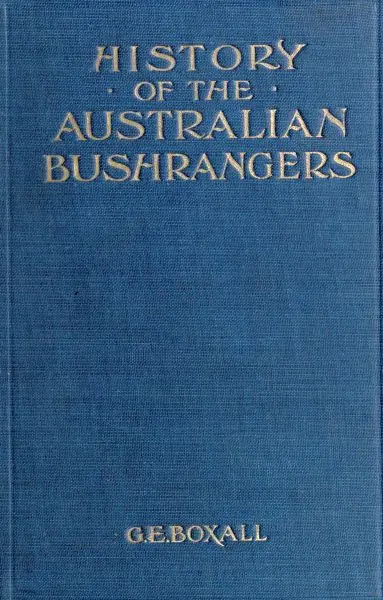
"History of the Australian Bushrangers" by George Boxall is a historical account written in the late 19th century. This work delves into the complex era of bushranging in Australia, examining the social and legal conditions that fostered the emergence of these outlaw groups. The narrative is rooted in the historical treatment of convicts and explores the motivations behind their descent into bushranging, shedding light on a significant period of Australian history. The opening of the text provides a foundational understanding of bushranging, highlighting its origins connected to the convict system in Australia. Boxall discusses how the harsh treatment and oppressive laws against convicts often pushed them to revolt against the system, leading many to take to the bush to escape their dire circumstances. He emphasizes that early bushrangers were often driven by desperation rather than inherent criminality and illustrates the grim realities they faced, including severe punitive measures like flogging. Boxall aims to present a comprehensive picture of bushranging and its implications for Australian society, suggesting that the bushrangers, despite their notorious actions, were products of their brutal environment.
Introduction adapted from the source catalogue; source summaries may be automatically generated.
Free to read · English · 150,077 words · No account needed
MAKE TIME FOR A GOOD BOOK
On by default. Untick to stop anonymous reading totals. Each page counts after 10 seconds in view. How this works.
Anonymous counting is on unless you have switched it off.
This report covers only a portion of the time during which the war lasted, but it sufficiently indicates the character of the war. When the blacks attacked the cottages, or huts as they are called in Australia, of shepherds, sawyers, splitters, and other workers, they were frequently successful, but were generally repulsed when they attacked the residences or houses of the employers. The manner in which the blacks fought struck terror into the hearts of the settlers. No one was safe. At any time, day or night, a party of blacks might sneak up and, with wild yells, spear men, women, and children, old or young, without warning. Their patience in tracking was indomitable. If they could not effect a surprise they withdrew and waited. No doubt, as the advocates of the cause of the blacks said, the number of whites killed was much smaller than the number of blacks slaughtered by bushrangers in their lust and by settlers and soldiers in defence. But it can be readily understood that the position of the settlers was intolerable. Every attempt to drive the blacks away from the settled districts only provoked fresh reprisals, while every attempt at conciliation failed until at length it became evident that the blacks must be either captured or killed. It was therefore with a view to saving the blacks that Lieutenant Governor Arthur urged the necessity of capturing and removing them from Van Diemen's Land to one of the Islands in Bass's Straits. In his despatches to Governor Bourke and to the Colonial Office, he said that it was utterly impossible to restrain the colonists, so great was their rage at the murders of peaceful citizens, and especially of women and children, while all his attempts at conciliation had failed in consequence of the continual outrages committed on the blacks by the bushrangers. Mr. Gilbert Robertson said: "One day a settler was riding across his grounds looking for cattle. He jumped his horse over a log, and while doing so caught the sparkle of a pair of eyes gleaming from the shadow of the log. He pulled up, wheeled his horse round and dismounted, thinking he had found a kangaroo, but on pulling some brush away saw a poor cowering black trying to hide himself, but there was no mercy in the heart of the settler. He cocked his gun and shot the black in cold blood."[23] The story is a very pathetic one, but perhaps the settler had had reason to know that "the poor cowering black" was sneaking up to the settlement to murder any unsuspecting man, woman, or child he might come across. Hiding behind logs, crawling through brush, was the ordinary method of fighting employed by the Van Diemen's Land aborigines, and had he not been on the war path he would not have resorted to this secret manner of travelling but would have stood out boldly. The blacks are not cowards, and are not afraid of showing themselves, as a rule, after their first superstitious fear of the white man passes away. This being the general experience of bushmen, the settler may have been justified in killing the black. He may have been simply treating him according to the blackfellow's own rule in war time. But although we may acquit the settler of blame by such reasoning, the existence of such conditions as to necessitate such a war is not the less deplorable. The whites all carried arms when travelling, and even while working about their homes. Shepherds and other workmen went in pairs. There was no safety anywhere outside the cleared lands round the larger towns. Reviewing the whole situation from our present standpoint, it is difficult to say what other measures could have been adopted than those tried by the Government. The authorities were apparently incapable of controlling the bushrangers, nor could they prevent convicts from running away, and these outlaws appear to have always considered the blacks as fair game. Mr. Robertson tells us that a convict known as "Carrots" boasted shortly before his death that, "having killed a native in his attempt to carry off the black's wife, he cut off the dead man's head and obliged the woman to go with him carrying it suspended round her neck."[24] Is it any wonder that even such "passive and inoffensive creatures" as the Van Diemen's Land blacks are said to have been, should have been aroused to fury by such methods? But although the Government had no control over the convicts in the bush, and such outrages as this were not known of until long after they had occurred, it can scarcely be said that even Governor Arthur, in spite of his earnest desire to protect the blacks, was altogether blameless. The whole policy of the Government in relation to the blacks was weak and vacillating. Governor Arthur promised a native, known as Teague, a boat on condition that he should assist in the capture of some bushrangers. The black performed his share of the work, but he never got his boat, and is said to have fretted himself to death in consequence. The Sydney black, Musquito, was forced "into the bush" by the failure of the Government to protect him against the persecution due to the manner in which he had been employed in the service of that Government. In September, 1826, two blacks were hung in Hobart Town "to impress the others." Nothing could be more absurd than this, and it was far more barbarous a method of reprisal than the shooting of a "poor cowering black." But the Government was not even consistent in its savagery. At the trial of Eumarrah Mr. Robertson pleaded that the black was justified in resisting the invaders of his country in any and every way; and, on his undertaking to remove Eumarrah to Flinders Island, where he had collected about thirty-eight blacks under the charge of missionaries, the plea was accepted and the prisoner was handed over to him. By this time, however, the war had become so vindictive that even the authorities in London recognised that the blacks must be captured or annihilated, and consequently permission was granted to Governor Arthur to put in practice the most extraordinary project perhaps ever attempted.
Your reading position is saved on this browser. Take it to another device with a library code. Reading pages adapt to text, rather than matching a printed edition.
BEHIND THE BOOK
This eBook is for the use of anyone anywhere in the United States and most other parts of the world at no cost and with almost no restrictions whatsoever. You may copy it, give it away or re-use it under the terms of the Project Gutenberg License included with this eBook or online at www.gutenberg.org. If you are not located in the United States, you will have to check the laws of the country where you are located before using this eBook. Read the source licence.
The original source file, including credits and licence, is retained by this library. Request an original-format copy at no charge. Please include the book title and Project Gutenberg identifier #58799.
KEEP YOUR CURIOSITY GOING
Cécile Tormay

Moritz Busch
John L. Ransom
Frances Wright
Cécile Tormay

Mabel Potter Daggett