THE CLASSIC COLLECTION✦An outlaw’s diary: the CommuneCLASSIC FREE BOOKS
An outlaw’s diary: the Commune
Cécile Tormay
THE CLASSIC COLLECTION · 1908
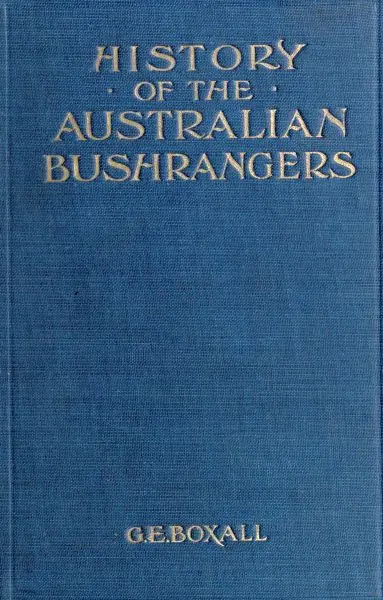
"History of the Australian Bushrangers" by George Boxall is a historical account written in the late 19th century. This work delves into the complex era of bushranging in Australia, examining the social and legal conditions that fostered the emergence of these outlaw groups. The narrative is rooted in the historical treatment of convicts and explores the motivations behind their descent into bushranging, shedding light on a significant period of Australian history. The opening of the text provides a foundational understanding of bushranging, highlighting its origins connected to the convict system in Australia. Boxall discusses how the harsh treatment and oppressive laws against convicts often pushed them to revolt against the system, leading many to take to the bush to escape their dire circumstances. He emphasizes that early bushrangers were often driven by desperation rather than inherent criminality and illustrates the grim realities they faced, including severe punitive measures like flogging. Boxall aims to present a comprehensive picture of bushranging and its implications for Australian society, suggesting that the bushrangers, despite their notorious actions, were products of their brutal environment.
Introduction adapted from the source catalogue; source summaries may be automatically generated.
Free to read · English · 150,077 words · No account needed
MAKE TIME FOR A GOOD BOOK
On by default. Untick to stop anonymous reading totals. Each page counts after 10 seconds in view. How this works.
Anonymous counting is on unless you have switched it off.
"The deadly antipathy which was excited between the aborigines and the bushrangers of Van Diemen's Land provoked a series of outrages which would have terminated in the utter extinction of the whole race, if the local Government had not interposed to remove the last remnant of them from the island; an act of real mercy, though of apparent severity."[21] Before proceeding to describe this attempt to save the remnant of the race we may perhaps give a list of the "Atrocities committed by the blacks." It is not a very long one, taking into consideration the time occupied in the war. In March, 1820, forty-nine natives attacked Mr. Broadribb's house. They were divided into several parties which came up from different points simultaneously. One man was speared in the thigh before the blacks were repulsed. They all went away together and stripped Mr. Thomson's house of everything portable. They then proceeded to Mr. E. Denovan's and robbed his place. On April 1st John Raynor was speared and dreadfully beaten at Spring Bay. On May 18th a party of blacks attacked two men employed by Mr. Lord. One was dangerously speared and the other beaten. The hut was stripped. On June 1st Mr. Sherwin's hut, at Weasel Plain, was plundered, and on the 15th, Den Hut, at Lake River, was stripped bare, and Mary Daniels and her two children murdered. On August 7th, S. Stockman's hut, at Green Ponds, was plundered. On the 9th, some muskets, powder, and shot were stolen from the huts of Mr. Sharland, a Government surveyor. On the same day the Government hut, between Borthwick and Blue Ash, was robbed, several horses stolen from Mr. Wood and Mr. Pitcairn, and a man wounded at Mr. Purvis's. This party consisted of about forty blacks. They were met by Mr. Howell's party, and the blacks were driven off after a fight. A woman living near was wounded with a spear. On the 23rd, the huts of Mr. J. Connell and Mr. Robertson were attacked, and the latter plundered; Mr. Sutherland's shepherds were robbed of their arms and one of them wounded; some arms were taken from Mr. Taylor's hut. The next day James Hooper was killed, and his hut plundered. The huts of Lieutenants Bell and Watts were attacked, but the blacks were repulsed. On September 8th Captain Clark's shepherd was attacked, but contrived to escape. On the 13th one man was killed and another wounded on the banks of the Tamar River. On the 14th a man working at the Government lime kilns at Bothwell was attacked, but escaped. On the 18th a private of the 63rd Regiment was speared and two other soldiers wounded. One of the savages was killed. On the 27th Francis Booker was killed with spears, and on the next day three men at Major Gray's hut were wounded. On the same day two men were killed at Mr. G. Scott's place and their bodies thrown into the river. A third man was wounded, but escaped into the bush. The house was stripped of everything. This robbery was so systematically carried through that it was believed that the blacks had been led by white men. A hut on the opposite side of the road was also stripped. On October 16th the settlement at Sorell was attacked, one man being killed and another severely wounded. Four houses were stripped. On the 18th Captain Stewart's shepherd was killed and a settler, Mr. Gilders, was also speared and died. On the 19th, Messrs. Gatehouse and Gordon's house was attacked, but the blacks were repulsed. They were also driven away from Mr. Gaugel's place, but not before he was severely wounded. On November 19th two huts were robbed on the Ouse River. Captain Wight's shepherd was killed and dreadfully mangled. His body was found later. On the 27th a hut on the Esk River was stripped bare. On February 3rd, 1821, an attack was made on Mr. Burrell's house on the Tamar River. Mr. Wallace was severely wounded in several places, and a child was also wounded by a spear. L. Knight's hut was plundered, three horses belonging to Mr. Sutherland were killed and three others were wounded. His hut at North Esk was also plundered. Mrs. McCaskell was killed near Westbury, and her hut plundered of everything. An attack made on Mr. Stewart's house was repulsed. On March 8th, two sawyers were wounded, and two huts near New Norfolk were plundered. On the 12th, Mrs. Cunningham and her child were severely wounded, and her hut at East Arm plundered. Mr. Lawrence's servant was wounded, and three men were wounded on Norfolk Plains. On April 5th, T. Ralton was killed with a spear while splitting wood. On the 16th, Mr. Fitzgerald was sitting at the door of his hut reading, when a blackfellow sneaked up and drove a spear through him, after which his cottage was plundered. On the 17th, another attack was made on Fitzgerald's house. On May 10th, the Government store at Patrick Plains was burned down. Mr. Kemp's establishment at Lake Sorell was attacked by a large mob of blacks. Two men were killed, one wounded, the buildings were burned down and the firearms carried away. On June 6th, several huts were attacked at Hunter's Hill. Mrs. Triffet was speared and her house plundered, the huts of Messrs. Marnetti, Bell, and Clark were robbed, and Mrs. N. Long was killed. On September 5th, Thomas Smith was killed at Tapsley, and his hut plundered; John Higginson was killed and his hut robbed, and a sawyer's hut was plundered. On the 7th, Mr. B.B. Thomas and his overseer, Mr. Parker, were murdered near Port Sorell, while endeavouring to carry out the conciliatory policy of the Government. Mr. Stocker's hut was attacked, a man named Cupid killed, and a child wounded. On the 27th, Mr. Dawson's hut on Bushy Plains was attacked, and a man severely beaten. On the 23rd, Mr. Dawson's man Hughes was again beaten with waddies and nearly killed. On October 13th, the natives, armed with muskets, attacked and robbed the house of Constable Reid, and afterwards that of Mr. Amos Junior.[22]
Your reading position is saved on this browser. Take it to another device with a library code. Reading pages adapt to text, rather than matching a printed edition.
BEHIND THE BOOK
This eBook is for the use of anyone anywhere in the United States and most other parts of the world at no cost and with almost no restrictions whatsoever. You may copy it, give it away or re-use it under the terms of the Project Gutenberg License included with this eBook or online at www.gutenberg.org. If you are not located in the United States, you will have to check the laws of the country where you are located before using this eBook. Read the source licence.
The original source file, including credits and licence, is retained by this library. Request an original-format copy at no charge. Please include the book title and Project Gutenberg identifier #58799.
KEEP YOUR CURIOSITY GOING
Cécile Tormay

Moritz Busch
John L. Ransom
Frances Wright
Cécile Tormay

Mabel Potter Daggett