THE CLASSIC COLLECTION✦The Knight of MaltaCLASSIC FREE BOOKS
The Knight of Malta
Eugène Sue
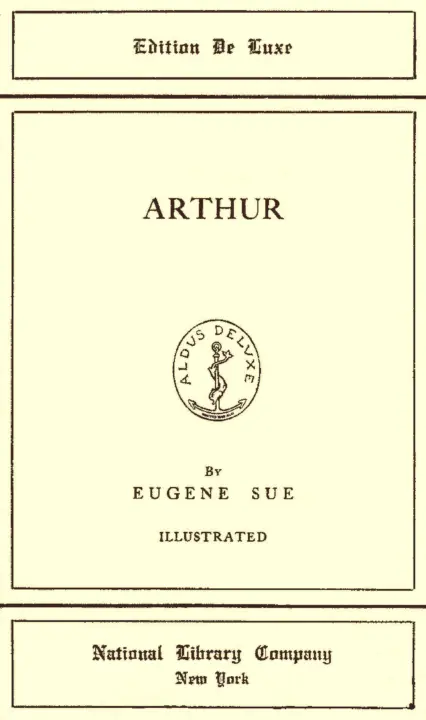
THE CLASSIC COLLECTION · 1839
"Arthur" by Eugène Sue is a novel written in the late 19th century. The story unfolds through the intertwining lives of various characters, with an emphasis on the mysterious figure of Count Arthur and the tragedy surrounding his household. The opening portions hint at themes of intrigue, love, and loss, captivating readers who are drawn to character-driven narratives steeped in emotion and moral complexity. At the start of the novel, the protagonist, who remains unnamed, recounts a chance encounter that leads him to explore a quaint southern village, drawn by the allure of a country house rumored to be for sale. As he journeys through the picturesque landscape, he learns intriguing tales of previous travelers to the village, notably one ominous story involving a mysterious carriage that never returned. Upon reaching the village, he meets the curé and his sister, who are steeped in sadness related to the house's past. This foreshadows deeper explorations of love and loss and sets the stage for revelations regarding Count Arthur, a character woven into the fabric of the village's tragic history. The sense of curiosity and impending revelations builds a compelling narrative thread that invites readers further into the novel's intricate plot.
Introduction adapted from the source catalogue; source summaries may be automatically generated.
Free to read · English · 180,723 words · No account needed
MAKE TIME FOR A GOOD BOOK
On by default. Untick to stop anonymous reading totals. Each page counts after 10 seconds in view. How this works.
Anonymous counting is on unless you have switched it off.
I was so incensed that I firmly believed I had wrestled against these frightful suspicions; and I became convinced of these horrors with the same bitter satisfaction of the man who discovers the vile snare into which he has fallen.
As an executioner I struck pitilessly, as a victim I moaned bitterly.
The remembrance of Hélène, of Marguerite, of Falmouth,--nothing could
bring me to my senses.
From the confirmation of so much infamy to the hate and scorn it inspired, there was but one step for my fierce monomania.
From this point of view, all that was noble and generous in my conduct seemed to me shamefully ridiculous.
I was oppressed by these reflections when this letter from Catherine was
handed to me:
"A sad, unhappy petitioner asks you to be kind and indulgent towards her; she wants you to pardon all that she has suffered to-day; she hopes to be alone this evening, and will expect you. Come; she is, moreover, resolved that Europe shall no longer be your rival."
In my state of mind, this letter so tenderly imploring, this simple allusion to my reproaches, seemed to me so humbly offensive, so coldly insulting, that I was on the point of writing to Madame de Fersen that I would never again see her.
But I changed my mind.
I wrote to her that I would call on her that evening.
I waited for the hour with frightful anxiety.
I had laid my plan.
At ten o'clock I went to Madame de Fersen's, expecting to find her
alone.
A thousand confused thoughts were rushing through my mind. Anger, hate, love, a remorseful anticipation of the wrong I was about to commit, a vague instinct of the injustice of my suspicions, all combined to put me in a feverish exasperated condition, the consequences of which I could not foresee.
Contrary to my expectations, Catherine had several persons with her.
This new proof of what I called her falsehood incensed me; for a moment I was on the point of turning back and abandoning my purpose, but an irresistible force drove me, and I entered.
The sight of people, and the control which I had always possessed over myself, at once changed my violent anger into a polished, cold, and biting irony.
This scene is still present to me. Catherine, seated near the fireplace, was chatting with a friend.
My first look was doubtless very terrible, for Madame de Fersen, bewildered, suddenly turned pale.
The conversation continued; I shared in it with the greatest calmness, even asserting my superiority, for I was gay, almost brilliant.
Your reading position is saved on this browser. Take it to another device with a library code. Reading pages adapt to text, rather than matching a printed edition.
Eugène Sue
Eugène Sue
Eugène Sue
Eugène Sue
BEHIND THE BOOK
This eBook is for the use of anyone anywhere in the United States and most other parts of the world at no cost and with almost no restrictions whatsoever. You may copy it, give it away or re-use it under the terms of the Project Gutenberg License included with this eBook or online at www.gutenberg.org. If you are not located in the United States, you will have to check the laws of the country where you are located before using this eBook. Read the source licence.
The original source file, including credits and licence, is retained by this library. Request an original-format copy at no charge. Please include the book title and Project Gutenberg identifier #66473.
KEEP YOUR CURIOSITY GOING
Coulson Kernahan

Maurice Baring
Frances Wright
Cécile Tormay

Frederic Jesup Stimson

W. H. P. (William Henry Pope) Jarvis