THE CLASSIC COLLECTION✦The Knight of MaltaCLASSIC FREE BOOKS
The Knight of Malta
Eugène Sue
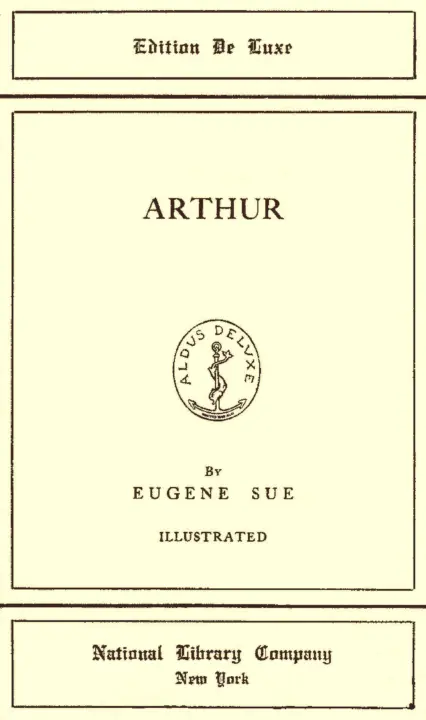
THE CLASSIC COLLECTION · 1839
"Arthur" by Eugène Sue is a novel written in the late 19th century. The story unfolds through the intertwining lives of various characters, with an emphasis on the mysterious figure of Count Arthur and the tragedy surrounding his household. The opening portions hint at themes of intrigue, love, and loss, captivating readers who are drawn to character-driven narratives steeped in emotion and moral complexity. At the start of the novel, the protagonist, who remains unnamed, recounts a chance encounter that leads him to explore a quaint southern village, drawn by the allure of a country house rumored to be for sale. As he journeys through the picturesque landscape, he learns intriguing tales of previous travelers to the village, notably one ominous story involving a mysterious carriage that never returned. Upon reaching the village, he meets the curé and his sister, who are steeped in sadness related to the house's past. This foreshadows deeper explorations of love and loss and sets the stage for revelations regarding Count Arthur, a character woven into the fabric of the village's tragic history. The sense of curiosity and impending revelations builds a compelling narrative thread that invites readers further into the novel's intricate plot.
Introduction adapted from the source catalogue; source summaries may be automatically generated.
Free to read · English · 180,723 words · No account needed
MAKE TIME FOR A GOOD BOOK
On by default. Untick to stop anonymous reading totals. Each page counts after 10 seconds in view. How this works.
Anonymous counting is on unless you have switched it off.
Can I, in the name of my past devotedness, in the name of the fatal influence I exercise over Irene, approach Catherine, professing my love, and expressing my hopes?
It would be base, it would be despicable.
And if the unhappy mother were to think--oh, Heaven!--that I demanded her love as the price for my presence near her child!
Ah, this thought is horrible!
My resolution is taken, irrevocably taken.
Never shall a word of love pass my lips.
THE GROVE, 11th May, 18--.
My best deeds bring me bad luck,--one reason the more for keeping
silent.
This morning the newspapers were brought in.
Madame de Fersen opened one, and began to read.
All at once she ceased to read, I saw her shiver and blush deeply; then, with an expression of dumb surprise, lowering her hands to her knees, she shook her head, as if she were saying, "Is this really possible!"
Looking at me with eyes filled with tears, she quickly rose, and left
the room.
Not knowing what might have caused this keen emotion, I picked up the newspaper, and the following lines soon explained to me Madame de Fersen's dismay.
"It is well known that a month ago the firm ---- & Co. failed for a sum amounting to several millions. The head of the firm secretly embarked for the United States. A few creditors, warned by alarming rumours as to the solvency of the firm, were in time to withdraw a portion of their funds. M. Dumont, business agent of M. le Comte de ----, involved in this bankruptcy to the amount of one hundred and fifty thousand francs, has not been equally fortunate; although he had come to Havre to ward off this disaster, he was not provided with the necessary papers, and as the bankruptcy was considered fraudulent, he laid his complaint before the district attorney, but in view of the assets amounting to scarcely eighty thousand francs, the numerous creditors of the firm ---- must look upon their funds as lost."
Madame de Fersen knew of my hurried departure for Havre, for her courier had overtaken me before I reached that town. I had returned immediately, and the date of my return coincided with that of the bankruptcy. It was therefore evident to Catherine that my eagerness to return to the dying Irene was the sole cause of the severe loss I had sustained. Thus now, more than ever, should I appear to demand a reward for my sacrifices.
While mechanically skimming the newspaper, beneath the article which I have quoted, I came upon the following paragraph, which also concerned me.
Your reading position is saved on this browser. Take it to another device with a library code. Reading pages adapt to text, rather than matching a printed edition.
Eugène Sue
Eugène Sue
Eugène Sue
Eugène Sue
BEHIND THE BOOK
This eBook is for the use of anyone anywhere in the United States and most other parts of the world at no cost and with almost no restrictions whatsoever. You may copy it, give it away or re-use it under the terms of the Project Gutenberg License included with this eBook or online at www.gutenberg.org. If you are not located in the United States, you will have to check the laws of the country where you are located before using this eBook. Read the source licence.
The original source file, including credits and licence, is retained by this library. Request an original-format copy at no charge. Please include the book title and Project Gutenberg identifier #66473.
KEEP YOUR CURIOSITY GOING
Coulson Kernahan

Maurice Baring
Frances Wright
Cécile Tormay

Frederic Jesup Stimson

W. H. P. (William Henry Pope) Jarvis