
Jocelyn
John Galsworthy
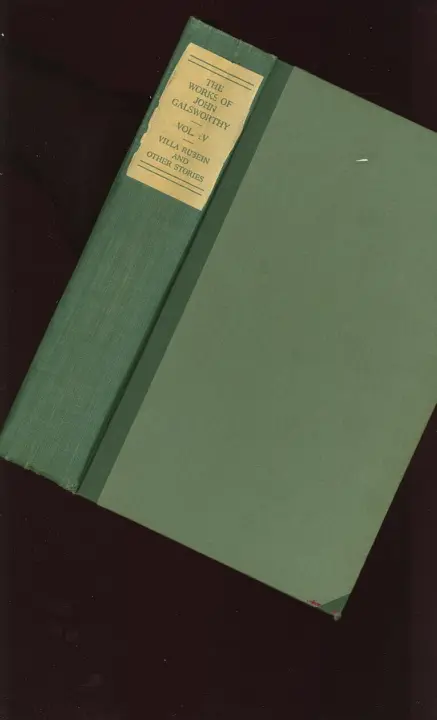
THE CLASSIC COLLECTION · 1920
"Villa Rubein and Other Stories" by John Galsworthy is a collection of short stories likely written during the early 20th century. The stories explore themes of human emotion and the complexity of relationships, often set against a backdrop of social dynamics and individual aspirations. The opening story introduces the central character, Harz, a painter who is deeply engaged in his creative process and his interactions with a mixed household at Villa Rubein, highlighting the contrasts between artistic ambition and societal expectations. The opening of the story unfolds with Harz, an artist, as he navigates his daily life in Botzen, where he meets Edmund Dawney, a doctor; their conversations reveal contrasting views on passion and duty towards their respective professions. Harz is depicted as passionate and driven by a desire to create, while Dawney is practical and focused on social success. When Harz's isolation in his creative pursuits is interrupted by interactions with the family at Villa Rubein—including the innocent and curious young girl Greta- an unexpected warmth begins to bloom. The narrative transitions into deeper explorations of relationships and the philosophical underpinnings of art and life, setting the stage for both personal and artistic growth throughout the collection.
Introduction adapted from the source catalogue; source summaries may be automatically generated.
Free to read · English · 96,246 words · No account needed
MAKE TIME FOR A GOOD BOOK
On by default. Untick to stop anonymous reading totals. Each page counts after 10 seconds in view. How this works.
Anonymous counting is on unless you have switched it off.
Towards evening, five days later, Swithin, yellow and travel-worn, was ferried in a gondola to Danielli's Hotel. His brother, who was on the steps, looked at him with an apprehensive curiosity.
“Why, it's you!” he mumbled. “So you've got here safe?”
“Safe?” growled Swithin.
James replied, “I thought you wouldn't leave your friends!” Then, with a jerk of suspicion, “You haven't brought your friends?”
“What friends?” growled Swithin.
James changed the subject. “You don't look the thing,” he said.
“Really!” muttered Swithin; “what's that to you?”
He appeared at dinner that night, but fell asleep over his coffee. Neither Traquair nor James asked him any further question, nor did they allude to Salzburg; and during the four days which concluded the stay in Venice Swithin went about with his head up, but his eyes half-closed like a dazed man. Only after they had taken ship at Genoa did he show signs of any healthy interest in life, when, finding that a man on board was perpetually strumming, he locked the piano up and pitched the key into the sea.
That winter in London he behaved much as usual, but fits of moroseness would seize on him, during which he was not pleasant to approach.
One evening when he was walking with a friend in Piccadilly, a girl coming from a side-street accosted him in German. Swithin, after staring at her in silence for some seconds, handed her a five-pound note, to the great amazement of his friend; nor could he himself have explained the meaning of this freak of generosity.
Of Rozsi he never heard again....
This, then, was the substance of what he remembered as he lay ill in bed. Stretching out his hand he pressed the bell. His valet appeared, crossing the room like a cat; a Swede, who had been with Swithin many years; a little man with a dried face and fierce moustache, morbidly sharp nerves, and a queer devotion to his master.
Swithin made a feeble gesture. “Adolf,” he said, “I'm very bad.”
“Yes, sir!”
“Why do you stand there like a cow?” asked Swithin; “can't you see I'm
very bad?”
“Yes, sir!” The valet's face twitched as though it masked the dance of
obscure emotions.
“I shall feel better after dinner. What time is it?”
“Five o'clock.”
“I thought it was more. The afternoons are very long.”
“Yes, sir!” Swithin sighed, as though he had expected the consolation of
denial.
“Very likely I shall have a nap. Bring up hot water at half-past six and shave me before dinner.”
The valet moved towards the door. Swithin raised himself.
“What did Mr. James say to you?”
Your reading position is saved on this browser. Take it to another device with a library code. Reading pages adapt to text, rather than matching a printed edition.
John Galsworthy
John Galsworthy
John Galsworthy

John Galsworthy
BEHIND THE BOOK
This eBook is for the use of anyone anywhere in the United States and most other parts of the world at no cost and with almost no restrictions whatsoever. You may copy it, give it away or re-use it under the terms of the Project Gutenberg License included with this eBook or online at www.gutenberg.org. If you are not located in the United States, you will have to check the laws of the country where you are located before using this eBook. Read the source licence.
The original source file, including credits and licence, is retained by this library. Request an original-format copy at no charge. Please include the book title and Project Gutenberg identifier #2639.
KEEP YOUR CURIOSITY GOING
Coulson Kernahan

Maurice Baring
Frances Wright
Cécile Tormay

Frederic Jesup Stimson

W. H. P. (William Henry Pope) Jarvis