
The Yoke of the Thorah
Henry Harland
THE CLASSIC COLLECTION · 1909
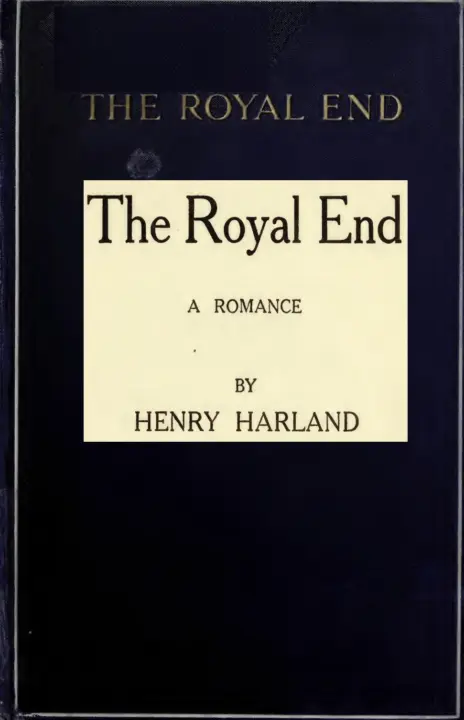
"The Royal End: A Romance" by Henry Harland is a novel written in the early 20th century. The story is set in Venice and follows the intricate lives of its main characters, specifically Lucilla Dor and her companion Ruth Adgate, as they encounter a charming man named Bertram and navigate romantic entanglements amid social expectations. As Balzatore, the dog, flits through scenes of flirtation and adventure, themes of admiration, social status, and identity come to the forefront, evoking the challenges of love against a backdrop of societal intrigue. At the start of the novel, the setting is established as Lucilla and Ruth dine at a hotel in Venice, where they unknowingly attract the attention of Bertram and his canine companion, Balzatore. This signals the beginning of a romantic entanglement fueled by misunderstandings and societal norms. As the characters interact against the enchanting backdrop of the city, the narrative delves into their personalities, exploring Lucilla's flirtatiousness and Ruth's contrasting reserve. Their evening takes a turn when they find themselves stranded on the Lido, ultimately leading to Bertram's gallant intervention. The opening sets a tone rich with fascination and sharp social commentary as the characters' complexities begin to intertwine.
Introduction adapted from the source catalogue; source summaries may be automatically generated.
Free to read · English · 55,898 words · No account needed
MAKE TIME FOR A GOOD BOOK
On by default. Untick to stop anonymous reading totals. Each page counts after 10 seconds in view. How this works.
Anonymous counting is on unless you have switched it off.
“A Pontycroft, as much as you will,” concurred her brother suavely, “but you're only the wife of an Irish baronet, dear girl. No, it's something subtle, unseizable. Every word, look, gesture, hailed you as her friend and equal, and all of them together delicately kept you reminded that she was deigning hugely to honour a nobody. It's sheer odylic force.”
“She ate like five,” Lucilla went spitefully on. “She was helped twice to everything. And she emptied at least a whole bottle of wine.”
“Ah, well, as for that,” Ponty said, “a healthy appetite is a sign that its owner is human at the red-ripe of the heart. You didn't, by the by, do so badly yourself.”
“And she consumed her food with an air,” Lucilla persisted, “with a kind of devotional absorption, as if feeding herself was a religious sacrifice.”
“And I suppose you noticed also that she called Ruth 'my dear'?” Ponty
asked.
“Yes, as if she was a dairymaid,” sniffed Lucilla. “I wonder you didn't turn and rend her.”
“Oh, I liked her,” Ruth replied. “You see, we mere Americans are so inured to being treated with affability and put at our ease by our English cousins that we scarcely notice such things in foreigners.”
“Well, it's lucky you like her,” said Ponty, wagging his head, “for you're in a fair way to see a good bit of her, if events move as they're moving. The crucial question, of course, is whether she liked you. If she did, I should call the deal as good as done.”
The “deal” seemed, at any rate, to advance a measurable step when, on the following afternoon, the Duchess called at the villa, for the purpose, as Pontycroft afterwards put it to Ruth, of “taking up your character.”
“Dearest Lady Dor,” she said, beaming upon every one, and I wish I could render the almost cooing loving-kindness of her intonation, “you will forgive me if I come like this à l'improviste? Yes? I was so anxious to see you again, and when people are mutually sympathetic, it is a pity to let time or etiquette delay the progress of their friendship, don't you think? Oh, kind Mr. Pontycroft,” she purred, as Ponty handed her a cup of tea. “Dear little Miss Adgate,” as Ruth passed the bread and butter.
They drank their tea in the great hall, and afterwards, linking her arm familiarly in Lucilla's, “Dearest Lady Dor,” she pronounced, in the accents of one pleading for a grace, “I am so anxious to see your beautiful garden! You will show it to me? Yes? My son has told me so much about it.”
Your reading position is saved on this browser. Take it to another device with a library code. Reading pages adapt to text, rather than matching a printed edition.
Henry Harland

Henry Harland

Henry Harland

Henry Harland
BEHIND THE BOOK
This eBook is for the use of anyone anywhere in the United States and most other parts of the world at no cost and with almost no restrictions whatsoever. You may copy it, give it away or re-use it under the terms of the Project Gutenberg License included with this eBook or online at www.gutenberg.org. If you are not located in the United States, you will have to check the laws of the country where you are located before using this eBook. Read the source licence.
The original source file, including credits and licence, is retained by this library. Request an original-format copy at no charge. Please include the book title and Project Gutenberg identifier #51980.
KEEP YOUR CURIOSITY GOING
Coulson Kernahan

Maurice Baring
Frances Wright
Cécile Tormay

Frederic Jesup Stimson

W. H. P. (William Henry Pope) Jarvis