
The Yoke of the Thorah
Henry Harland
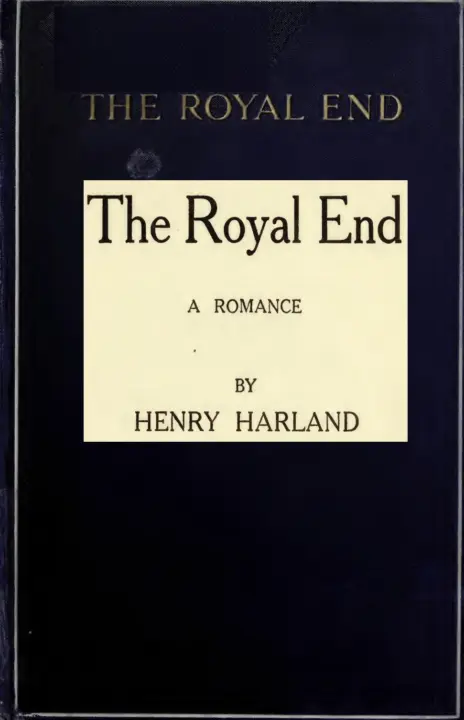
THE CLASSIC COLLECTION · 1909
"The Royal End: A Romance" by Henry Harland is a novel written in the early 20th century. The story is set in Venice and follows the intricate lives of its main characters, specifically Lucilla Dor and her companion Ruth Adgate, as they encounter a charming man named Bertram and navigate romantic entanglements amid social expectations. As Balzatore, the dog, flits through scenes of flirtation and adventure, themes of admiration, social status, and identity come to the forefront, evoking the challenges of love against a backdrop of societal intrigue. At the start of the novel, the setting is established as Lucilla and Ruth dine at a hotel in Venice, where they unknowingly attract the attention of Bertram and his canine companion, Balzatore. This signals the beginning of a romantic entanglement fueled by misunderstandings and societal norms. As the characters interact against the enchanting backdrop of the city, the narrative delves into their personalities, exploring Lucilla's flirtatiousness and Ruth's contrasting reserve. Their evening takes a turn when they find themselves stranded on the Lido, ultimately leading to Bertram's gallant intervention. The opening sets a tone rich with fascination and sharp social commentary as the characters' complexities begin to intertwine.
Introduction adapted from the source catalogue; source summaries may be automatically generated.
Free to read · English · 55,898 words · No account needed
MAKE TIME FOR A GOOD BOOK
On by default. Untick to stop anonymous reading totals. Each page counts after 10 seconds in view. How this works.
Anonymous counting is on unless you have switched it off.
Perseveringly the snowflakes descended. They continued to fall, fall, fall, for another thirty-six hours. The wind next morning, though, had stopped, and debris of yesterday's storm had been removed. A trackless white garment of snow spread to the furthest reaches of Barracks Hill.
“This is all very weird,” said Ruth to Miranda, as, side by side, they sat and gazed on leagues and leagues of the white silence. “Miranda, this is all very well--Blizzards are very stirring; simple homely pleasures are very pleasing, this landscape is very beautiful, but,-----” Ruth suppressed a yawn.
“Besides, why will young men make geese of themselves? One can't get away from him, Miranda; a Blizzard even, does not keep him away! Miranda! If there's an object, my dear kitten, I detest, it's a sentimental young man.”
“Uncle,” said Ruth, nonchalantly, to General Adgate that evening after supper, as, with Miranda purring snugly beside her, the three sat together in the drawing-room, “I have an invitation from the Bolingbrokes, in Washington. They want me to come to them for a visit. Would you--would you miss me very much?” she coaxed, and she went to him and laid a caressing hand on the old man's cheek--“would you mind, very much, if I were to accept?”
“Mind, my dear?” General Adgate looked at her. “Who am I to say mind? You are your own mistress. Miss you? That's another pair of sleeves.”
“But suppose I bring them back with me,--I mean the Bolingbrokes,” laughed she. “They're such dears.... You'd fall in love with her, the sauciest sprite in Christendom. And he'll welcome the occasion to talk international Politics with you! I believe,” Ruth teased,--she drew up the Empire settle before the fire, she took Miranda to her knees and sat down again; “I believe that it's my Duty--to go--to go fetch them--to play with you.” With a final nod of decision Miss Adgate placed two small, elaborately shod feet, in a pair of high-heeled, steel-embroidered Florentine shoes, upon the fender; she began, with equal decision, to remove the wrappers from The Athenoum, The Saturday Review and a couple of Morning Posts.
“Go--my dear,” said the old man gently.
“Dear me! I feel like a brute,” thought Miss Adgate. “What will he do if I return to England? Oh, why will people get fond of people!”
Miranda purred.... The fire responded; a crisp, little musical crepitation; the flames licked the wood, the logs consumed themselves, in a cadenced song of happy Death and blessed Eternity. Punctured by this music silence entered, cozily, warmly descended upon the New England drawing-room.
Your reading position is saved on this browser. Take it to another device with a library code. Reading pages adapt to text, rather than matching a printed edition.
Henry Harland

Henry Harland

Henry Harland

Henry Harland
BEHIND THE BOOK
This eBook is for the use of anyone anywhere in the United States and most other parts of the world at no cost and with almost no restrictions whatsoever. You may copy it, give it away or re-use it under the terms of the Project Gutenberg License included with this eBook or online at www.gutenberg.org. If you are not located in the United States, you will have to check the laws of the country where you are located before using this eBook. Read the source licence.
The original source file, including credits and licence, is retained by this library. Request an original-format copy at no charge. Please include the book title and Project Gutenberg identifier #51980.
KEEP YOUR CURIOSITY GOING
Coulson Kernahan

Maurice Baring
Frances Wright
Cécile Tormay

Frederic Jesup Stimson

W. H. P. (William Henry Pope) Jarvis