THE CLASSIC COLLECTION✦Preston Fight; or, The Insurrection of 1715CLASSIC FREE BOOKS
Preston Fight; or, The Insurrection of 1715
William Harrison Ainsworth
THE CLASSIC COLLECTION · 1866
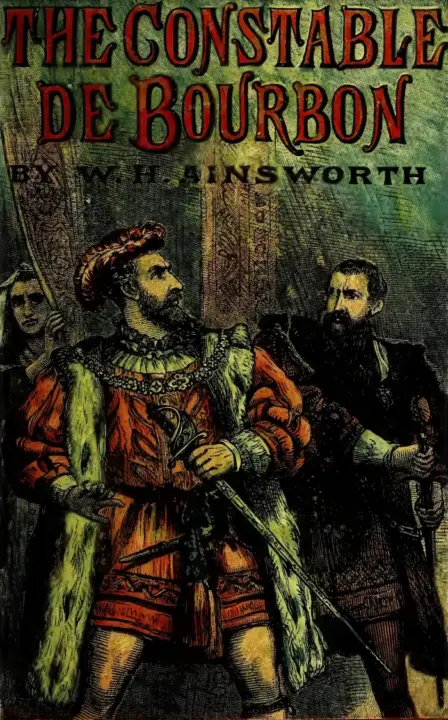
"The Constable De Bourbon" by William Harrison Ainsworth is a historical novel written in the mid-19th century. The narrative unfolds in the context of 16th-century France, focusing on the titular character, Charles de Bourbon, the Constable of France, who navigates the tumultuous political and personal betrayals at the royal court. Themes of ambition, rivalry, and the quest for power resonate throughout the story, highlighting Bourbon's struggles with King François I and the Duchess d'Angoulême. At the start of the novel, we are introduced to a grand cavalcade entering the Forest of Fontainebleau, heralding the arrival of Charles de Bourbon amidst a backdrop of royal and noble pageantry. As the opening unfolds, it meticulously details Bourbon’s illustrious yet contentious background, his noble stature, and the complicated relationships he maintains with the court, especially with the king and the duchess. Bourbon's discontent with his treatment at court, highlighted by past grievances and ambitions, sets the stage for a conflict that alludes to a potential rebellion against the king's authority, suggesting a menacing path forward filled with intrigue and dramatic confrontation.
Introduction adapted from the source catalogue; source summaries may be automatically generated.
Free to read · English · 118,233 words · No account needed
MAKE TIME FOR A GOOD BOOK
On by default. Untick to stop anonymous reading totals. Each page counts after 10 seconds in view. How this works.
Anonymous counting is on unless you have switched it off.
“Stay a moment, monseigneur,” said Benoit. “A plan occurs to me. I should have thought of it before, but I am so bewildered. Underneath this room there is a vault where I store my corn before grinding it. Will it please you to hide there?”
“If the retreat should be discovered, we shall be caught like rats in a trap, and can offer no defence,” objected Bourbon.
“My father has not explained that there is a communication between the vault and the mill,” interposed Madelon. “Your highness can get out that way, should it be necessary.”
“The entrance to the vault is there--under the staircase,” urged the miller. “Madelon will conduct your highness. Lift the trap, girl--lift it quickly,” he added to his daughter.
The trap-door was soon opened by Madelon, who descended by means of a ladder into the vault, and was instantly followed by the fugitives, the trap-door being shut by Hugues, who went down last.
Scarcely had they disappeared, when the outer door was burst open with a tremendous crash, and Warthy, sword in hand, and followed by four men-at-arms, rushed into the house. Alarmed by the noise, Margot and Babet hurried down the staircase, bearing lights, both screaming loudly as they perceived Benoit upon his knees before Warthy, who held a sword to his throat. Flying towards them, and kneeling to Warthy, Margot besought him, in piteous terms, to spare her husband's life.
“Harm him not, and I will tell all,” she cried, almost frightened out of
her wits.
“Speak out then at once, woman,” said Warthy. “Where is the traitor
Bourbon hidden?”
“Hold your tongue, wife, I command you,” said the stout-hearted miller.
“But I can't stand by and see your throat cut, Benoit,” she rejoined. “I
must speak.”
“Certainly you must, unless you desire to become a widow,” said Warthy. “You may as well confess that Bourbon is here. Your looks betray you. He cannot escape, for the house is surrounded, and I don't mean to leave a hole or corner unvisited. Where is the traitor, I say?”
“Where is he, Benoit?” she cried, appealing to her husband. “For my sake, don't sacrifice yourself.”
“Woman, you have lost your senses,” said the miller, angrily. “What do I know about the Duke de Bourbon?”
“You know a great deal more than you appear inclined to tell, rascal,” rejoined Warthy. “But I will have the truth from you. I give you five minutes for consideration,” he added, releasing him, “and if at the end of that time Bourbon be not forthcoming, I will execute my threat, and hang you at your own door.”
Your reading position is saved on this browser. Take it to another device with a library code. Reading pages adapt to text, rather than matching a printed edition.
William Harrison Ainsworth
William Harrison Ainsworth
William Harrison Ainsworth
William Harrison Ainsworth
BEHIND THE BOOK
This eBook is for the use of anyone anywhere in the United States and most other parts of the world at no cost and with almost no restrictions whatsoever. You may copy it, give it away or re-use it under the terms of the Project Gutenberg License included with this eBook or online at www.gutenberg.org. If you are not located in the United States, you will have to check the laws of the country where you are located before using this eBook. Read the source licence.
The original source file, including credits and licence, is retained by this library. Request an original-format copy at no charge. Please include the book title and Project Gutenberg identifier #49681.
KEEP YOUR CURIOSITY GOING
Cécile Tormay

Moritz Busch
Coulson Kernahan
John L. Ransom

Maurice Baring
Frances Wright