THE CLASSIC COLLECTION✦Preston Fight; or, The Insurrection of 1715CLASSIC FREE BOOKS
Preston Fight; or, The Insurrection of 1715
William Harrison Ainsworth
THE CLASSIC COLLECTION · 1866
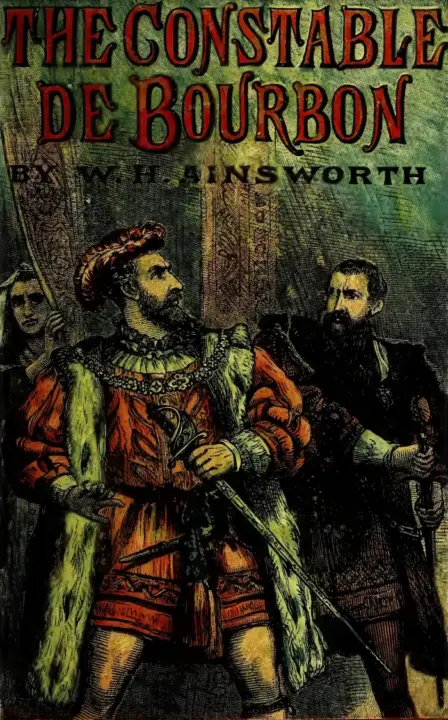
"The Constable De Bourbon" by William Harrison Ainsworth is a historical novel written in the mid-19th century. The narrative unfolds in the context of 16th-century France, focusing on the titular character, Charles de Bourbon, the Constable of France, who navigates the tumultuous political and personal betrayals at the royal court. Themes of ambition, rivalry, and the quest for power resonate throughout the story, highlighting Bourbon's struggles with King François I and the Duchess d'Angoulême. At the start of the novel, we are introduced to a grand cavalcade entering the Forest of Fontainebleau, heralding the arrival of Charles de Bourbon amidst a backdrop of royal and noble pageantry. As the opening unfolds, it meticulously details Bourbon’s illustrious yet contentious background, his noble stature, and the complicated relationships he maintains with the court, especially with the king and the duchess. Bourbon's discontent with his treatment at court, highlighted by past grievances and ambitions, sets the stage for a conflict that alludes to a potential rebellion against the king's authority, suggesting a menacing path forward filled with intrigue and dramatic confrontation.
Introduction adapted from the source catalogue; source summaries may be automatically generated.
Free to read · English · 118,233 words · No account needed
MAKE TIME FOR A GOOD BOOK
On by default. Untick to stop anonymous reading totals. Each page counts after 10 seconds in view. How this works.
Anonymous counting is on unless you have switched it off.
“No, no, that must not be, my pretty damsel,” said Bourbon, checking her. And he added, with a smile, “Go with Hugues to the stable. He needs your protection from the dogs.”
“Ay, take a lantern and go with him, Madelon,” said her father. “Show him where to find food for the horses.”
As the young couple departed, the miller's wife, Margot, a comely, middle-aged woman, threw a heap of wood on the hearth, and in a few minutes a blazing fire cast a cheerful glow around. While she was thus employed, an active-looking female servant, about Madelon's age, and not without some pretension to good looks, tripped down the staircase, and hastened to spread a snow-white cloth upon the table, and make other preparations for supper. Babet, for so she was named, took Bourbon for a serving-man, and would have assigned him a place at the lower end of the table, but her mistress soon set this matter right, and ere long the two fugitives were seated opposite each other, discussing a very substantial repast.
By this time Madelon and Hugues had returned from the stables, and the young man took his seat at a respectful distance from his superiors. Before he had finished his supper, Babet, who had gone up-stairs with her mistress, came down again, and made the satisfactory announcement that chambers were ready for the guests, whereupon Bourbon and Pomperant immediately arose, and prepared to retire, intimating their intention of departing an hour before dawn.
The females having likewise retired, Benoit and Hugues drew near the fire, and fell fast asleep, but they were speedily roused from their slumbers by the fierce barking of the dogs. Both started to their feet in great alarm, as the trampling of horses, mingled with the clank of arms, was heard outside, and left no doubt that a troop of cavalry was at hand.
Without a moment's delay, Benoit extinguished the lamp which unluckily had been left burning on the table, and rushed up the staircase to warn the fugitives.
In another minute a loud knocking was heard at the door, and an authoritative voice demanded immediate admittance. Hugues, however, made no reply, but reconnoitring the party through the window, perceived that it consisted of some twenty mounted men-at-arms, whose leader was knocking against the door with the handle of his sword.
“Unfasten the door instantly, I say,” cried this personage, “or my men shall burst it open. Some one must be astir, for a light has just been extinguished.”
“I knew that cursed light had betrayed us,” groaned Hugues. “If the saints do not help us now, Bourbon will certainly be captured!”
Your reading position is saved on this browser. Take it to another device with a library code. Reading pages adapt to text, rather than matching a printed edition.
William Harrison Ainsworth
William Harrison Ainsworth
William Harrison Ainsworth

William Harrison Ainsworth
BEHIND THE BOOK
This eBook is for the use of anyone anywhere in the United States and most other parts of the world at no cost and with almost no restrictions whatsoever. You may copy it, give it away or re-use it under the terms of the Project Gutenberg License included with this eBook or online at www.gutenberg.org. If you are not located in the United States, you will have to check the laws of the country where you are located before using this eBook. Read the source licence.
The original source file, including credits and licence, is retained by this library. Request an original-format copy at no charge. Please include the book title and Project Gutenberg identifier #49681.
KEEP YOUR CURIOSITY GOING
Cécile Tormay

Moritz Busch
Coulson Kernahan
John L. Ransom

Maurice Baring
Frances Wright