THE CLASSIC COLLECTION✦Preston Fight; or, The Insurrection of 1715CLASSIC FREE BOOKS
Preston Fight; or, The Insurrection of 1715
William Harrison Ainsworth
THE CLASSIC COLLECTION · 1866
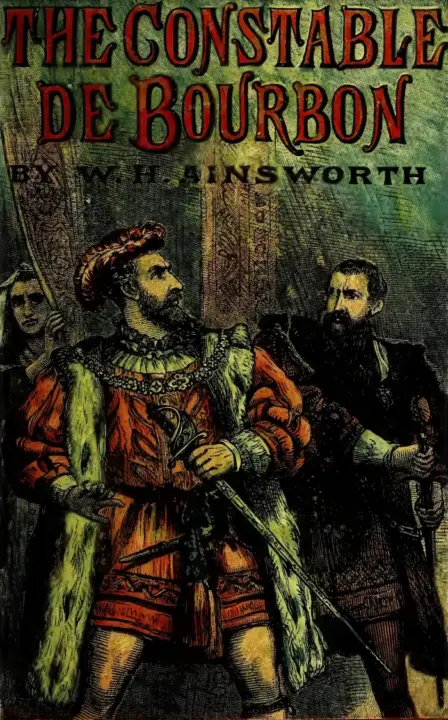
"The Constable De Bourbon" by William Harrison Ainsworth is a historical novel written in the mid-19th century. The narrative unfolds in the context of 16th-century France, focusing on the titular character, Charles de Bourbon, the Constable of France, who navigates the tumultuous political and personal betrayals at the royal court. Themes of ambition, rivalry, and the quest for power resonate throughout the story, highlighting Bourbon's struggles with King François I and the Duchess d'Angoulême. At the start of the novel, we are introduced to a grand cavalcade entering the Forest of Fontainebleau, heralding the arrival of Charles de Bourbon amidst a backdrop of royal and noble pageantry. As the opening unfolds, it meticulously details Bourbon’s illustrious yet contentious background, his noble stature, and the complicated relationships he maintains with the court, especially with the king and the duchess. Bourbon's discontent with his treatment at court, highlighted by past grievances and ambitions, sets the stage for a conflict that alludes to a potential rebellion against the king's authority, suggesting a menacing path forward filled with intrigue and dramatic confrontation.
Introduction adapted from the source catalogue; source summaries may be automatically generated.
Free to read · English · 118,233 words · No account needed
MAKE TIME FOR A GOOD BOOK
On by default. Untick to stop anonymous reading totals. Each page counts after 10 seconds in view. How this works.
Anonymous counting is on unless you have switched it off.
“I know it,” replied Agrippa, gravely. “I could tell you why he comes, and what will befal him, but I care not to read the future to those who mock my lore. The star of Bourbon is temporarily obscured. But it will break out with added splendour. This day is the turning-point of his destiny. If he stays here he will be great--but if he departs he will be greater.”
“How are we to interpret that, compère?” inquired Triboulet,
“As you will,” rejoined Agrippa, contemptuously. “The words of wisdom are unintelligible to fools. But mark me, messeigneurs,” he added to Bonnivet and Montmoreney. “The destinies of the king, the duchess, and the Constable, are this day linked together--but the influencing power resides in Bourbon.”
“Why in him? Explain your meaning, doctor!” demanded Bonnivet.
“I have said all I care to say,” replied Agrippa. “But here comes the Constable. Will you stay and bid him welcome?”
“No, I will in, and inform the king of his arrival,” said Bonnivet.
“You will find his majesty in the grand gallery,” said Agrippa. “I left him there, not many minutes since, with the Comtesse de Chateaubriand.”
“I will go thither,” replied Bonnivet, hastening across the vestibule.
“Methinks the Constable is like a wild beast about to fall into a trap,” remarked Triboulet to the astrologer. “Were I the king, if I once caught him, I would not let him go.”
“Neither would I,” replied Agrippa, significantly. “But his majesty cannot read the future.”
By this time Bourbon had dismounted from his charger, and was received with the ceremony due to his exalted rank by the chamberlain, who descended the stairs to meet him. Pages, esquires and gentlemen bowed as the haughty Constable mounted the steps, and when he readied the summit the Marshal de Montmoreney advanced to meet him, and a very cordial greeting passed between them.
“I am right glad to see you here again, prince,” said the marshal. “I hope we shall soon gather fresh laurels together in the Milanese.”
“I should rejoice to fight by your side,” replied Bourbon. “But I know not why I have been sent for by the king.”
“Have you been sent for?” said Montmoreney, surprised. “I thought you came of your own accord. So much the better. You will be well received. The king is in a very gracious humour--and so is the duchess.”
“Ah! the duchess!” exclaimed Bourbon, with an expression of deep
disgust.
“You do not speak of her highness as she speaks of you, prince,” observed Triboulet. “I have heard her sigh and seen her change colour at the mention of your name.”
Your reading position is saved on this browser. Take it to another device with a library code. Reading pages adapt to text, rather than matching a printed edition.
William Harrison Ainsworth
William Harrison Ainsworth
William Harrison Ainsworth

William Harrison Ainsworth
BEHIND THE BOOK
This eBook is for the use of anyone anywhere in the United States and most other parts of the world at no cost and with almost no restrictions whatsoever. You may copy it, give it away or re-use it under the terms of the Project Gutenberg License included with this eBook or online at www.gutenberg.org. If you are not located in the United States, you will have to check the laws of the country where you are located before using this eBook. Read the source licence.
The original source file, including credits and licence, is retained by this library. Request an original-format copy at no charge. Please include the book title and Project Gutenberg identifier #49681.
KEEP YOUR CURIOSITY GOING
Cécile Tormay

Moritz Busch
Coulson Kernahan
John L. Ransom

Maurice Baring
Frances Wright