THE CLASSIC COLLECTION✦Preston Fight; or, The Insurrection of 1715CLASSIC FREE BOOKS
Preston Fight; or, The Insurrection of 1715
William Harrison Ainsworth
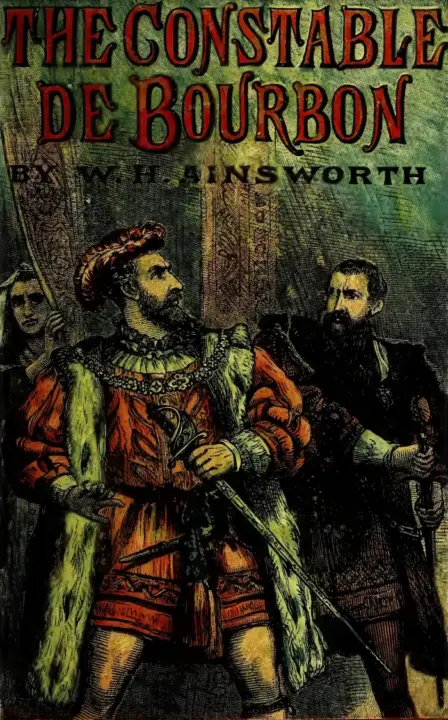
THE CLASSIC COLLECTION · 1866
"The Constable De Bourbon" by William Harrison Ainsworth is a historical novel written in the mid-19th century. The narrative unfolds in the context of 16th-century France, focusing on the titular character, Charles de Bourbon, the Constable of France, who navigates the tumultuous political and personal betrayals at the royal court. Themes of ambition, rivalry, and the quest for power resonate throughout the story, highlighting Bourbon's struggles with King François I and the Duchess d'Angoulême. At the start of the novel, we are introduced to a grand cavalcade entering the Forest of Fontainebleau, heralding the arrival of Charles de Bourbon amidst a backdrop of royal and noble pageantry. As the opening unfolds, it meticulously details Bourbon’s illustrious yet contentious background, his noble stature, and the complicated relationships he maintains with the court, especially with the king and the duchess. Bourbon's discontent with his treatment at court, highlighted by past grievances and ambitions, sets the stage for a conflict that alludes to a potential rebellion against the king's authority, suggesting a menacing path forward filled with intrigue and dramatic confrontation.
Introduction adapted from the source catalogue; source summaries may be automatically generated.
Free to read · English · 118,233 words · No account needed
MAKE TIME FOR A GOOD BOOK
On by default. Untick to stop anonymous reading totals. Each page counts after 10 seconds in view. How this works.
Anonymous counting is on unless you have switched it off.
“Ride on with the prince,” she said to her brother. “Let the Seigneur Pomperant go with me. They will take him for the Constable. We can make our way across the mountains to the Château de Lallières. If you can baffle pursuit, you will find us there.”
To this bold proposition D'Herment at once agreed, and the courageous damsel, calling upon Pomperant to follow her, dashed up the rugged side of the mountain. At the same moment, D'Herment, followed by Bourbon and the falconers, galloped off along a road which skirted the banks of the lake.
The movements of the parties were of course descried by Captain Florae, the leader of the troop. As had been foreseen by Marcelline, he mistook Pomperaût for Bourbon, and started in pursuit with a couple of men, despatching the rest of the troop after the other fugitives, While mounting the hill, Marcelline and her companion remained in sight of their pursuers, but soon after gaining the summit they were lost to view.
On reaching the same point, Florae found that they were descending a precipitous road into the valley on the opposite side of the mountain, and, notwithstanding the danger of the course, he unhesitatingly followed with his men, and reached the valley in safety.
The chase continued for more than a league along a narrow defile, when all at once Marcelline and her companion stopped, and, on seeing this, Florae pressed on more vigorously than ever.
The stoppage of the fugitives had been caused by the appearance of a body of armed men riding towards them from the farther end of the defile. Uncertain whether these were friends or foes, but fearing they might prove the latter, Pomperant hesitated to proceed, halting for a brief space to consider what course lie should pursue.
Marcelline proposed to take refuge in the fastnesses of the mountains, and undertook to guide him to a secure retreat, and, without waiting for his reply, forced her horse up a steep acclivity. Pomperant followed, but, ere he had climbed half the ascent, Florae and his men came up, and two shots were fired, one of which struck Pomperant's horse, and the wounded animal, after a plunge and a struggle, rolled down the precipice, dragging his rider with him.
Pomperant, though much bruised, tried to disengage himself, but, ere he could do so, Florae had dismounted, and holding him down, presented a poniard at his throat.
“I arrest your highness in the king's name,” cried Florae. “You are my
prisoner.”
“Why do you address me by that title?” demanded Pomperant. “For whom do
you take me?”
Your reading position is saved on this browser. Take it to another device with a library code. Reading pages adapt to text, rather than matching a printed edition.
William Harrison Ainsworth
William Harrison Ainsworth
William Harrison Ainsworth

William Harrison Ainsworth
BEHIND THE BOOK
This eBook is for the use of anyone anywhere in the United States and most other parts of the world at no cost and with almost no restrictions whatsoever. You may copy it, give it away or re-use it under the terms of the Project Gutenberg License included with this eBook or online at www.gutenberg.org. If you are not located in the United States, you will have to check the laws of the country where you are located before using this eBook. Read the source licence.
The original source file, including credits and licence, is retained by this library. Request an original-format copy at no charge. Please include the book title and Project Gutenberg identifier #49681.
KEEP YOUR CURIOSITY GOING
Cécile Tormay

Moritz Busch
Coulson Kernahan
John L. Ransom

Maurice Baring
Frances Wright