THE CLASSIC COLLECTION✦Preston Fight; or, The Insurrection of 1715CLASSIC FREE BOOKS
Preston Fight; or, The Insurrection of 1715
William Harrison Ainsworth
THE CLASSIC COLLECTION · 1866
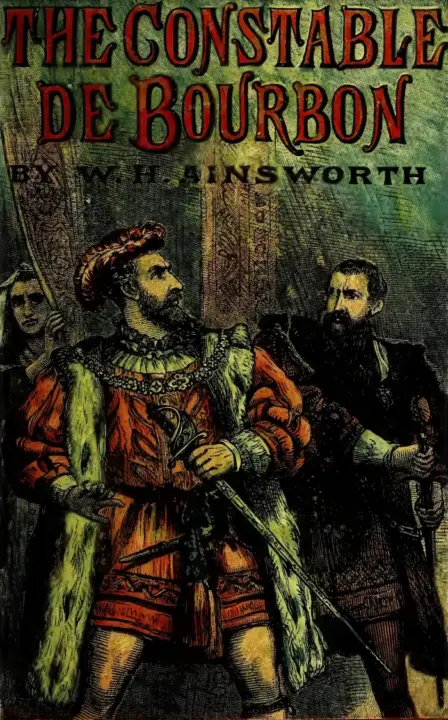
"The Constable De Bourbon" by William Harrison Ainsworth is a historical novel written in the mid-19th century. The narrative unfolds in the context of 16th-century France, focusing on the titular character, Charles de Bourbon, the Constable of France, who navigates the tumultuous political and personal betrayals at the royal court. Themes of ambition, rivalry, and the quest for power resonate throughout the story, highlighting Bourbon's struggles with King François I and the Duchess d'Angoulême. At the start of the novel, we are introduced to a grand cavalcade entering the Forest of Fontainebleau, heralding the arrival of Charles de Bourbon amidst a backdrop of royal and noble pageantry. As the opening unfolds, it meticulously details Bourbon’s illustrious yet contentious background, his noble stature, and the complicated relationships he maintains with the court, especially with the king and the duchess. Bourbon's discontent with his treatment at court, highlighted by past grievances and ambitions, sets the stage for a conflict that alludes to a potential rebellion against the king's authority, suggesting a menacing path forward filled with intrigue and dramatic confrontation.
Introduction adapted from the source catalogue; source summaries may be automatically generated.
Free to read · English · 118,233 words · No account needed
MAKE TIME FOR A GOOD BOOK
On by default. Untick to stop anonymous reading totals. Each page counts after 10 seconds in view. How this works.
Anonymous counting is on unless you have switched it off.
“Oh! sire,” exclaimed Diane, again flinging herself at the king's feet, “do not have recourse to such terrible measures. Spare him the torture!--spare him!”
“Let him confess his guilt, then--let him reveal all he knows regarding the plot,” rejoined François.
“Torture will not force me to speak,” said Saint-Val-lier, resolutely. “I should be unworthy of the name I bear if I could betray iny friends. Cease to intercede for me, Diane,” he added to his daughter.
“Remove the prisoners,” said François to Warthy, “and let them be taken with a strong escort to Paris, and lodged in the Conciergerie, there to be kept till commissioners shall be appointed for their trial by the Parliament.”
“Sire,” said Diane, “I crave your majesty's permission to attend my unhappy father to Paris. My presence will be some consolation to him.”
“I cannot grant your request, madame,” replied the king, in an inflexible tone. “You must remain here with the Comtesse de Châteaubriand, Take leave of your father, and let him depart.”
Half distracted, Diane flung herself in her father's arms. While straining her to his breast, Saint-Vallier said, in a low voice:
“Stay not here. Depart instantly for Normandy. Promise me this, and I
shall die content.”
“You shall not die, father,” she cried. “I will obtain your pardon. I will not cease to supplicate the king till he yields.”
“I forbid it,” rejoined Saint-Vallier, authoritatively. “Obey me, as you would know peace hereafter.”
Diane made no reply. Overcome by her emotion, she had swooned in his
arms.
Female attendants were instantly summoned from the adjoining tent, which was appropriated to the Comtesse de Chateaubriand and her ladies, and Saint-Vallier having committed his daughter to the charge of these women, quitted the tent with the Bishop of Autun and Warthy.
The king's injunctions were promptly carried into effect. While the two prisoners were despatched with a guard strong enough to prevent, any attempt at rescue, to Paris, and lodged in the Conciergerie, there to await, their trial, officers were sent forth to all the principal towns in the Lyonnois, the Borbonnois, Auvergne, Bourgogne, and Dauphiné, to proclaim by sound of trumpet the Constable de Bourbon a rebel and a traitor, and to offer in the king's name a reward of ten thousand golden crowns of the sun for his capture. Orders were at the same time issued that all the southern frontiers of the kingdom should be strictly guarded, so as to prevent his flight.
By such means the alarm was spread far and wide with inconceivable rapidity, and it seemed scarcely possible that Bourbon could escape.
Your reading position is saved on this browser. Take it to another device with a library code. Reading pages adapt to text, rather than matching a printed edition.
William Harrison Ainsworth
William Harrison Ainsworth
William Harrison Ainsworth

William Harrison Ainsworth
BEHIND THE BOOK
This eBook is for the use of anyone anywhere in the United States and most other parts of the world at no cost and with almost no restrictions whatsoever. You may copy it, give it away or re-use it under the terms of the Project Gutenberg License included with this eBook or online at www.gutenberg.org. If you are not located in the United States, you will have to check the laws of the country where you are located before using this eBook. Read the source licence.
The original source file, including credits and licence, is retained by this library. Request an original-format copy at no charge. Please include the book title and Project Gutenberg identifier #49681.
KEEP YOUR CURIOSITY GOING
Cécile Tormay

Moritz Busch
Coulson Kernahan
John L. Ransom

Maurice Baring
Frances Wright