THE CLASSIC COLLECTION✦Preston Fight; or, The Insurrection of 1715CLASSIC FREE BOOKS
Preston Fight; or, The Insurrection of 1715
William Harrison Ainsworth
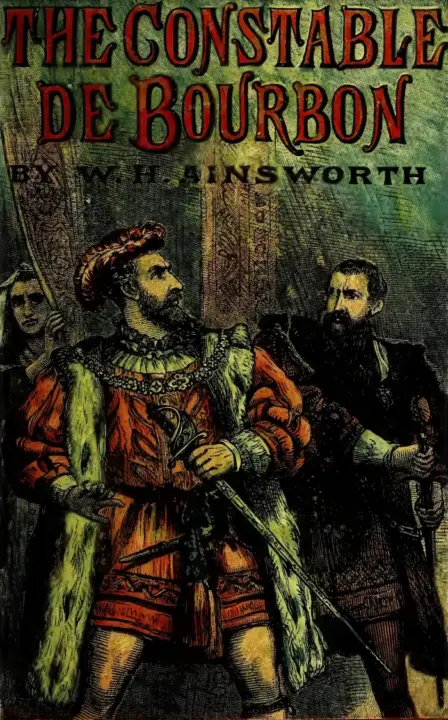
THE CLASSIC COLLECTION · 1866
"The Constable De Bourbon" by William Harrison Ainsworth is a historical novel written in the mid-19th century. The narrative unfolds in the context of 16th-century France, focusing on the titular character, Charles de Bourbon, the Constable of France, who navigates the tumultuous political and personal betrayals at the royal court. Themes of ambition, rivalry, and the quest for power resonate throughout the story, highlighting Bourbon's struggles with King François I and the Duchess d'Angoulême. At the start of the novel, we are introduced to a grand cavalcade entering the Forest of Fontainebleau, heralding the arrival of Charles de Bourbon amidst a backdrop of royal and noble pageantry. As the opening unfolds, it meticulously details Bourbon’s illustrious yet contentious background, his noble stature, and the complicated relationships he maintains with the court, especially with the king and the duchess. Bourbon's discontent with his treatment at court, highlighted by past grievances and ambitions, sets the stage for a conflict that alludes to a potential rebellion against the king's authority, suggesting a menacing path forward filled with intrigue and dramatic confrontation.
Introduction adapted from the source catalogue; source summaries may be automatically generated.
Free to read · English · 118,233 words · No account needed
MAKE TIME FOR A GOOD BOOK
On by default. Untick to stop anonymous reading totals. Each page counts after 10 seconds in view. How this works.
Anonymous counting is on unless you have switched it off.
“You are lukewarm in the cause, cousin,” said Bourbon. “Perhaps you may feel differently when I inform you that his majesty designs to take your daughter, the Comtesse de Maulévrier, with him to Lyons.”
“Ha!” exclaimed Saint-Vallier, as if struck by a sharp pang. “Rather than this should be, I would consent to his capture.”
“Who is mad now, M. le Comte?” remarked Pom-perant. “Will you entrust the beautiful Diane to this profligate monarch?”
“No, I would sooner see her perish,” rejoined Saint-Vallier. “I will
agree to any plan.”
At this moment a warning exclamation was uttered by the physician who was stationed near the door.
At the signal, Bourbon hastily resumed his gown, and flung himself upon
the couch.
Scarcely were these preparations completed, when Perot de Warthy and the Comte de Maulévrier entered. They both glanced suspiciously at the band of young seigneurs, who had withdrawn to the back of the chamber.
Saint-Vallier alone remained standing near the couch on which Bourbon
was extended.
“What is your business with me, sir?” demanded the Constable of Warthy.
“I am enjoined by his majesty to remain in constant attendance upon your highness,” replied the other, bowing.
“This fellow troubles me,” muttered Bourbon; “I must get rid of him.”
“Louis,” said Saint-Vallier to his son-in-law, “I am glad you have come hither. I was about to seek you. You must take back Diane to Normandy.”
“I cannot comply with your request,” replied Maulévrier. “I return to the Château de Brézé forthwith.”
“So much the better,” cried Saint-Vallier. “Diane must accompany you.”
“Impossible,” replied Maulévrier. “She is gone with the Comtesse de Chateaubriand and the king to Lyons.”
“Gone!” exclaimed Bourbon, starting up. “Has the king set out? I thought he meant to pass the night here?”
“He has changed his mind, and has just quitted the château with his
suite.”
“And you have allowed Diane to accompany him?” demanded Saint-Vallier,
with a look of agony.
“Mort-Dieu! I could not prevent it,” replied Maulévrier--“even if I had the wish,” he added to himself.
Saint-Vallier made no remark, but it was easy to perceive his anguish.
Greatly excited by the unlooked-for intelligence, Bourbon could
scarcely rest upon the couch.
“I cannot comprehend why the king should depart so suddenly,” he said to Warthy. “Has he taken the troops with him?”
“No,” replied the other. “He is only attended by the archers of the royal guard, and the young nobles forming his retinue. The Grand-Master and the Duke de Longueville are left behind with their men.”
“For what purpose?” demanded Bourbon, sternly.
“To keep guard upon the château and the town,” replied Warthy.
Your reading position is saved on this browser. Take it to another device with a library code. Reading pages adapt to text, rather than matching a printed edition.
William Harrison Ainsworth
William Harrison Ainsworth
William Harrison Ainsworth
William Harrison Ainsworth
BEHIND THE BOOK
This eBook is for the use of anyone anywhere in the United States and most other parts of the world at no cost and with almost no restrictions whatsoever. You may copy it, give it away or re-use it under the terms of the Project Gutenberg License included with this eBook or online at www.gutenberg.org. If you are not located in the United States, you will have to check the laws of the country where you are located before using this eBook. Read the source licence.
The original source file, including credits and licence, is retained by this library. Request an original-format copy at no charge. Please include the book title and Project Gutenberg identifier #49681.
KEEP YOUR CURIOSITY GOING
Cécile Tormay

Moritz Busch
Coulson Kernahan
John L. Ransom

Maurice Baring
Frances Wright