THE CLASSIC COLLECTION✦Preston Fight; or, The Insurrection of 1715CLASSIC FREE BOOKS
Preston Fight; or, The Insurrection of 1715
William Harrison Ainsworth
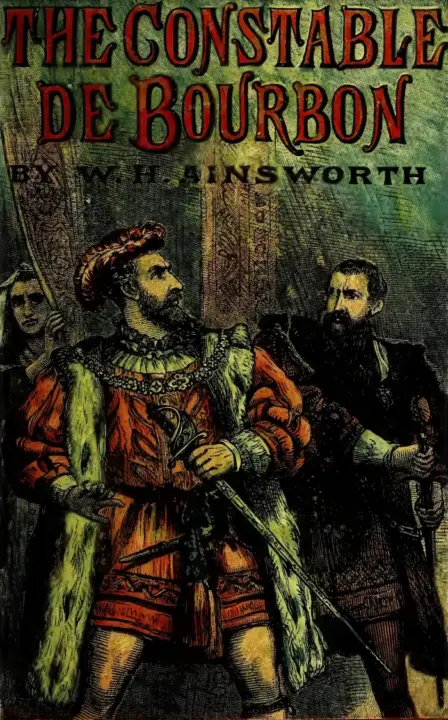
THE CLASSIC COLLECTION · 1866
"The Constable De Bourbon" by William Harrison Ainsworth is a historical novel written in the mid-19th century. The narrative unfolds in the context of 16th-century France, focusing on the titular character, Charles de Bourbon, the Constable of France, who navigates the tumultuous political and personal betrayals at the royal court. Themes of ambition, rivalry, and the quest for power resonate throughout the story, highlighting Bourbon's struggles with King François I and the Duchess d'Angoulême. At the start of the novel, we are introduced to a grand cavalcade entering the Forest of Fontainebleau, heralding the arrival of Charles de Bourbon amidst a backdrop of royal and noble pageantry. As the opening unfolds, it meticulously details Bourbon’s illustrious yet contentious background, his noble stature, and the complicated relationships he maintains with the court, especially with the king and the duchess. Bourbon's discontent with his treatment at court, highlighted by past grievances and ambitions, sets the stage for a conflict that alludes to a potential rebellion against the king's authority, suggesting a menacing path forward filled with intrigue and dramatic confrontation.
Introduction adapted from the source catalogue; source summaries may be automatically generated.
Free to read · English · 118,233 words · No account needed
MAKE TIME FOR A GOOD BOOK
On by default. Untick to stop anonymous reading totals. Each page counts after 10 seconds in view. How this works.
Anonymous counting is on unless you have switched it off.
“He is fully restored,” replied the king. “You will be pleased, I am sure, to learn that I have just promised him the command of half my Italian army.”
“You have done well, sire,” she rejoined. “With Bourbon in joint command with your majesty, victory will be assured. You will accompany the king?” she added to the Constable, with evident anxiety.
“I hope to do so,” he replied. “At all events, I will follow as soon as my strength will permit me.”
“Nay, I must have you with me,” said the king.
“Right, sire--do not leave him behind,” she whispered.
“I know the way to enforce obedience on the Constable's part,” said the king. “I shall take you with me to Lyons, fair Diane. He will follow quickly then.”
“Sire!” exclaimed Bourbon, with ill-concealed vexation, “the countess is here with her father!”
“What of that? I shall not ask his consent,” replied the king. “The only person who has any right to object is Maulévrier, and he is not likely to interfere. The Comtesse de Châteaubriand and a large party of court dames are in my train,” he added to Diane. “You shall accompany them.” He then continued in a low voice: “I cannot doubt the great influence you possess over Bourbon. What you say to him he will obey. Charge him, therefore, to join me a week hence at Lyons.”
And he moved towards the other side of the chamber, as if to examine the portrait of the beautiful Clara de Gonzaga.
Diane instantly took advantage of the opportunity, and, approaching Bourbon, said, in a low voice, “You have accepted the king's offer? You will break with the Emperor and Henry VIII., will you not?”
“It is too late,” replied the Constable, in the same tone. “I have
signed the compact.”
“But consider that the king has promised to share the command of the army with you?” she urged.
“Promises made by princes under such circumstances are rarely kept,” replied Bourbon. “I can never be really restored to the king's favour.”
“You wrong him,” she said. “He is the soul of loyalty and honour.”
“He loyal!” echoed Bourbon. “He is perfidious as his mother. I will not
trust him.”
“That is your determination?”
“My fixed determination,” he rejoined.
“Then we shall never meet again--never, Charles,” she said.
Bourbon made no reply, and his head sank upon his breast. At this moment
the king turned round.
“Have you prevailed upon him, fair Diane?” he asked. “Yes, yes, he will come, sire,” she answered, hastily. “You will?” she added to Bourbon, with an entreating look that ought to have been irresistible.
“You have said it,” he rejoined.
Your reading position is saved on this browser. Take it to another device with a library code. Reading pages adapt to text, rather than matching a printed edition.
William Harrison Ainsworth
William Harrison Ainsworth
William Harrison Ainsworth
William Harrison Ainsworth
BEHIND THE BOOK
This eBook is for the use of anyone anywhere in the United States and most other parts of the world at no cost and with almost no restrictions whatsoever. You may copy it, give it away or re-use it under the terms of the Project Gutenberg License included with this eBook or online at www.gutenberg.org. If you are not located in the United States, you will have to check the laws of the country where you are located before using this eBook. Read the source licence.
The original source file, including credits and licence, is retained by this library. Request an original-format copy at no charge. Please include the book title and Project Gutenberg identifier #49681.
KEEP YOUR CURIOSITY GOING
Cécile Tormay

Moritz Busch
Coulson Kernahan
John L. Ransom

Maurice Baring
Frances Wright