THE CLASSIC COLLECTION✦Preston Fight; or, The Insurrection of 1715CLASSIC FREE BOOKS
Preston Fight; or, The Insurrection of 1715
William Harrison Ainsworth
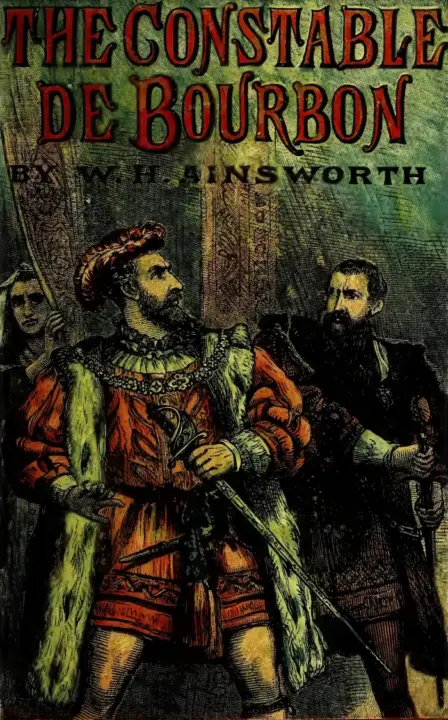
THE CLASSIC COLLECTION · 1866
"The Constable De Bourbon" by William Harrison Ainsworth is a historical novel written in the mid-19th century. The narrative unfolds in the context of 16th-century France, focusing on the titular character, Charles de Bourbon, the Constable of France, who navigates the tumultuous political and personal betrayals at the royal court. Themes of ambition, rivalry, and the quest for power resonate throughout the story, highlighting Bourbon's struggles with King François I and the Duchess d'Angoulême. At the start of the novel, we are introduced to a grand cavalcade entering the Forest of Fontainebleau, heralding the arrival of Charles de Bourbon amidst a backdrop of royal and noble pageantry. As the opening unfolds, it meticulously details Bourbon’s illustrious yet contentious background, his noble stature, and the complicated relationships he maintains with the court, especially with the king and the duchess. Bourbon's discontent with his treatment at court, highlighted by past grievances and ambitions, sets the stage for a conflict that alludes to a potential rebellion against the king's authority, suggesting a menacing path forward filled with intrigue and dramatic confrontation.
Introduction adapted from the source catalogue; source summaries may be automatically generated.
Free to read · English · 118,233 words · No account needed
MAKE TIME FOR A GOOD BOOK
On by default. Untick to stop anonymous reading totals. Each page counts after 10 seconds in view. How this works.
Anonymous counting is on unless you have switched it off.
On the third night after his arrival at Montbrison, while he was seated at supper with his retainers in the great banqueting-hall of the château, two strangers, who described themselves as merchants of Lyons, who were travelling to Clermont, claimed his hospitality.
The Constable at once gave them welcome, and assigned them seats at the lower table. Their attire accorded with the account they gave of themselves, but their bearing proclaimed them persons of rank, and Bourbon easily detected in one of them, a handsome, dark-complexioned man, with fine eyes and a very intelligent countenance, the Seigneur de Beaurain; while, though he was wholly unacquainted with the other--a well-made, but somewhat robust personage, with a bright fresh colour and light-brown locks--he judged him to be Sir John Russell, and he was right in the conjecture.
At the close of the meal, the Constable expressed a desire to converse with his new guests, and requested them to follow him to his private cabinet.
As soon as the door was closed, all disguise was thrown aside, and Bourbon cordially welcomed Beaurain, and expressed the highest satisfaction at beholding the English envoy.
“I regret that I could not receive you in a manner befitting your rank, messeigneurs,” he said. “I do not think I have any spies amid my household, but it is necessary to be cautious. And now be seated, I pray you, and let us address ourselves to the matter in hand.”
“First, let me express the indignation which my royal master the Emperor feels at the infamous treatment experienced by your highness from the King of France,” said Beaurain--“treatment as injudicious as unworthy, and which fully justifies any reprisals you may make.”
“I have also to convey to your highness the expression of similar sentiments from my sovereign, King Henry VIII.,” added Sir John Russell. “His majesty is highly indignant.”
“I have not merely my own private wrongs to redress, messeigneurs,” replied Bourbon, “but those of my country, which is suffering from bad government and oppression, and half ruined by a luxurious monarch, who ravages the people to enrich his mistresses and favourites. François de Valois is unworthy to occupy the throne of France.”
“He shall not occupy it long,” replied Beaurain, with a significant smile. “But before proceeding further, let me offer my credentials to your highness. Here is a letter from the Emperor,” he added, delivering a despatch to the Constable.
Bourbon took it, broke the seal, and read as follows:
“Cousin,--I send you the Sieur de Beaurain, my second chamberlain. Believe him as you would believe me, and doing so you will find me always your good cousin and friend,
“Charles.”
Your reading position is saved on this browser. Take it to another device with a library code. Reading pages adapt to text, rather than matching a printed edition.
William Harrison Ainsworth
William Harrison Ainsworth
William Harrison Ainsworth

William Harrison Ainsworth
BEHIND THE BOOK
This eBook is for the use of anyone anywhere in the United States and most other parts of the world at no cost and with almost no restrictions whatsoever. You may copy it, give it away or re-use it under the terms of the Project Gutenberg License included with this eBook or online at www.gutenberg.org. If you are not located in the United States, you will have to check the laws of the country where you are located before using this eBook. Read the source licence.
The original source file, including credits and licence, is retained by this library. Request an original-format copy at no charge. Please include the book title and Project Gutenberg identifier #49681.
KEEP YOUR CURIOSITY GOING
Cécile Tormay

Moritz Busch
Coulson Kernahan
John L. Ransom

Maurice Baring
Frances Wright