THE CLASSIC COLLECTION✦Preston Fight; or, The Insurrection of 1715CLASSIC FREE BOOKS
Preston Fight; or, The Insurrection of 1715
William Harrison Ainsworth
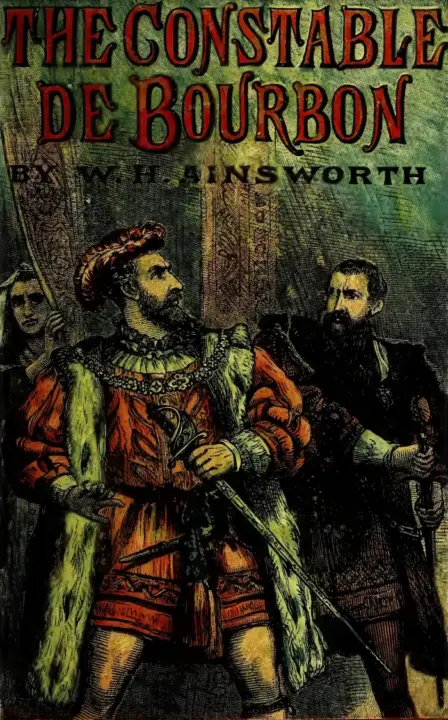
THE CLASSIC COLLECTION · 1866
"The Constable De Bourbon" by William Harrison Ainsworth is a historical novel written in the mid-19th century. The narrative unfolds in the context of 16th-century France, focusing on the titular character, Charles de Bourbon, the Constable of France, who navigates the tumultuous political and personal betrayals at the royal court. Themes of ambition, rivalry, and the quest for power resonate throughout the story, highlighting Bourbon's struggles with King François I and the Duchess d'Angoulême. At the start of the novel, we are introduced to a grand cavalcade entering the Forest of Fontainebleau, heralding the arrival of Charles de Bourbon amidst a backdrop of royal and noble pageantry. As the opening unfolds, it meticulously details Bourbon’s illustrious yet contentious background, his noble stature, and the complicated relationships he maintains with the court, especially with the king and the duchess. Bourbon's discontent with his treatment at court, highlighted by past grievances and ambitions, sets the stage for a conflict that alludes to a potential rebellion against the king's authority, suggesting a menacing path forward filled with intrigue and dramatic confrontation.
Introduction adapted from the source catalogue; source summaries may be automatically generated.
Free to read · English · 118,233 words · No account needed
MAKE TIME FOR A GOOD BOOK
On by default. Untick to stop anonymous reading totals. Each page counts after 10 seconds in view. How this works.
Anonymous counting is on unless you have switched it off.
“Drink of this, madame,” said Cornelius Agrippa, offering her a phial. “It is a sovereign elixir, and will restore you.”
But she had not strength to take the phial, and was evidently sinking.
Bourbon, however, placed the elixir to her lips, and made her swallow a few drops. The effect was instantaneous and almost magical. New strength seemed imparted to her limbs, the hue of health returned to her cadaverous cheeks, and she was able to stand without support.
“You have given me new life,” she said to Agrippa.
“Waste not a moment of it, madame,” he replied. “It may not be of long
duration.”
Just then, the great folding-doors at the end of the hall were thrown open, and the king, accompanied by the Duchess d'Angoulême and Bonnivet, entered the salon. Behind them came a crowd of courtiers, amongst whom were Montmorency, Saint-Vallier, and René de Bretagne.
“I have my wish. She is here!” cried the old duchess.
On the entrance of the king, Claude advanced to meet him, and the Dame de Beaujeu followed closely behind her, marching with the firmness and majesty of former years. As he beheld her move along in this way, Mathieu Bernard observed to Agrippa:
“You have performed a miracle.”
“I have but restored the vital energies for a moment,” replied the other. “It is the last flash of the expiring taper.”
The royal party met in the centre of the salon. Bourbon had followed his mother-in-law, and Saint-Vallier and René came over and stationed themselves beside him.
“I am sorry to learn, sire,” said Claude, “that our cousin, the Constable de Bourbon, has incurred your displeasure. Let me intercede for him with your majesty.”
“It is true that the Duke dc Bourbon has deeply offended me,” said the king. “But it is not too late for his restoration to favour.”
“You hear that, prince,” said Claude to the Constable. “All may yet be
well.”
“Sire,” interposed the Dame de Beaujeu, “I ask for justice to my son-in-law, the Duke de Bourbon. Has he not served you faithfully? Has he not brought you men and treasure? Has he not bled for you in the field? And how has he been rewarded? By slights, by the withdrawal of his pensions, by the spoliation of his property, by disgrace, by dishonour. Sire, wrongs like these are enough to make a traitor of the noblest and most loyal heart in France.”
“No wrong, madame, has been done to the Constable de Bourbon,” rejoined the king. “But, if I am not misinformed, he has already played the traitor.”
Bourbon looked sternly at the king, but took no other notice of the
insinuation.
Your reading position is saved on this browser. Take it to another device with a library code. Reading pages adapt to text, rather than matching a printed edition.
William Harrison Ainsworth
William Harrison Ainsworth
William Harrison Ainsworth

William Harrison Ainsworth
BEHIND THE BOOK
This eBook is for the use of anyone anywhere in the United States and most other parts of the world at no cost and with almost no restrictions whatsoever. You may copy it, give it away or re-use it under the terms of the Project Gutenberg License included with this eBook or online at www.gutenberg.org. If you are not located in the United States, you will have to check the laws of the country where you are located before using this eBook. Read the source licence.
The original source file, including credits and licence, is retained by this library. Request an original-format copy at no charge. Please include the book title and Project Gutenberg identifier #49681.
KEEP YOUR CURIOSITY GOING
Cécile Tormay

Moritz Busch
Coulson Kernahan
John L. Ransom

Maurice Baring
Frances Wright