THE CLASSIC COLLECTION✦Preston Fight; or, The Insurrection of 1715CLASSIC FREE BOOKS
Preston Fight; or, The Insurrection of 1715
William Harrison Ainsworth
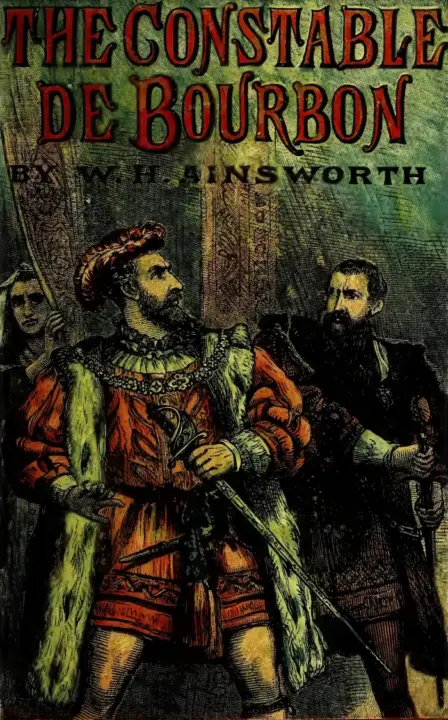
THE CLASSIC COLLECTION · 1866
"The Constable De Bourbon" by William Harrison Ainsworth is a historical novel written in the mid-19th century. The narrative unfolds in the context of 16th-century France, focusing on the titular character, Charles de Bourbon, the Constable of France, who navigates the tumultuous political and personal betrayals at the royal court. Themes of ambition, rivalry, and the quest for power resonate throughout the story, highlighting Bourbon's struggles with King François I and the Duchess d'Angoulême. At the start of the novel, we are introduced to a grand cavalcade entering the Forest of Fontainebleau, heralding the arrival of Charles de Bourbon amidst a backdrop of royal and noble pageantry. As the opening unfolds, it meticulously details Bourbon’s illustrious yet contentious background, his noble stature, and the complicated relationships he maintains with the court, especially with the king and the duchess. Bourbon's discontent with his treatment at court, highlighted by past grievances and ambitions, sets the stage for a conflict that alludes to a potential rebellion against the king's authority, suggesting a menacing path forward filled with intrigue and dramatic confrontation.
Introduction adapted from the source catalogue; source summaries may be automatically generated.
Free to read · English · 118,233 words · No account needed
MAKE TIME FOR A GOOD BOOK
On by default. Untick to stop anonymous reading totals. Each page counts after 10 seconds in view. How this works.
Anonymous counting is on unless you have switched it off.
“His majesty must pledge his royal word to return to prison, if all the conditions of the treaty be not fulfilled within three months,” said Lannoy.
“How say you, brother? Will you give that pledge?” demanded Charles V.
“He will--he does!” interposed Marguerite.
“Nay, madame, let the king speak for himself,” said the Emperor.
“I give the required pledge,” said François, with evident reluctance.
“But your majesty must also give hostages for your good faith,” remarked
Bourbon.
“Hostages!” exclaimed François.
“Yes, sire, hostages--hostages the most precious to yourself and to your people--your two elder sons. They must take your place, and remain in captivity till all be fulfilled.”
“Sire, you do not require this?” cried François.
“If you mean fairly, brother--as I feel sure you do--where is the hardship?” rejoined Charles V., “I must have an exchange of prisoners.”
“Assent,” whispered Marguerite. “We will soon find means to liberate
the princes.”
“Well, sire, I must perforce agree,” said François.
“One point only remains,” said the Emperor. “I would willingly have kept it separate, but circumstances require that it should form part of the treaty. It relates to my sister Leanor, the widowed queen of Portugal.”
“Yes, sire, and I now renew the proposal I have made to you respecting the queen,” said François. “Do you agree to give me her hand?”
“Sire,” interposed Bourbon, haughtily, “you have already promised your
sister to me.”
“Before giving that promise I ought to have consulted her,” said
Charles.
“You would have me to understand that she declines the alliance,” said
Bourbon.
“The queen could scarce hesitate between a proscribed prince and a powerful monarch,” said Marguerite, in a tone that stung Bourbon to the quick.
“You mistake, madame,” he cried, sharply. “'Tis the prince who is powerful, and the king a prisoner. However, I relinquish my claim. Your Imperial Majesty is free to bestow the queen your sister on whomsoever you list.”
“Then, brother, she is yours,” said the Emperor to François; “and I may now tell you frankly that your chivalrous qualities have won her admiration, and that she can give you her heart as well as her hand. The alliance, I trust, will form a lasting bond of amity between us. By the terms of the treaty you are bound to cede Burgundy to me. I am willing that you should settle the duchy upon my sister, to revert to me in default of issue by the marriage.”
“Sire, I am content,” said François.
“Since we are fully agreed, let the treaty be signed,” said Charles V
Your reading position is saved on this browser. Take it to another device with a library code. Reading pages adapt to text, rather than matching a printed edition.
William Harrison Ainsworth
William Harrison Ainsworth
William Harrison Ainsworth

William Harrison Ainsworth
BEHIND THE BOOK
This eBook is for the use of anyone anywhere in the United States and most other parts of the world at no cost and with almost no restrictions whatsoever. You may copy it, give it away or re-use it under the terms of the Project Gutenberg License included with this eBook or online at www.gutenberg.org. If you are not located in the United States, you will have to check the laws of the country where you are located before using this eBook. Read the source licence.
The original source file, including credits and licence, is retained by this library. Request an original-format copy at no charge. Please include the book title and Project Gutenberg identifier #49681.
KEEP YOUR CURIOSITY GOING
Cécile Tormay

Moritz Busch
Coulson Kernahan
John L. Ransom

Maurice Baring
Frances Wright