THE CLASSIC COLLECTION✦Preston Fight; or, The Insurrection of 1715CLASSIC FREE BOOKS
Preston Fight; or, The Insurrection of 1715
William Harrison Ainsworth
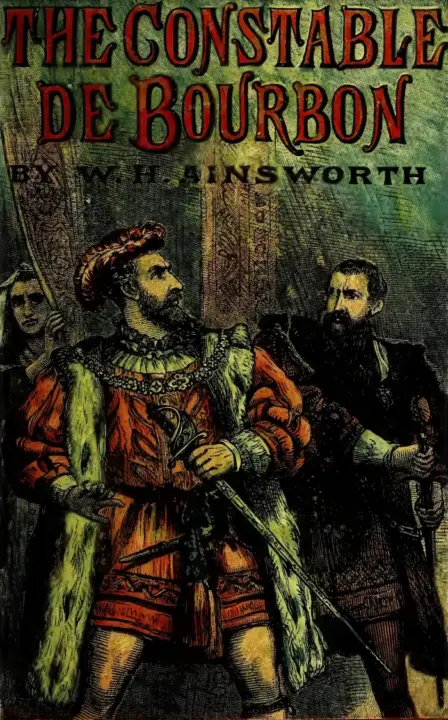
THE CLASSIC COLLECTION · 1866
"The Constable De Bourbon" by William Harrison Ainsworth is a historical novel written in the mid-19th century. The narrative unfolds in the context of 16th-century France, focusing on the titular character, Charles de Bourbon, the Constable of France, who navigates the tumultuous political and personal betrayals at the royal court. Themes of ambition, rivalry, and the quest for power resonate throughout the story, highlighting Bourbon's struggles with King François I and the Duchess d'Angoulême. At the start of the novel, we are introduced to a grand cavalcade entering the Forest of Fontainebleau, heralding the arrival of Charles de Bourbon amidst a backdrop of royal and noble pageantry. As the opening unfolds, it meticulously details Bourbon’s illustrious yet contentious background, his noble stature, and the complicated relationships he maintains with the court, especially with the king and the duchess. Bourbon's discontent with his treatment at court, highlighted by past grievances and ambitions, sets the stage for a conflict that alludes to a potential rebellion against the king's authority, suggesting a menacing path forward filled with intrigue and dramatic confrontation.
Introduction adapted from the source catalogue; source summaries may be automatically generated.
Free to read · English · 118,233 words · No account needed
MAKE TIME FOR A GOOD BOOK
On by default. Untick to stop anonymous reading totals. Each page counts after 10 seconds in view. How this works.
Anonymous counting is on unless you have switched it off.
“Sire,” cried Pomperant, in the most earnest tones he could command, “I conjure you not to struggle against fate. The battle is utterly lost, and all your valour can only end in your own destruction.”
“I do not desire to survive this fatal day,” rejoined the king, fiercely. “I will not yield. If you would boast that you have slain the King of France, draw your sword and attack me.”
“No, sire. I will never lift my arm against your person,” said Pomperant, respectfully. “But since you have done all that valour can achieve--since you have fought as monarch of France never fought before--since further resistance is in vain, let me implore you to yield to my master, the Duke de Bourbon.”
“Yield to Bourbon! Yield to that rebel and traitor!--never!” exclaimed the king, furiously. “Wert thou not kneeling before me, villain, I would strike thee dead for daring to make the proposition to me. If I surrender to any one, it shall be to the Marquis of Pescara. He is a valiant captain, and loyal to his sovereign.”
“Pescara is wounded, sire, and unable to protect you,” rejoined Pomperant. “But the Viceroy of Naples is at hand.”
“Let him come to me, then,” said François.
Some soldiers were instantly despatched on this errand by Pomperant, who remained standing near the king to protect him. Though smarting from his wounds, François refused all assistance; but feeling faint from loss of blood, he sat down upon the breathless body of his charger, and took off his helmet.
“Fill this with water for me,” he said, giving the casque to a soldier. “I am sore athirst.”
The man hurried to the river, filled the helmet, and brought it to him. François drank eagerly, and breaking off an ornament, bestowed it upon the soldier.
At this moment Lannoy rode up, and, dismounting, knelt before the king, who had risen at his approach, and now assumed a dignified and majestic demeanour. When he spoke, his accents were firm, but full of sadness.
“Here is my sword,” he said, delivering the bloodstained weapon to the Viceroy. “I yield myself prisoner to the Emperor your master. I might have saved myself by flight, but I would have died rather than quit the field dishonourably.”
“Your majesty has held out to the latest moment,” rejoined Lannoy. “Scarce one of your soldiers but has thrown down his arms. Doubt not that you will be worthily treated by the Emperor.”
Lannoy then kissed the hand graciously extended towards him, and drawing his own sword presented it to the king.
“I will take the weapon, though I cannot use it,” said François.
Your reading position is saved on this browser. Take it to another device with a library code. Reading pages adapt to text, rather than matching a printed edition.
William Harrison Ainsworth
William Harrison Ainsworth
William Harrison Ainsworth

William Harrison Ainsworth
BEHIND THE BOOK
This eBook is for the use of anyone anywhere in the United States and most other parts of the world at no cost and with almost no restrictions whatsoever. You may copy it, give it away or re-use it under the terms of the Project Gutenberg License included with this eBook or online at www.gutenberg.org. If you are not located in the United States, you will have to check the laws of the country where you are located before using this eBook. Read the source licence.
The original source file, including credits and licence, is retained by this library. Request an original-format copy at no charge. Please include the book title and Project Gutenberg identifier #49681.
KEEP YOUR CURIOSITY GOING
Cécile Tormay

Moritz Busch
Coulson Kernahan
John L. Ransom

Maurice Baring
Frances Wright