THE CLASSIC COLLECTION✦Preston Fight; or, The Insurrection of 1715CLASSIC FREE BOOKS
Preston Fight; or, The Insurrection of 1715
William Harrison Ainsworth
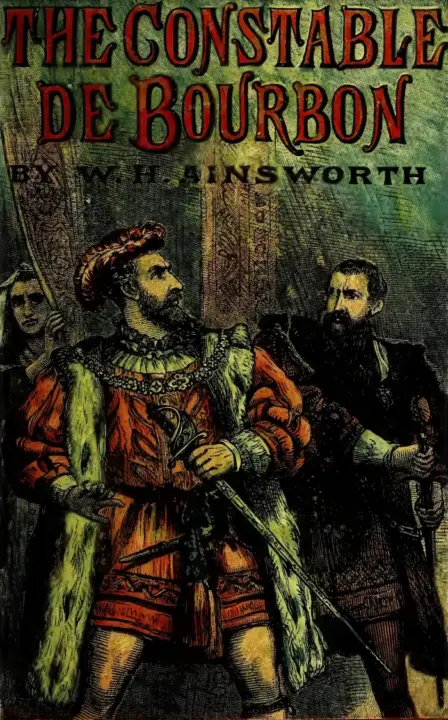
THE CLASSIC COLLECTION · 1866
"The Constable De Bourbon" by William Harrison Ainsworth is a historical novel written in the mid-19th century. The narrative unfolds in the context of 16th-century France, focusing on the titular character, Charles de Bourbon, the Constable of France, who navigates the tumultuous political and personal betrayals at the royal court. Themes of ambition, rivalry, and the quest for power resonate throughout the story, highlighting Bourbon's struggles with King François I and the Duchess d'Angoulême. At the start of the novel, we are introduced to a grand cavalcade entering the Forest of Fontainebleau, heralding the arrival of Charles de Bourbon amidst a backdrop of royal and noble pageantry. As the opening unfolds, it meticulously details Bourbon’s illustrious yet contentious background, his noble stature, and the complicated relationships he maintains with the court, especially with the king and the duchess. Bourbon's discontent with his treatment at court, highlighted by past grievances and ambitions, sets the stage for a conflict that alludes to a potential rebellion against the king's authority, suggesting a menacing path forward filled with intrigue and dramatic confrontation.
Introduction adapted from the source catalogue; source summaries may be automatically generated.
Free to read · English · 118,233 words · No account needed
MAKE TIME FOR A GOOD BOOK
On by default. Untick to stop anonymous reading totals. Each page counts after 10 seconds in view. How this works.
Anonymous counting is on unless you have switched it off.
“Dishonour!” echoed the king, astounded and enraged. “Dare you breathe such a word in connexion with my mother? What mean you? Speak!”
François looked at him with eyes that seemed to flash lightning. Bourbon, however, did not quail before the fierce looks and gestures of the king, but replied with stern significance:
“A man of my quality, sire, does not marry a wanton.”
“Sang Dieu! this to me!” cried the king, transported with rage.
And he struck Bourbon in the face with his hand.
This mortal insult, as may be imagined, produced a fearful effect on the Constable. His first impulse was to slay his assailant, and his hand involuntarily clutched his sword. But he abandoned the insane design almost as soon as formed. In the effort to constrain himself, his frame and features were terribly convulsed, and a cry of rage that was scarcely human escaped him. The king watched him narrowly, prepared for attack, but manifesting no alarm.
“Sire,” cried Bourbon, at length, “that was a craven blow, unworthy of one who aspires to be the first knight in Christendom. No other person but yourself, who had thus insulted me, should live. But you are safe. You have dishonoured me for ever. Take back the dignity you have bestowed upon me, and which I am unworthy longer to wear,” he added, tearing the jewelled cross of Saint Michael from his breast, and casting it on the ground. “Others may fight for you. My sword shall never again be drawn in your service.”
With a heart bursting with rage and grief, he rushed out of the room.
As Bourbon disappeared, the duchess came from behind the hangings.
“So, you have heard what has passed between us, madame?” cried the king.
“I have,” she replied. “He is a false traitor and a liar, and has been rightly served. But you will not let him quit the palace? By that blow', which he richly deserved, you have made him your mortal enemy. You have him now in your hands, and you will rue it, if you suffer him to escape. He has many partisans, and may raise a revolt.”
“You alarm yourself unnecessarily, madame,” rejoined François.
“I have good reason for apprehension,” rejoined the duchess. “He has already entered into secret negotiations with the Emperor.”
“Foi de gentilhomme! if I thought so, I would order his instant arrest!” exclaimed the king. “But are you sure, madame? Have you any proof of what you assert?”
“He boasted, just now that the Emperor had offered him the widowed Queen of Portugal in marriage,” replied the duchess. “Does not that prove that secret overtures have been made him?”
Your reading position is saved on this browser. Take it to another device with a library code. Reading pages adapt to text, rather than matching a printed edition.
William Harrison Ainsworth
William Harrison Ainsworth
William Harrison Ainsworth
William Harrison Ainsworth
BEHIND THE BOOK
This eBook is for the use of anyone anywhere in the United States and most other parts of the world at no cost and with almost no restrictions whatsoever. You may copy it, give it away or re-use it under the terms of the Project Gutenberg License included with this eBook or online at www.gutenberg.org. If you are not located in the United States, you will have to check the laws of the country where you are located before using this eBook. Read the source licence.
The original source file, including credits and licence, is retained by this library. Request an original-format copy at no charge. Please include the book title and Project Gutenberg identifier #49681.
KEEP YOUR CURIOSITY GOING
Cécile Tormay

Moritz Busch
Coulson Kernahan
John L. Ransom

Maurice Baring
Frances Wright