THE CLASSIC COLLECTION✦Preston Fight; or, The Insurrection of 1715CLASSIC FREE BOOKS
Preston Fight; or, The Insurrection of 1715
William Harrison Ainsworth
THE CLASSIC COLLECTION · 1866
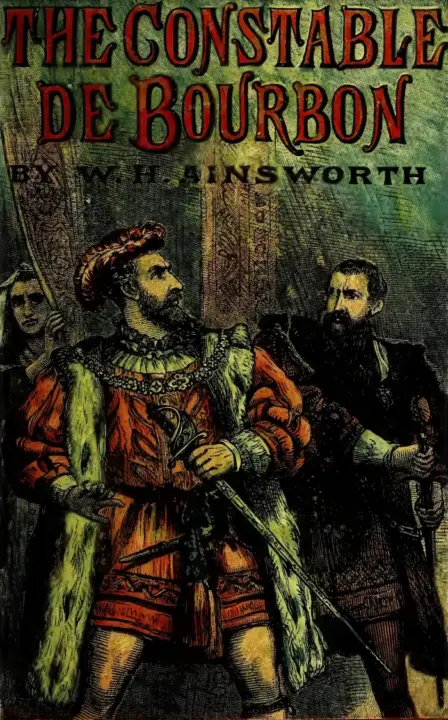
"The Constable De Bourbon" by William Harrison Ainsworth is a historical novel written in the mid-19th century. The narrative unfolds in the context of 16th-century France, focusing on the titular character, Charles de Bourbon, the Constable of France, who navigates the tumultuous political and personal betrayals at the royal court. Themes of ambition, rivalry, and the quest for power resonate throughout the story, highlighting Bourbon's struggles with King François I and the Duchess d'Angoulême. At the start of the novel, we are introduced to a grand cavalcade entering the Forest of Fontainebleau, heralding the arrival of Charles de Bourbon amidst a backdrop of royal and noble pageantry. As the opening unfolds, it meticulously details Bourbon’s illustrious yet contentious background, his noble stature, and the complicated relationships he maintains with the court, especially with the king and the duchess. Bourbon's discontent with his treatment at court, highlighted by past grievances and ambitions, sets the stage for a conflict that alludes to a potential rebellion against the king's authority, suggesting a menacing path forward filled with intrigue and dramatic confrontation.
Introduction adapted from the source catalogue; source summaries may be automatically generated.
Free to read · English · 118,233 words · No account needed
MAKE TIME FOR A GOOD BOOK
On by default. Untick to stop anonymous reading totals. Each page counts after 10 seconds in view. How this works.
Anonymous counting is on unless you have switched it off.
“Any feverish symptoms?” inquired the doctor.
“Yes,” she replied. “About an hour ago, I felt stifled with heat, and then had a shivering fit. But there is nothing to be alarmed at?” she added, nervously.
“Nothing--nothing,” he replied. “But you must retire to rest immediately. The fever has not quite left you, and may return.”
“But why should I retire to rest, dear doctor?” appealed the countess. “I do not feel ill. Ah! I see you are alarmed about me,” she continued, gazing eagerly at him. “Tell me what is the matter?”
“Do not agitate yourself, signora,” he returned. “You will soon be better--but you must attend to my directions. I will send you a febrifuge presently, and will see you in the morning. Good night, countess.”
He then bowed and departed, and Bonnivet, feeling very uneasy, followed
him out of the room.
“I trust the countess is not seriously ill, doctor?” inquired Bonnivet.
“A passing indisposition,” replied Nardi, evasively. “But you must not stay, monseigneur. Take leave of the countess. At this awful season there is no security that they who part at night may meet again on the morrow.”
The last words were uttered with a significance that increased
Bonnivet's uneasiness.
“Do not conceal the truth from me, doctor,” he said. “The certainty, however dreadful, would be more tolerable than suspense.”
“What purpose will it answer to tell you what I think?” rejoined Nardi. “Be advised by me, and leave the palace without delay. Every moment you remain here increases the risk.”
“Ha!” ejaculated Bonnivet, horror-stricken. “I now understand. But I will not leave her.”
“As you please, monseigneur,” said Nardi. “I have warned you.”
“Stay, I implore of you,” cried Bonnivet, detaining him. “Is there any means of saving her?”
“Alas! none,” replied Nardi. “She is beyond the power of medicine. I have seen too many fatal cases lately to be mistaken. She has all the worst symptoms about her. Before to-morrow morning she will be a corpse.”
“Oh! say not so, doctor!” cried Bonnivet, distractedly.
“You are never content,” rejoined Nardi, petulantly, “You try to extract the truth from me, and when I yield to your importunities, you are dissatisfied. You now know the worst. Act as you think proper; but if you would not yourself fall a victim to the pestilence, you will leave the palace as expeditiously as possible. I will send a nurse to attend upon the countess, and a priest to minister to her soul's welfare.”
“I cannot, will not, leave her,” rejoined Bonnivet, rushing back to the
saloon.
“Then share her fate,” muttered Nardi, shrugging his shoulders as he
departed.
Your reading position is saved on this browser. Take it to another device with a library code. Reading pages adapt to text, rather than matching a printed edition.
William Harrison Ainsworth
William Harrison Ainsworth
William Harrison Ainsworth

William Harrison Ainsworth
BEHIND THE BOOK
This eBook is for the use of anyone anywhere in the United States and most other parts of the world at no cost and with almost no restrictions whatsoever. You may copy it, give it away or re-use it under the terms of the Project Gutenberg License included with this eBook or online at www.gutenberg.org. If you are not located in the United States, you will have to check the laws of the country where you are located before using this eBook. Read the source licence.
The original source file, including credits and licence, is retained by this library. Request an original-format copy at no charge. Please include the book title and Project Gutenberg identifier #49681.
KEEP YOUR CURIOSITY GOING
Cécile Tormay

Moritz Busch
Coulson Kernahan
John L. Ransom

Maurice Baring
Frances Wright