THE CLASSIC COLLECTION✦Preston Fight; or, The Insurrection of 1715CLASSIC FREE BOOKS
Preston Fight; or, The Insurrection of 1715
William Harrison Ainsworth
THE CLASSIC COLLECTION · 1866
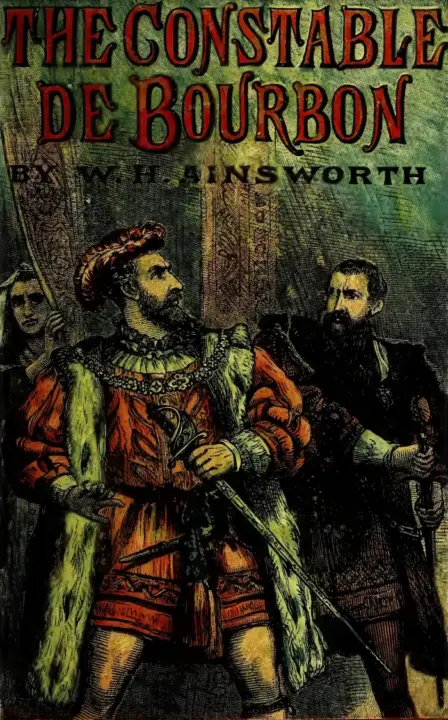
"The Constable De Bourbon" by William Harrison Ainsworth is a historical novel written in the mid-19th century. The narrative unfolds in the context of 16th-century France, focusing on the titular character, Charles de Bourbon, the Constable of France, who navigates the tumultuous political and personal betrayals at the royal court. Themes of ambition, rivalry, and the quest for power resonate throughout the story, highlighting Bourbon's struggles with King François I and the Duchess d'Angoulême. At the start of the novel, we are introduced to a grand cavalcade entering the Forest of Fontainebleau, heralding the arrival of Charles de Bourbon amidst a backdrop of royal and noble pageantry. As the opening unfolds, it meticulously details Bourbon’s illustrious yet contentious background, his noble stature, and the complicated relationships he maintains with the court, especially with the king and the duchess. Bourbon's discontent with his treatment at court, highlighted by past grievances and ambitions, sets the stage for a conflict that alludes to a potential rebellion against the king's authority, suggesting a menacing path forward filled with intrigue and dramatic confrontation.
Introduction adapted from the source catalogue; source summaries may be automatically generated.
Free to read · English · 118,233 words · No account needed
MAKE TIME FOR A GOOD BOOK
On by default. Untick to stop anonymous reading totals. Each page counts after 10 seconds in view. How this works.
Anonymous counting is on unless you have switched it off.
“You ought to be soldiers' wives,” said François, smiling, “and on my return from Italy--if you be not meanwhile wedded--I must find you husbands among my bravest captains. It greatly rejoices me to see you here to-day, for I had heard--much to my grief--that you perished during the explosion of a mine.”
“We narrowly escaped being crushed to death, sire,” replied Marcelline. “But after lying beneath the ruins for some hours, we were fortunately extricated.”
“Heaven designed you for a better fate,” said the king. “I have but imperfectly discharged my obligations to you. Whenever you have a favour to solicit, hesitate not to come to me. Foi de gentilhomme! the request shall be granted.”
“At some future time I may claim fulfilment of your royal promise, sire,” returned Marcelline.
The whole party then retired, charmed with their gracious reception. A sumptuous repast awaited them in the banqueting-chamber, and the rest of the day was spent in festivity and rejoicing.
“Are you prepared to brave the difficulties of the march and accompany me to Italy?” said François to Diane, as the Amazons withdrew.
“No, sire,” she replied; “and I would fain dissuade you from the expedition. You have now an opportunity of making an advantageous peace with the Emperor. Why not profit by it?”
“Honour forbids me,” he rejoined. “My own inclinations prompt me to remain here. But I must requite the affront offered me by Bourbon. I must win back the duchy I have lost.”
“And for this you will quit France--you will quit me?” she added, in a
lower tone.
“I must,” he replied. “I have been attacked, and I owe it to myself to chastise the insolent aggressor.”
At this moment a letter was handed to him by Bonnivet.
“From the Duchess d'Angoulême, sire,” he said, in a significant tone, as
he delivered it.
“What says your royal mother, sire?” demanded Diane, who had watched his countenance as he perused the letter. “I will wager she is of my mind, and urges you to abandon the expedition.”
“You are right, ma mie,” replied the king. “She tells me she is coming in all haste to Aix, having a secret of great importance to reveal to me, and she entreats me to delay my departure till her arrival.”
“And you will comply with the request, sire?” said Diane. “No doubt she has some state secret to communicate. You will wait?”
“I shall rather hasten my departure,” rejoined the king. “I can guess the nature of her secret. It is a pretext to detain me--but I will not yield. Make ready, messeigneurs,” he added to the leaders near him. “We shall set forth to Italy to-morrow.”
Your reading position is saved on this browser. Take it to another device with a library code. Reading pages adapt to text, rather than matching a printed edition.
William Harrison Ainsworth
William Harrison Ainsworth
William Harrison Ainsworth

William Harrison Ainsworth
BEHIND THE BOOK
This eBook is for the use of anyone anywhere in the United States and most other parts of the world at no cost and with almost no restrictions whatsoever. You may copy it, give it away or re-use it under the terms of the Project Gutenberg License included with this eBook or online at www.gutenberg.org. If you are not located in the United States, you will have to check the laws of the country where you are located before using this eBook. Read the source licence.
The original source file, including credits and licence, is retained by this library. Request an original-format copy at no charge. Please include the book title and Project Gutenberg identifier #49681.
KEEP YOUR CURIOSITY GOING
Cécile Tormay

Moritz Busch
Coulson Kernahan
John L. Ransom

Maurice Baring
Frances Wright