THE CLASSIC COLLECTION✦Preston Fight; or, The Insurrection of 1715CLASSIC FREE BOOKS
Preston Fight; or, The Insurrection of 1715
William Harrison Ainsworth
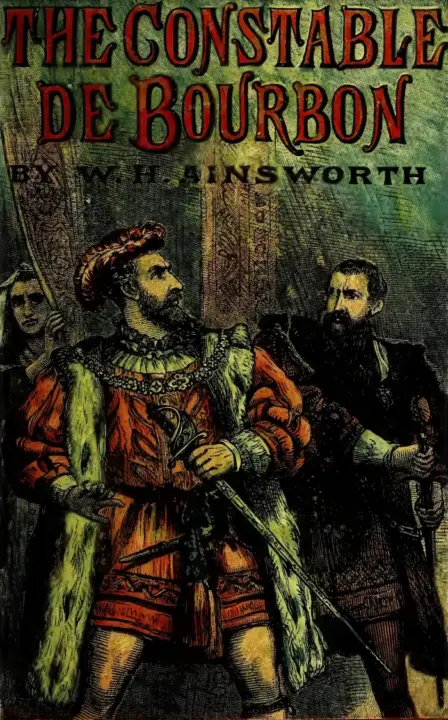
THE CLASSIC COLLECTION · 1866
"The Constable De Bourbon" by William Harrison Ainsworth is a historical novel written in the mid-19th century. The narrative unfolds in the context of 16th-century France, focusing on the titular character, Charles de Bourbon, the Constable of France, who navigates the tumultuous political and personal betrayals at the royal court. Themes of ambition, rivalry, and the quest for power resonate throughout the story, highlighting Bourbon's struggles with King François I and the Duchess d'Angoulême. At the start of the novel, we are introduced to a grand cavalcade entering the Forest of Fontainebleau, heralding the arrival of Charles de Bourbon amidst a backdrop of royal and noble pageantry. As the opening unfolds, it meticulously details Bourbon’s illustrious yet contentious background, his noble stature, and the complicated relationships he maintains with the court, especially with the king and the duchess. Bourbon's discontent with his treatment at court, highlighted by past grievances and ambitions, sets the stage for a conflict that alludes to a potential rebellion against the king's authority, suggesting a menacing path forward filled with intrigue and dramatic confrontation.
Introduction adapted from the source catalogue; source summaries may be automatically generated.
Free to read · English · 118,233 words · No account needed
MAKE TIME FOR A GOOD BOOK
On by default. Untick to stop anonymous reading totals. Each page counts after 10 seconds in view. How this works.
Anonymous counting is on unless you have switched it off.
“I see whither your gaze is directed, my lord, and can guess the thoughts that occupy your mind,” remarked Pomperant, as he rode up. “'Tis a lovely region, that of Provence--an earthly paradise--and it will pain François to lose it.”
“Yet he makes not an effort to check the invasion,” remarked Bourbon. “There is no army to oppose our progress. The conquest will be too easy. By-and-by I will rouse him from his dreams of pleasure, and force him to give me battle. But let us on. I am impatient to set foot in France.”
After halting at the charming city of Nice, and crossing the headlong Var, Bourbon entered Provence with his army. His progress was wholly unimpeded. Marching on through a delightful district to Antibes, he took possession of that little seaport, and proceeded to Grasse.
As he advanced, the country seemed to increase in beauty. The hills were clothed with groves of ilex, arbutus, and myrtle, and the cork-tree flourished in more exposed places. Aloes and cactuses fringed the shore, and olives and vines, figs and mulberries, struggled for mastery on the plains.
Bourbon prevented his army from committing any kind of excess, and though the purpose of his invasion was well understood, the peasants and the inhabitants of the towns did not fly at his approach, but received him joyfully. From Grasse he proceeded to Cannes, with its beautiful bay, and the lovely group of islands, with fort, convent, and church, that face it.
Again marching along a coast of almost unrivalled beauty, and boasting an aqueduct and many other Roman remains, he reached Frejus, and then turning inland, summoned the important town of Draguignan to surrender. The mandate was instantly obeyed, and he entered the town without striking a blow, and was received with all honour by the authorities.
Having taken Hyères, Brignolles, and Tourves, he pursued his march towards Aix, the ancient capital of Provence, and renowned for its fêtes and tournaments in the days of Raimond Beranger and the good René d'Anjou.
As Aix was occupied by a considerable force under the Maréchal de la Palisse, it might have been thought that he would here experience a check, especially as the ancient city was strongly fortified; but as he advanced towards it from Trets, whence he had despatched Pom-perant with a guard to summon it to surrender, La Palisse, unwilling to hazard a siege, withdrew his forces, and retired to Avignon.
When Bourbon, therefore, came within a couple of leagues of the capital of Provence, he encountered a large band of citizens, who had come thus far to meet him.
Your reading position is saved on this browser. Take it to another device with a library code. Reading pages adapt to text, rather than matching a printed edition.
William Harrison Ainsworth
William Harrison Ainsworth
William Harrison Ainsworth

William Harrison Ainsworth
BEHIND THE BOOK
This eBook is for the use of anyone anywhere in the United States and most other parts of the world at no cost and with almost no restrictions whatsoever. You may copy it, give it away or re-use it under the terms of the Project Gutenberg License included with this eBook or online at www.gutenberg.org. If you are not located in the United States, you will have to check the laws of the country where you are located before using this eBook. Read the source licence.
The original source file, including credits and licence, is retained by this library. Request an original-format copy at no charge. Please include the book title and Project Gutenberg identifier #49681.
KEEP YOUR CURIOSITY GOING
Cécile Tormay

Moritz Busch
Coulson Kernahan
John L. Ransom

Maurice Baring
Frances Wright