THE CLASSIC COLLECTION✦Preston Fight; or, The Insurrection of 1715CLASSIC FREE BOOKS
Preston Fight; or, The Insurrection of 1715
William Harrison Ainsworth
THE CLASSIC COLLECTION · 1866
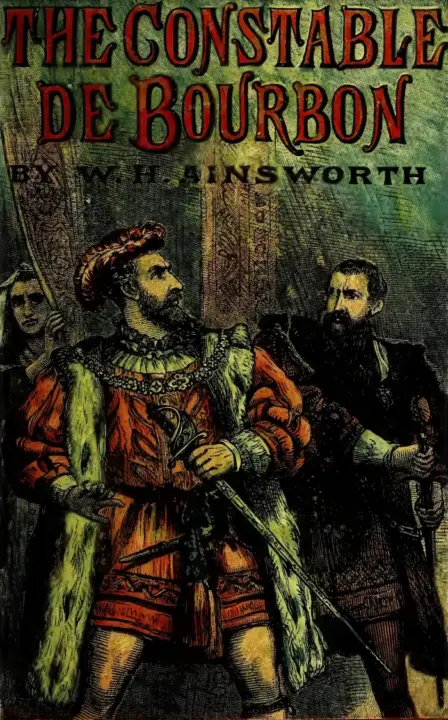
"The Constable De Bourbon" by William Harrison Ainsworth is a historical novel written in the mid-19th century. The narrative unfolds in the context of 16th-century France, focusing on the titular character, Charles de Bourbon, the Constable of France, who navigates the tumultuous political and personal betrayals at the royal court. Themes of ambition, rivalry, and the quest for power resonate throughout the story, highlighting Bourbon's struggles with King François I and the Duchess d'Angoulême. At the start of the novel, we are introduced to a grand cavalcade entering the Forest of Fontainebleau, heralding the arrival of Charles de Bourbon amidst a backdrop of royal and noble pageantry. As the opening unfolds, it meticulously details Bourbon’s illustrious yet contentious background, his noble stature, and the complicated relationships he maintains with the court, especially with the king and the duchess. Bourbon's discontent with his treatment at court, highlighted by past grievances and ambitions, sets the stage for a conflict that alludes to a potential rebellion against the king's authority, suggesting a menacing path forward filled with intrigue and dramatic confrontation.
Introduction adapted from the source catalogue; source summaries may be automatically generated.
Free to read · English · 118,233 words · No account needed
MAKE TIME FOR A GOOD BOOK
On by default. Untick to stop anonymous reading totals. Each page counts after 10 seconds in view. How this works.
Anonymous counting is on unless you have switched it off.
From the contemplation of the bewitching Françoise de Foix we must turn to another lovely woman, who formed part of the assemblage in the gallery. This was the king's sister, Marguerite de Valois, Duchess d'Alençon--La Marguerite des Marguerites, as she was styled by her royal brother, who tenderly loved her. Graceful of person, beautiful of feature, amiable in disposition, a model of virtue in a depraved court, united to a husband she could not respect, and who was incapable of appreciating her merits, yet to whom she was faithful, highly accomplished, learned, and witty, the Duchess d'Alençon was the chief ornament of the court of François I.
About two years subsequent to the period of our history Marguerite was liberated from her husband by death, and espoused in her second nuptials Henri d'Albret, King of Navarre--a consort in all respects better suited to her. As Queen of Navarre, her court was thronged by poets, savants, and men of letters. Clement Marot thus eulogises her:=
```Entre autres dons de grâces immortelles,
```Madame écrit si haut et doucement,
```Que je m'étonne, en voyant choses telles,
```Qu'on n'en reçoit plus d'ebanissement.
```Puis quand je l'ouis parler si sagement,
```Et que je vois sa plume travailler,
```Je tourne bride, et m'ébanis comment
```On est si sot de s'en émerveiller.=
Ronsard, then a handsome page, thus addresses her:=
````Ainsi tu fus, ô princesse,
````Ançois plutôt, ô déesse,
````Tu fus certes tout l'honneur
````Des princesses de notre âge,
````Soit en force de courage,
````Ou soit en royal bonheur.
By some she was styled the Tenth Muse and the Fourth Grace. Her Nouvelles, which obtained a wonderful celebrity in her own day, may be classed with the Decameron of Boccaccio.
Marguerite was dressed in crimson velvet, richly embroidered, and her head-dress was of goldsmith's work, like that of the Comtesse de Châteaubriand. If she was not so fascinating as the latter syren, she possessed infinitely more dignity, and her features had an expression which nothing but purity can impart.
Many other beautiful and high-born dames and demoiselles were present, but we do not think it necessary to describe them, neither can we do more than allude to the brilliant collection of young seigneurs, all magnificently arrayed, by whom the king was attended.
“So you are resolved to go to Italy, sire,” observed the Comtesse de Châteaubriand to the king, who was standing near an open window, gazing into the orange-garden. “Nothing that I can say will detain you.”
Your reading position is saved on this browser. Take it to another device with a library code. Reading pages adapt to text, rather than matching a printed edition.
William Harrison Ainsworth
William Harrison Ainsworth
William Harrison Ainsworth

William Harrison Ainsworth
BEHIND THE BOOK
This eBook is for the use of anyone anywhere in the United States and most other parts of the world at no cost and with almost no restrictions whatsoever. You may copy it, give it away or re-use it under the terms of the Project Gutenberg License included with this eBook or online at www.gutenberg.org. If you are not located in the United States, you will have to check the laws of the country where you are located before using this eBook. Read the source licence.
The original source file, including credits and licence, is retained by this library. Request an original-format copy at no charge. Please include the book title and Project Gutenberg identifier #49681.
KEEP YOUR CURIOSITY GOING
Cécile Tormay

Moritz Busch
Coulson Kernahan
John L. Ransom

Maurice Baring
Frances Wright