THE CLASSIC COLLECTION✦Preston Fight; or, The Insurrection of 1715CLASSIC FREE BOOKS
Preston Fight; or, The Insurrection of 1715
William Harrison Ainsworth
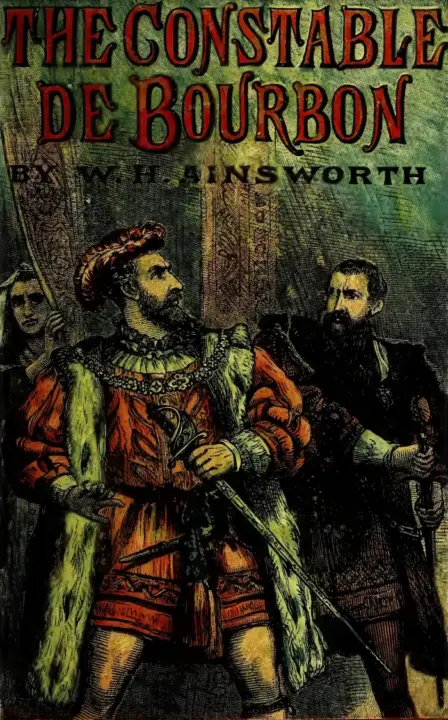
THE CLASSIC COLLECTION · 1866
"The Constable De Bourbon" by William Harrison Ainsworth is a historical novel written in the mid-19th century. The narrative unfolds in the context of 16th-century France, focusing on the titular character, Charles de Bourbon, the Constable of France, who navigates the tumultuous political and personal betrayals at the royal court. Themes of ambition, rivalry, and the quest for power resonate throughout the story, highlighting Bourbon's struggles with King François I and the Duchess d'Angoulême. At the start of the novel, we are introduced to a grand cavalcade entering the Forest of Fontainebleau, heralding the arrival of Charles de Bourbon amidst a backdrop of royal and noble pageantry. As the opening unfolds, it meticulously details Bourbon’s illustrious yet contentious background, his noble stature, and the complicated relationships he maintains with the court, especially with the king and the duchess. Bourbon's discontent with his treatment at court, highlighted by past grievances and ambitions, sets the stage for a conflict that alludes to a potential rebellion against the king's authority, suggesting a menacing path forward filled with intrigue and dramatic confrontation.
Introduction adapted from the source catalogue; source summaries may be automatically generated.
Free to read · English · 118,233 words · No account needed
MAKE TIME FOR A GOOD BOOK
On by default. Untick to stop anonymous reading totals. Each page counts after 10 seconds in view. How this works.
Anonymous counting is on unless you have switched it off.
François I. was not remarkable merely for his personal accomplishments and graces. His mental qualifications were of a very high order. If not erudite or profound, he was well read. He was fond of poetry, and was himself a poet. He delighted in romances of chivalry, “Lancelot du Lac,” “Garin le Lorrain,” and took for his model the peerless “Amadis de Gaule.” In consequence of his predilection for them, the favourite books with the gallants and dames of his court were “Gérard de Nevers,” “Pierre de Provence et la Belle Magueloune,” and “Petit Jehan de Saintré.” Not merely was François I. a lover of literature, and a patron of poets and men of learning, but he warmly encouraged the arts, and his court was frequented by the best painters, sculptors, and architects, whom he brought from Italy.
Endowed with some of the highest and noblest qualities, by nature frank, loyal, and chivalrous, though fiery and impetuous, passionately fond of war, and always thirsting for military renown, François was a perfect type of the nation over which he ruled, and next to Henri IV., who to a certain extent based himself upon him, is the best loved of the French monarchs. His splendid person and noble features, his kingly deportment, his accomplishments, his martial tastes, his courage, his address in the tilt-yard and in the management of arms of all kinds, pike, rapier, two-handed sword, his unequalled skill and grace in horsemanship, his jovial humour, his bonhomie, his devotion to the fair sex, are dwelt upon with satisfaction, and his faults overlooked or forgotten. The following poetical portrait of him is far too brightly coloured:=
```C'est luy qui a grâce et parler de maître,
```Digne d'avoir sur tous droit et puissance,
```Qui sans nommer, se peut assez connoître.
```C'est luy qui a de tout la comioissance.
```De sa beauté il est blanc et vermeil,
```Les cheveux bruns, de grande et belle taille;
```En terre il est comme au ciel le soleil.
```Hardi, vaillant, sage et preux en bataille,
```Il est bénin, doux, humble en sa grandeur,
```Fort et puissant, et plein de patience.=
The faults of François I. were profligacy and prodigality More than once he exhausted his treasury by the immense sums he lavished upon his mistresses and his favourites. So completely did he yield to his love of pleasure, that the greater part of his life which was not occupied in the field was spent in sybaritic enjoyments. Though not tyrannical, he was capricious and vindictive, and not unfrequently strained the royal prerogative to the utmost.
Your reading position is saved on this browser. Take it to another device with a library code. Reading pages adapt to text, rather than matching a printed edition.
William Harrison Ainsworth
William Harrison Ainsworth
William Harrison Ainsworth
William Harrison Ainsworth
BEHIND THE BOOK
This eBook is for the use of anyone anywhere in the United States and most other parts of the world at no cost and with almost no restrictions whatsoever. You may copy it, give it away or re-use it under the terms of the Project Gutenberg License included with this eBook or online at www.gutenberg.org. If you are not located in the United States, you will have to check the laws of the country where you are located before using this eBook. Read the source licence.
The original source file, including credits and licence, is retained by this library. Request an original-format copy at no charge. Please include the book title and Project Gutenberg identifier #49681.
KEEP YOUR CURIOSITY GOING
Cécile Tormay

Moritz Busch
Coulson Kernahan
John L. Ransom

Maurice Baring
Frances Wright