THE CLASSIC COLLECTION✦Preston Fight; or, The Insurrection of 1715CLASSIC FREE BOOKS
Preston Fight; or, The Insurrection of 1715
William Harrison Ainsworth
THE CLASSIC COLLECTION · 1866
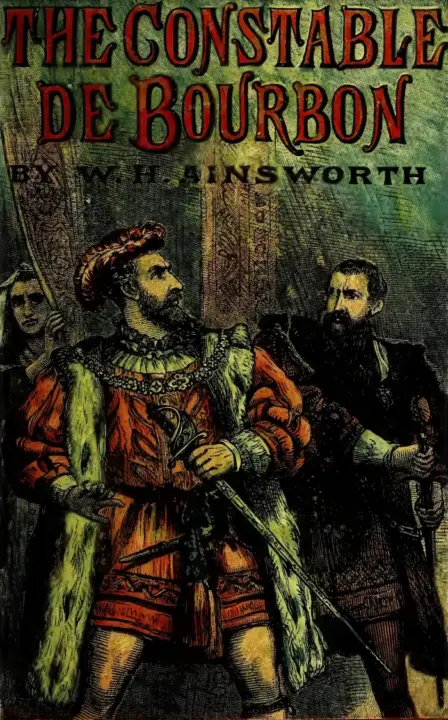
"The Constable De Bourbon" by William Harrison Ainsworth is a historical novel written in the mid-19th century. The narrative unfolds in the context of 16th-century France, focusing on the titular character, Charles de Bourbon, the Constable of France, who navigates the tumultuous political and personal betrayals at the royal court. Themes of ambition, rivalry, and the quest for power resonate throughout the story, highlighting Bourbon's struggles with King François I and the Duchess d'Angoulême. At the start of the novel, we are introduced to a grand cavalcade entering the Forest of Fontainebleau, heralding the arrival of Charles de Bourbon amidst a backdrop of royal and noble pageantry. As the opening unfolds, it meticulously details Bourbon’s illustrious yet contentious background, his noble stature, and the complicated relationships he maintains with the court, especially with the king and the duchess. Bourbon's discontent with his treatment at court, highlighted by past grievances and ambitions, sets the stage for a conflict that alludes to a potential rebellion against the king's authority, suggesting a menacing path forward filled with intrigue and dramatic confrontation.
Introduction adapted from the source catalogue; source summaries may be automatically generated.
Free to read · English · 118,233 words · No account needed
MAKE TIME FOR A GOOD BOOK
On by default. Untick to stop anonymous reading totals. Each page counts after 10 seconds in view. How this works.
Anonymous counting is on unless you have switched it off.
The ferryman performed his part of the business successfully. In another moment the boat struck against the rock, and with a violence that shook her from head to stern. Both parties were now close together, and the soldiers immediately attempted to board the ferry-boat, but were beaten back with the loss of one of their number, who was wounded and thrown into the river.
In a second attempt, however, they were more successful, and the ferry-boat became the scene of a desperate conflict, in which personal strength was displayed rather than skill. Indeed, the space was so confined that swords could scarcely be used.
After a furious struggle, which endured for a few minutes, both Pomperant and Hugues were thrown down, and a general attack was made upon Bourbon, who was standing near the head of the boat.
Warthy summoned him to surrender, saying that resistance was useless, but he replied by striking down the foremost of his opponents, and the man fell overboard. Bourbon, being then hard pressed by Warthy and two others, who turned their swords against him, sprang backwards upon the rock, which rose about a couple of feet above the water, presenting a rugged summit, on which not more than two or three persons could find standing room.
“Hold back!” cried Warthy to his men. “If we advance we shall drive him into the river, and I shall lose my prize, and you your reward. Listen to me, Charles de Bourbon,” he added to the Constable. “For the last time, I summon you to surrender.”
“Not while I can defend myself,” rejoined Bourbon. “Come and take me. You dare not come alone.”
“You are mistaken, traitor,” cried Warthy, courageously. “I can capture you without assistance.”
“Make good your vaunt, then,” said Bourbon. “Drag me from this rock, and
I will yield.”
“I accept the challenge,” rejoined Warthy, resolutely. “I have no fear of the issue of a conflict with a traitor. Guilt will unnerve your arm--justice will strengthen mine. Move not, I charge you,” he added to his men.
“Leave me to fight it out alone.”
So saying, he leaped upon the rock.
Bourbon did not oppose him, but drew back slightly to give him room.
They now stood face to Face, eyeing each other fiercely--the one thirsting for vengeance, the other animated with the hope of achieving a feat which would ensure him a great reward and endless renown.
“Swords are useless here,” said Warthy.
“Use your poniard, then,” replied Bourbon, sheathing his sword.
His example was followed by Warthy, and in another moment each held a poniard in his right hand, while with his left he grasped the corresponding hand of his adversary.
Your reading position is saved on this browser. Take it to another device with a library code. Reading pages adapt to text, rather than matching a printed edition.
William Harrison Ainsworth
William Harrison Ainsworth
William Harrison Ainsworth
William Harrison Ainsworth
BEHIND THE BOOK
This eBook is for the use of anyone anywhere in the United States and most other parts of the world at no cost and with almost no restrictions whatsoever. You may copy it, give it away or re-use it under the terms of the Project Gutenberg License included with this eBook or online at www.gutenberg.org. If you are not located in the United States, you will have to check the laws of the country where you are located before using this eBook. Read the source licence.
The original source file, including credits and licence, is retained by this library. Request an original-format copy at no charge. Please include the book title and Project Gutenberg identifier #49681.
KEEP YOUR CURIOSITY GOING
Cécile Tormay

Moritz Busch
Coulson Kernahan
John L. Ransom

Maurice Baring
Frances Wright