THE CLASSIC COLLECTION✦A dead man’s diaryCLASSIC FREE BOOKS
A dead man’s diary
Coulson Kernahan
THE CLASSIC COLLECTION · 1916
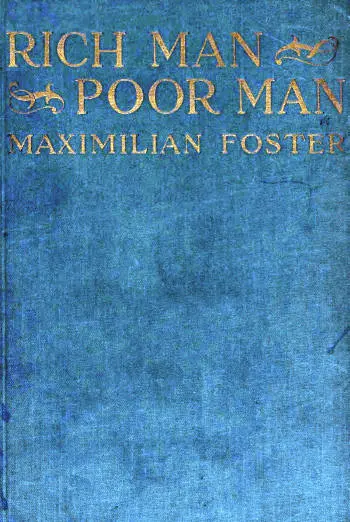
"Rich Man, Poor Man" by Maximilian Foster is a novel written in the early 20th century. The story explores themes of class, wealth, and personal connections, particularly focusing on the lives of Mr. Mapleson, a timid clerk in New York City, and Bab Wynne, a spirited young woman who is on the verge of discovering her true heritage. The interplay between these characters and their relationships will likely form a central part of the narrative as the plot unfolds. At the start of the novel, we meet Mr. Mapleson, an elderly clerk whose life appears mundane and lonely. On Christmas Eve, his character is established as he reflects on the loneliness and alienation he experiences, despite the joyful holiday spirit surrounding him. Meanwhile, the narrative shifts to Bab Wynne, who is depicted with a spirited demeanor that subtly suggests her yearning for a more exciting life, free from the confines of her boarding house existence. The initial chapters set the stage for a forthcoming transformation in their lives, hinting at the intertwining fates of the characters against the backdrop of societal expectations and personal dreams.
Introduction adapted from the source catalogue; source summaries may be automatically generated.
Free to read · English · 58,624 words · No account needed
MAKE TIME FOR A GOOD BOOK
On by default. Untick to stop anonymous reading totals. Each page counts after 10 seconds in view. How this works.
Anonymous counting is on unless you have switched it off.
"What card?" Miss Elvira looked up sharply. Then almost at the same instant she seemed to comprehend. "The card to--to---- You mean the one we were talking about?" Her air was obviously uneasy. Beeston, too, seemed interested, for his eye lighted and he glanced sideways at his daughter. Mrs. Lloyd was still smiling vaguely.
"Yes," she returned, "the card for that young man. I'm curious to learn whether he would accept."
Miss Elvira did not reply. In frosty silence she busied herself about the tea-urn; but as Bab sat listening, her interest mildly awakened, she saw Miss Elvira glance swiftly toward her, then away, a signal evidently for the benefit of Mrs. Lloyd. But Mrs. Lloyd, it seemed, had some purpose behind her veiled, vague speeches. She, too, cast a glance at Bab.
"I suggest we send the invitation. At the most he could only refuse. If he accepted we might by chance learn his true attitude toward us."
"Ethel!"
It was Miss Elvira that spoke. Like her brother, she did not raise her voice; neither did she much change its tone. But even so Miss Elvira managed to convey with it a significant something not to be overlooked. Mrs. Lloyd, who was just about to speak again, paused. However, after an inquiring look she began anew: "As I was saying----"
"One lump or two, Ethel?" Miss Elvira abruptly interrupted.
"What? Oh, why two, please. As I was saying----"
"Cream?" asked Miss Elvira.
"Please. As I said----"
"Hibberd, hand me the toast," Miss Elvira again interposed.
In mild wonder Hibberd said there was no toast--should he order some sent up? No, it was not worth while; Miss Elvira did not need it so much as that.
"Cream and sugar, Barbara?" she inquired.
"Yes, please, Aunty Vi," returned Bab. Her aunt's strategy she had not missed. It added to her growing curiosity. Something was going on.
Mrs. Lloyd again glanced at her husband. The two having exchanged a look, Mrs. Lloyd once more applied herself to her aunt. Some strong resolution seemed now to have armed her with determination.
"Aunt Vira, I was just speaking to you," she announced.
Without looking up from the teacups Miss Elvira murmured, "Were you?"
"I asked you," returned Mrs. Lloyd, "whether you'd sent that
invitation."
"Yes, I heard you perfectly," Miss Elvira replied calmly.
"Well?"
"Well, what?" was the rejoinder.
Your reading position is saved on this browser. Take it to another device with a library code. Reading pages adapt to text, rather than matching a printed edition.
BEHIND THE BOOK
This eBook is for the use of anyone anywhere in the United States and most other parts of the world at no cost and with almost no restrictions whatsoever. You may copy it, give it away or re-use it under the terms of the Project Gutenberg License included with this eBook or online at www.gutenberg.org. If you are not located in the United States, you will have to check the laws of the country where you are located before using this eBook. Read the source licence.
The original source file, including credits and licence, is retained by this library. Request an original-format copy at no charge. Please include the book title and Project Gutenberg identifier #46945.
KEEP YOUR CURIOSITY GOING
Coulson Kernahan

Maurice Baring
Frances Wright
Cécile Tormay

Frederic Jesup Stimson

W. H. P. (William Henry Pope) Jarvis